
Charting Your Course to McMaster Medicine
Embarking on the journey to medical school is a significant undertaking, and for aspiring physicians, the name McMaster University often stands out. The Michael G. DeGroote School of Medicine at McMaster University is renowned for its innovative and rigorous undergraduate medical education (UGME) program, consistently attracting a competitive pool of applicants. Navigating this selective admission process requires more than just meeting academic benchmarks; it demands a deep understanding of McMaster’s unique educational philosophy, a strategic approach to your application, and a clear demonstration of your suitability for their distinctive learning environment. This comprehensive blueprint is designed to demystify the McMaster Medical School admissions process, providing you with the essential knowledge and strategies to craft a compelling application and chart your course toward success. From understanding their core values to mastering each stage of the application, we will equip you with the insights needed to stand out and make your mark.
This blog will cover:
- Charting Your Course to McMaster Medicine
- Building Your Foundation: Strategic Undergraduate Preparation
- The McMaster Application Journey: OMSAS & Beyond
- Excelling at the Interview Stage: The Multiple Mini Interview (MMI)
- Key Considerations and Next Steps
- Conclusion: Your Blueprint for Success in McMaster Medical School Admissions
Why McMaster? A Unique Approach to Medical Education
McMaster University’s Faculty of Health Sciences has long been a trailblazer in medical education. Its undergraduate medical education (UGME) program is distinguished by a philosophy that moves beyond traditional lecture-based learning, prioritizing critical thinking, problem-solving, and self-directed learning. This distinctive approach is not merely a pedagogical choice; it’s a deliberate strategy to cultivate physicians who are adaptable, evidence-based, and deeply engaged with the evolving landscape of healthcare. Understanding this foundational ethos is the first crucial step in aligning your aspirations with McMaster’s vision for the future of medicine.
The Heart of McMaster: Inquiry-Based Learning and Andragogy
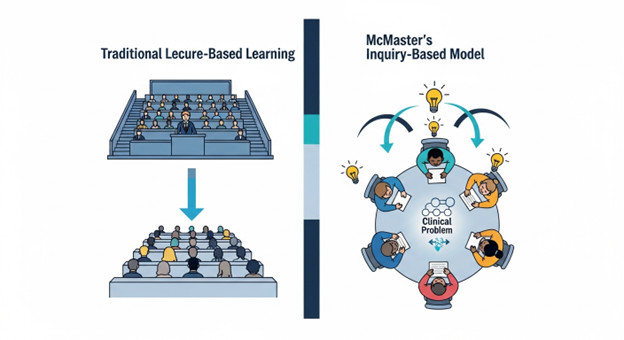
At the core of McMaster’s educational philosophy lies a commitment to Inquiry-Based Learning (IBL). Unlike rote memorization, IBL challenges students to actively seek knowledge, question assumptions, and construct their understanding through problem-solving. Medical education at McMaster is structured around small groups that tackle real-world clinical scenarios, prompting in-depth investigation and collaborative learning. This method fosters a deep and lasting comprehension of medical science, mirroring the investigative nature of medical practice itself.
Complementing IBL is Andragogy, the art and science of adult learning. McMaster recognizes that medical students are adult learners who bring a wealth of prior experience and a strong intrinsic motivation to learn. The Curriculum is designed to leverage this, fostering an environment where learners are respected as active participants in their education. This means learning is contextual, problem-centered, and designed to be immediately relevant. The block system, a hallmark of the McMaster Curriculum, organizes learning into distinct, focused units, allowing for deep dives into specific medical disciplines and facilitating a more integrated understanding of complex topics. This approach ensures that students are not just absorbing information but are actively developing the critical thinking skills necessary to apply it effectively in clinical settings.
Embracing Interdisciplinary Collaboration
The modern healthcare system is inherently collaborative, and McMaster’s Medical School reflects this reality. A significant emphasis is placed on interdisciplinary collaboration, preparing students to work effectively with professionals from various Health Sciences backgrounds. This exposure begins early in the UGME program, with opportunities to interact with students from nursing, physiotherapy, midwifery, and other health-related disciplines. By working together on case studies and projects, students learn to appreciate diverse perspectives, communicate effectively across professional boundaries, and understand the integrated nature of patient care. This fosters a holistic approach to medicine, recognizing that optimal patient outcomes are achieved through teamwork and shared expertise. The faculty actively promotes and facilitates these collaborative environments, ensuring that students gain practical experience in interdisciplinary settings.
The Ideal Candidate Profile: Beyond Academic Metrics
While exceptional academic performance is a prerequisite, McMaster seeks candidates who embody a broader set of qualities. The ideal candidate profile extends beyond mere Grades and MCAT scores. McMaster values individuals who demonstrate strong critical thinking abilities, a genuine curiosity, resilience, empathy, and a commitment to service. They look for students who are self-directed learners, adaptable, and possess excellent communication and interpersonal skills. Experiences that showcase leadership, teamwork, problem-solving in diverse settings, and a deep understanding of the challenges and rewards of a career in medicine are highly regarded. The admission process is designed to identify individuals who not only possess the intellectual capacity to succeed but also the personal attributes and intrinsic motivation to become compassionate and effective physicians. Your application should aim to illuminate these qualities through your experiences and reflections.
Building Your Foundation: Strategic Undergraduate Preparation
The journey toward McMaster University‘s Medical School begins long before the formal application is submitted. Strategic preparation during your undergraduate years is crucial for building a competitive profile that aligns with the institution’s expectations. This involves excelling academically, but more importantly, developing a rich tapestry of experiences that demonstrate the competencies McMaster values in its future physicians.
Academic Excellence: Grades and Prerequisite Knowledge
Academic excellence is non-negotiable for admission to any competitive Medical School, and McMaster is no exception. A strong Grades average is a foundational requirement, reflecting your ability to handle the rigorous academic demands of medical studies. While McMaster has a minimum GPA requirement (often cited as 3.00/4.00 on the OMSAS scale), successful applicants typically possess significantly higher averages. Maintaining a strong GPA throughout your undergraduate career is paramount.
Beyond the overall GPA, demonstrating proficiency in core scientific disciplines is important. While McMaster’s Curriculum is inquiry-based and does not always mandate specific prerequisite courses in the traditional sense, a solid understanding of biological and chemical sciences, as well as mathematics and statistics, provides a strong foundation. The MCAT®, particularly the Critical Analysis and Reasoning Skills (CARS) section, directly assesses your ability to engage with complex texts, a skill honed through rigorous academic study across disciplines. Therefore, focus on not just achieving high Grades but on developing a deep comprehension of your subject matter, which will serve you well in both your application and the Medical School itself.
Developing Core Competencies Through Meaningful Experience
McMaster seeks individuals who have cultivated core competencies beyond academic prowess. This involves engaging in experiences that showcase your critical thinking, leadership potential, teamwork skills, empathy, and commitment to helping others.
- Clinical Exposure: Gaining direct experience in healthcare settings, whether through volunteering in hospitals, long-term care facilities, or community clinics, provides invaluable insight into the realities of patient care. This exposure allows you to develop empathy, hone your observation skills, and begin to understand the patient experience firsthand. Shadowing physicians in various specialties can offer a broader perspective on the medical profession.
- Research Experience: Involvement in research demonstrates your intellectual curiosity, analytical skills, and ability to contribute to the scientific knowledge base. Whether it’s bench research, clinical research, or qualitative studies, the process of inquiry, data analysis, and scientific communication is highly valued.
- Volunteering and Community Engagement: Demonstrating a commitment to serving others outside of a clinical context highlights your altruism and understanding of societal needs. Long-term, consistent involvement in meaningful volunteer activities often speaks volumes about your character and dedication.
- Leadership and Teamwork: Opportunities to lead and collaborate in academic clubs, sports teams, or community organizations are crucial. These experiences reveal your ability to motivate others, work effectively within a group, resolve conflicts, and contribute to shared goals – all essential skills for medical practice and the collaborative UGME program at McMaster.
The key is to seek out experiences that are meaningful to you and that allow for genuine growth and reflection. Document these experiences thoroughly, as they will form the basis of your OMSAS application and your supplementary application essays.
Navigating International vs. Canadian Education Requirements
For students educated outside of Canada, understanding the equivalency of your academic background and application requirements is essential. McMaster University, through OMSAS, generally assesses international credentials to determine their Canadian equivalency.
- GPA Calculation: Prospective applicants with international transcripts will need to have their academic records evaluated to determine their GPA on the OMSAS This often involves submitting official transcripts and potentially undergoing a credential evaluation by a recognized service. It is crucial to understand how your grades will be interpreted within the Canadian system.
- MCAT® Requirement: The MCAT® is a universal requirement for most medical schools, including McMaster, regardless of your educational background. International students must still complete the MCAT®, often requiring them to travel to Canada or designated international testing centers to take the exam.
- Casper Test: The Casper test is also a mandatory component for all applicants, and there are specific testing windows and procedures that international students must adhere to.
- Visa and Immigration: International applicants must also ensure they have the necessary study permits or visas to complete their medical education in Canada.
- OMSAS Application: The OMSAS application process itself is the same for both domestic and international applicants. However, the supporting documentation and understanding of Canadian educational norms may require extra attention for those applying from abroad. It is advisable to consult the McMaster Faculty of Health Sciences admissions website and OMSAS directly for the most current and specific guidelines regarding international application
The McMaster Application Journey: OMSAS & Beyond
The path to securing a place in McMaster’s Medical School is a multi-faceted journey, requiring meticulous attention to detail and strategic execution at each stage. It begins with the centralized Ontario Medical School Application Service (OMSAS) and extends through supplementary essays, standardized tests, and ultimately, the interview. Understanding the nuances of each component is critical for crafting a strong and competitive application.
The Ontario Medical School Application Service (OMSAS): Your Central Hub
The Ontario Medical School Application Service (OMSAS) serves as the primary portal for all medical school applications in Ontario, including McMaster. It is a comprehensive system where you will input your biographical information, academic history, autobiographical Sketch (ABS), and details about your experiences. The ABS section is particularly crucial, allowing you to detail up to 20 experiences across categories like education, work, extracurriculars, and volunteering. For each experience, you’ll describe your role, responsibilities, and the skills or lessons learned. Authenticity, conciseness, and a clear demonstration of impact are key to making this section stand out. This is where you begin to tell your story and showcase the breadth of your engagement and development.
Crafting a Compelling McMaster Supplementary Application
Beyond the core OMSAS application, McMaster requires a supplementary application. This component provides an opportunity to directly address McMaster’s specific values and to elaborate on aspects of your profile not fully captured in the main application. These prompts often require reflective essays, asking you to discuss your motivations for pursuing medicine at McMaster, your understanding of their educational philosophy, and how your experiences align with their desired attributes.
When crafting your responses, be authentic, specific, and articulate. Avoid generic statements. Instead, use concrete examples from your experiences to illustrate your points. Connect your motivations directly to McMaster’s unique approach, such as Inquiry-Based Learning or interdisciplinary collaboration. Demonstrate that you have researched the UGME program thoroughly and understand what makes McMaster Medicine distinct. Your ability to communicate clearly, critically reflect on your experiences, and articulate your fit with McMaster’s ethos will be heavily assessed here.
Mastering the Casper Test (Acuity Insight Casper)
The Casper test, now known as Acuity Insight Casper, is a mandatory online assessment designed to evaluate non-cognitive skills and attributes such as ethics, professionalism, empathy, and critical thinking. It is a situational judgment test (SJT) that presents you with a series of scenarios, typically in video or written format, followed by questions that require short, typed responses.
Preparing for Casper involves understanding what attributes it aims to assess and practicing your ability to articulate thoughtful, well-reasoned responses under time constraints. Focus on demonstrating your awareness of ethical considerations, your problem-solving approach in complex interpersonal situations, and your ability to communicate your thought process clearly and concisely. While there’s no single “right” answer, demonstrating self-awareness, ethical reasoning, and a mature approach to challenges is paramount. Many applicants find it beneficial to practice timed responses to various scenarios to build confidence and improve their efficiency. Remember, your responses should reflect your genuine character and ethical framework.
The MCAT®: Essential for the Michael G. DeGroote School of Medicine
The MCAT® (Medical College Admission Test) is a cornerstone of the Medical School admission process nationwide, and McMaster University is no exception. While McMaster does not have a strict cutoff for the MCAT® score, it is a critical component of the application. Of particular note, McMaster places significant emphasis on the CARS (Critical Analysis and Reasoning Skills) section. A minimum CARS score (historically 123) is often cited as an absolute requirement.
Beyond meeting minimums, a strong overall MCAT® score demonstrates your readiness for the academic rigor of medical school. It assesses your knowledge of foundational sciences, your ability to reason critically, and your capacity to engage with scientific and social science literature. Applicants are encouraged to prepare thoroughly for the MCAT®, aiming for scores that reflect their maximum potential, as it is a significant factor in the holistic review of their application. The faculty at McMaster uses this data alongside other components to evaluate readiness for their challenging Curriculum.
Excelling at the Interview Stage: The Multiple Mini Interview (MMI)
For those who successfully navigate the initial stages of the application process, the Multiple Mini Interview (MMI) is the final and perhaps most crucial hurdle. McMaster University, like many leading medical schools, utilizes the MMI format to assess a wide range of competencies that cannot be fully captured by written applications or standardized tests. This interview structure is designed to provide a more comprehensive and standardized evaluation of an applicant’s suitability for the UGME program.
Decoding the McMaster MMI System (Kira Talent, MMI system)
McMaster’s MMI system is designed to evaluate your non-academic attributes in a structured and objective manner. While specific platforms may evolve, the core principle remains: a series of discrete stations, each presenting a unique scenario or question. These scenarios can range from ethical dilemmas and personal reflections to problem-solving tasks and interpersonal interactions. You will typically move through several such stations, spending a few minutes at each, interacting with an interviewer or responding to a prompt.
Some medical schools, including potentially McMaster, may utilize platforms like Kira Talent for certain aspects of their interview process, which might involve recorded video responses to pre-determined questions. Understanding the format and expectations of the specific MMI system employed by McMaster is the first step in preparation. The goal of the MMI is to assess your critical thinking, communication skills, ethical reasoning, empathy, self-awareness, and ability to work collaboratively – qualities that are integral to the McMaster ethos.
Strategic Preparation for MMI Success
Preparing for the MMI requires a multifaceted approach, focusing on both content and delivery.
- Understand the Core Competencies: Familiarize yourself with the attributes McMaster seeks, as outlined in their admissions philosophy. These typically include communication, teamwork, leadership, empathy, critical thinking, ethical judgment, and resilience. Reflect on your own experiences and identify specific examples that demonstrate these qualities.
- Practice Common MMI Scenarios: While the exact questions are unknown, common themes emerge: ethical dilemmas (e.g., patient confidentiality, resource allocation), difficult interpersonal situations, personal reflections (e.g., strengths, weaknesses, motivations), and problem-solving tasks. Practice discussing these scenarios aloud, ideally with peers or mentors.
- Develop a Structured Approach to Responses: For scenario-based questions, consider a framework: identify the core issue, consider the stakeholders involved, weigh the ethical considerations, explore potential solutions, and justify your chosen course of action. For personal reflection questions, be genuine, insightful, and connect your experiences back to the values of medicine and McMaster.
- Focus on Communication: Speak clearly, maintain appropriate eye contact (even in virtual formats), and listen actively to the prompts. Articulate your thoughts logically and concisely. Avoid jargon and strive for clarity.
- Be Authentic: The interviewers are looking for genuine responses that reflect your character. While preparation is key, try not to memorize answers, as this can come across as inauthentic. Let your personality and values shine through.
- Simulate the Experience: If possible, participate in mock MMIs. This will help you get accustomed to the time pressures and the dynamic nature of the interview format.
The MMI is your opportunity to showcase the qualities that make you a unique and valuable prospective student for McMaster’s Medical School, complementing the information provided in your written application.
Key Considerations and Next Steps
Navigating the admissions process for McMaster Medical School involves meticulous planning and attention to detail beyond the core application components. Understanding critical timelines, managing communications, and planning for the financial implications are essential steps to ensure a smooth and successful journey.
Important Application Deadlines and Admission Decisions
Adherence to application deadlines is paramount. The OMSAS application typically opens in late summer and has a submission deadline in the fall of the year prior to intended matriculation. Specific dates for McMaster’s supplementary application and the Casper test will be communicated well in advance. Missing a deadline can render your application ineligible.
After submitting your application, the review process can take several months. Shortlisting for interviews usually occurs in late winter or early spring, with interviews themselves taking place through the spring. Admission decisions are typically released in the late spring or early summer. It is crucial to monitor your email communications diligently during this period, as important updates and invitations will be sent via email. Be patient, as the admissions committee reviews a large volume of applications.
Financial Planning: Tuition and Scholarship Opportunities
Pursuing medical education involves a significant financial commitment. The tuition fees for the Michael G. DeGroote School of Medicine are set annually and can be found on the McMaster University’s Faculty of Health Sciences website. It is important to research these costs thoroughly as part of your financial planning.
McMaster University and affiliated organizations offer a range of scholarships, bursaries, and financial aid opportunities for medical students. These can be based on academic merit, financial need, or specific criteria. Prospective students are strongly encouraged to explore these options well in advance of starting their program. Information regarding tuition and financial aid is typically available on the university’s financial aid office website and the Faculty of Health Sciences admissions pages. Proactive financial planning will alleviate stress and allow you to focus on your studies and Medical School experience.
Life as a McMaster Medical Student: Community and Support
Beyond the rigorous academic demands, life as a student at McMaster’s Medical School is characterized by a supportive community and extensive resources. The UGME program fosters a strong sense of camaraderie among students, enhanced by the collaborative learning environment. Students often form study groups, participate in extracurricular activities, and support each other through the challenges of medical training.
The faculty and administrative staff at McMaster are committed to student success and well-being. Various support services are available, including academic advising, mental health counseling, and career guidance. The Health Sciences Library provides extensive resources for research and study. Furthermore, the university offers numerous opportunities for students to engage in research, pursue special interests, and contribute to the broader community. The unique Curriculum, with its block system, allows for focused learning and can provide opportunities for electives and personal development. Embracing the McMaster University community means actively engaging with these resources and contributing to the vibrant academic and social life on campus.
Conclusion: Your Blueprint for Success in McMaster Medical School Admissions
The pursuit of a place at McMaster University’s Michael G. DeGroote School of Medicine is a challenging yet attainable goal. This comprehensive blueprint has illuminated the path, emphasizing that success hinges on a strategic, holistic approach that extends far beyond academic metrics. By deeply understanding McMaster’s commitment to Inquiry-Based Learning, Andragogy, and interdisciplinary collaboration, you can begin to align your own values and aspirations with their unique educational ethos.
Recap of key strategic pillars for a strong and differentiated application
The foundation of a successful application lies in strategic preparation. This includes maintaining exceptional Grades and mastering the MCAT®, particularly its CARS section, to demonstrate academic readiness. Equally vital is the cultivation of meaningful experiences – clinical exposure, research, volunteering, and leadership – that showcase your empathy, critical thinking, and commitment to service, aligning with the ideal candidate profile McMaster seeks. Navigating the complexities of the OMSAS system, crafting a compelling supplementary application, and excelling in the Casper test are pivotal steps in presenting your qualifications effectively. Furthermore, thorough preparation for the Multiple Mini Interview (MMI) is essential, as it provides the final opportunity to demonstrate your communication, ethical reasoning, and interpersonal skills. Always be mindful of application deadlines, manage your communications diligently via email, and plan for the financial realities of tuition and scholarship opportunities. By embracing the spirit of collaboration and inquiry that defines the McMaster University UGME program, you position yourself not just as an applicant, but as a future contributing member of the Medical School community. Your blueprint for success is built upon authenticity, strategic execution, and a profound understanding of what makes McMaster Medicine exceptional.
Frequently Asked Questions About McMaster Medical School
1. What GPA do you need to get into McMaster University Michael G. DeGroote School of Medicine?
McMaster requires a minimum cumulative GPA of 3.0 on a 4.0 scale, but admitted students are far more competitive. The average GPA for the Class of 2027 was 3.92. GPA accounts for 32% of the pre-interview selection formula, weighted equally alongside MCAT CARS and CASPer scores. McMaster calculates GPA using all undergraduate years with no grade drops or exclusions.
2. What MCAT score do you need for McMaster University Michael G. DeGroote School of Medicine?
McMaster is unique among Canadian medical schools in that it only evaluates the Critical Analysis and Reasoning Skills (CARS) section of the MCAT — the other three sections are completely ignored. The average CARS score for admitted students in the Class of 2027 was 129, which sits at approximately the 95th percentile. CARS makes up 32% of the pre-interview selection score and 15% of the post-interview score. A minimum CARS score (typically 125+) is generally required to be competitive, though McMaster does not publish an official cutoff.
3. What is the acceptance rate at McMaster University Michael G. DeGroote School of Medicine?
McMaster’s acceptance rate is approximately 3.6–4%, making it one of the most selective medical schools in Canada. For the Class of 2026, roughly 5,330 applications were received and approximately 570 applicants were invited to interview, from which 217 students were matriculated. The odds narrow further for out-of-province and international applicants, as the school heavily prioritizes Ontario residents.
4. How many people apply to McMaster University Michael G. DeGroote School of Medicine each year?
McMaster receives approximately 5,300–5,600 applications annually through the Ontario Medical School Application Service (OMSAS). For the Class of 2025 cycle, 5,605 applications were submitted. Of those, roughly 550–570 applicants are invited to the MMI interview stage, meaning fewer than 1 in 10 applicants ever reaches the interview. The school fills 203 Ontario-resident seats and 14 seats reserved for non-Ontario-resident Canadians per class.
5. Does McMaster University Michael G. DeGroote School of Medicine accept out-of-province or international applicants?
McMaster does accept a small number of out-of-province Canadian applicants — approximately 14 seats per class are reserved for non-Ontario residents. International applicants are not eligible to apply to the McMaster MD program; the school is open to Canadian citizens and permanent residents only. Ontario residents hold a strong advantage, as the vast majority of the 217-seat class is drawn from within the province. Out-of-province applicants should confirm current eligibility and seat allocations on the OMSAS guide before applying.
6. What is the interview format at McMaster University Michael G. DeGroote School of Medicine?
McMaster uses a virtual Multiple Mini Interview (MMI) conducted on the Kira Talent platform. The interview consists of 10 stations: 8 scored stations that assess personal and professional qualities, and 2 rest stations where applicants can speak informally with a current McMaster medical student. The MMI score is weighted heavily at 70% of the post-interview selection formula, with GPA and MCAT CARS each contributing 15%. McMaster pioneered the MMI format, which has since been adopted by medical schools worldwide.
7. What are the secondary essay prompts at McMaster University Michael G. DeGroote School of Medicine?
McMaster does not require secondary essays as part of its MD application — this is a notable difference from American medical schools that use AMCAS with secondary applications. Instead, applicants apply through OMSAS (Ontario Medical School Application Service) using a sketch (activity list) and autobiographical sketch (ABS) to document experiences. Because there are no secondary essays, your CASPer score and OMSAS autobiographical sketch carry significant weight in non-academic evaluation. Applicants should put particular effort into the ABS to communicate the breadth and depth of their experiences.
8. How much does it cost to attend McMaster University Michael G. DeGroote School of Medicine?
McMaster’s MD program is a 3-year accelerated program, which reduces total tuition costs compared to the standard 4-year Canadian medical degree. Annual tuition for domestic (Ontario) MD students is approximately CAD $25,000–$28,000 per year based on recent fee schedules, totalling roughly CAD $75,000–$84,000 for the full degree. Out-of-province Canadian students pay a similar rate. Students should budget an additional CAD $15,000–$20,000 per year for living expenses, books, and fees in Hamilton, Ontario. McMaster’s UGME Financial Resources page and the Office of the Registrar are the authoritative sources for current fee schedules.
9. Does McMaster University Michael G. DeGroote School of Medicine require the CASPer test, and why was it created there?
Yes — CASPer (Computer-Based Assessment for Sampling Personal Characteristics) is mandatory for all McMaster MD applicants, and McMaster is the institution that invented it. Developed at McMaster in the early 2000s, CASPer was designed to measure non-cognitive qualities like empathy, professionalism, collaboration, and ethical judgment that GPA and MCAT cannot assess. For the 2025–2026 cycle, CASPer consists of 11 scenarios across two sections: 4 video-response scenarios and 7 typed-response scenarios, each with 2 questions per scenario. CASPer accounts for 32% of McMaster’s pre-interview selection score — equal weight to GPA and MCAT CARS.
10. What makes McMaster University Michael G. DeGroote School of Medicine unique — what is problem-based learning?
McMaster invented problem-based learning (PBL) in the late 1960s, making it the birthplace of one of the most influential pedagogical innovations in the history of medical education. In the PBL model, small groups of students work through realistic clinical cases guided by a physician tutor, building knowledge by solving problems rather than memorizing lectures. McMaster’s curriculum is also self-directed, giving students more unscheduled time to pursue research, interests, and identified learning gaps. Combined with the accelerated 3-year program structure and early patient exposure from the first term, McMaster produces graduates who match across Canada and internationally by every available benchmark.