
Navigating the Path to a UT Medical School
The journey to becoming a physician is a challenging yet profoundly rewarding path, and for many aspiring doctors in the Lone Star State, the University of Texas (UT) System represents the pinnacle of medical education. With a network of world-class medical schools, the UT System offers diverse programs, cutting-edge research opportunities, and a deep commitment to serving the health needs of Texas. However, gaining admission to these prestigious institutions is a highly competitive endeavor. This comprehensive guide is designed to demystify the UT medical school admissions process, providing aspiring applicants with a clear roadmap to navigate the complex application journey. From understanding the nuances of the Texas Medical & Dental Schools Application Service (TMDSAS) to excelling in interviews, we will cover every essential step to help you craft a winning application and secure your place in one of the UT medical schools.
This blog will cover:
- Navigating the Path to a UT Medical School
- Understanding the University of Texas Medical School Landscape
- The Texas Medical & Dental Schools Application Service (TMDSAS): Your Primary Application Portal
- Foundation First: Academic Requirements and Standardized Tests
- Building a Compelling Profile: Beyond Academic Metrics
- The Secondary Application: Tailoring Your Story to Each UT School
- The Interview: Your Final Opportunity to Shine
- Conclusion
Why Texas: The Appeal of UT Medical Education
The University of Texas System stands as a titan in higher education, and its medical schools are no exception. For students aspiring to practice medicine, particularly within Texas, the UT System offers unparalleled advantages. These institutions are renowned for their rigorous academic standards, fostering an environment where critical thinking and scientific inquiry are paramount. The schools within the UT System are at the forefront of medical research, providing students with opportunities to engage in groundbreaking discoveries and contribute to the advancement of healthcare. Furthermore, a core mission of the UT System is to serve the health needs of Texas. This translates into a strong emphasis on primary care, community health initiatives, and addressing the unique healthcare challenges faced by the state’s diverse population. Applicants seeking a program that aligns with a deep commitment to public service and the advancement of medical knowledge will find that UT medical schools offer an ideal environment. The sheer number of medical schools within the system also means a broader range of specialized programs, research focuses, and training philosophies, increasing the likelihood that an individual student can find a perfect fit for their career aspirations.
A Glimpse into the UT System Medical Schools
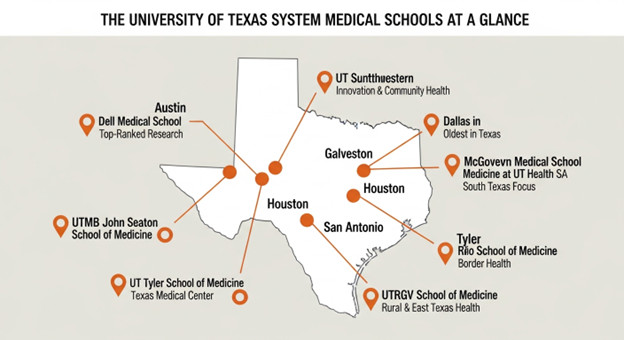
The UT System comprises a remarkable array of medical schools, each with its distinct strengths and focus areas. While this guide will delve deeper into specific institutions, it’s beneficial to acknowledge the breadth of options available. From the innovation hub of Dell Medical School at UT Austin to the established research powerhouses like UT Southwestern Medical School in Dallas and UTMB John Sealy School of Medicine in Galveston, and the robust clinical training offered at McGovern Medical School at UTHealth Houston and Long School of Medicine at UT Health San Antonio, the system offers a comprehensive spectrum of medical education. These institutions collectively train a significant portion of Texas physicians, many of whom go on to serve communities across the state and beyond. Understanding this diverse landscape is the first step in identifying which schools might best align with your personal and professional goals.
Your Comprehensive Roadmap to Acceptance
Navigating the path to UT medical school admissions requires a strategic and well-informed approach. It’s a multi-faceted process that extends far beyond strong academic metrics. Success hinges on meticulous preparation, a deep understanding of the application requirements, and the ability to present a compelling narrative that showcases your unique potential as a future physician. This guide will equip you with the knowledge to tackle each stage: from mastering the TMDSAS application and excelling academically with strong prerequisite coursework and MCAT scores, to building a robust profile through meaningful extracurricular activities and ultimately, shining during the interview process. By following this roadmap, applicants can significantly enhance their chances of gaining admission to their desired UT medical school.
Understanding the University of Texas Medical School Landscape
The University of Texas System is a powerhouse of medical education and research, comprising multiple highly respected medical schools across the state. Each institution within the system possesses a unique mission, curriculum, and institutional culture, making it crucial for prospective students to thoroughly research and understand these differences. The diversity within the UT System ensures that a wide range of applicants can find a program that aligns with their individual goals, whether those are centered on groundbreaking research, community health, or specialized clinical training.
Key Institutions in the UT System for Medical Education
The UT System boasts several prominent medical schools that attract a significant number of applicants each year. Understanding their individual identities is paramount:
- Dell Medical School at the University of Texas at Austin: This relatively newer school is built on a foundation of innovation, community collaboration, and a focus on transforming healthcare. It emphasizes interdisciplinary learning and has a strong commitment to research and technology.
- McGovern Medical School at UTHealth Houston: As a comprehensive medical center, McGovern Medical School offers extensive clinical training opportunities in a large urban setting. It is known for its strong residency programs and its role in addressing the healthcare needs of a diverse metropolitan population.
- UTMB John Sealy School of Medicine in Galveston: With a long and distinguished history, UTMB is a major academic health science center with a broad mission encompassing education, patient care, and cutting-edge research. It is particularly noted for its expertise in infectious diseases and tropical medicine, as well as its robust programs for serving underserved populations.
- UT Southwestern Medical School: Located in Dallas, UT Southwestern is a globally recognized institution renowned for its research prowess, particularly in biomedical sciences. It offers a rigorous academic environment with extensive opportunities for students to engage in scientific discovery and advanced clinical practice.
- Long School of Medicine at UT Health San Antonio: This school is dedicated to improving the health of the people of South Texas through education, research, and patient care. It has a strong focus on addressing health disparities and serving a large Hispanic population, making it a critical institution for understanding and treating a diverse patient base.
Other institutions within the UT System also contribute to medical education, such as UT Rio Grande Valley, Texas Tech University Health Sciences Center, and UT Tyler, each with unique regional focuses.
Dell Medical School at the University of Texas at Austin
Dell Medical School, established with a vision to revolutionize healthcare, offers a distinctive program designed for students who are innovators and change agents. Its curriculum is deeply integrated with the city of Austin, fostering a culture of collaboration between the medical school, the community, and other UT Austin colleges. Applicants drawn to interdisciplinary studies, technology-driven healthcare solutions, and a mission to transform health and healthcare are particularly well-suited for Dell. The admissions process here often looks for individuals who demonstrate leadership potential, a desire to challenge the status quo, and a commitment to improving healthcare delivery systems.
McGovern Medical School at UTHealth Houston
McGovern Medical School is a cornerstone of the UTHealth Houston academic health science center, providing students with a rich tapestry of clinical experiences in one of the nation’s largest and most diverse cities. Its program is characterized by extensive patient contact from early in training, a strong emphasis on translational research, and a commitment to serving the health needs of Houston and the surrounding regions. Applicants who thrive in a dynamic urban environment and are eager to engage with a broad spectrum of medical cases will find McGovern a compelling choice. The admissions committee seeks individuals who demonstrate strong communication skills, a capacity for teamwork, and a genuine desire to contribute to public health.
UTMB John Sealy School of Medicine in Galveston
The University of Texas Medical Branch (UTMB) John Sealy School of Medicine boasts a legacy of excellence and a comprehensive approach to medical education. Situated on Galveston Island, UTMB is a vital academic health center with a strong focus on research, particularly in areas such as infectious diseases, aging, and cancer. Its educational program offers robust clinical training across a wide range of specialties, with a significant emphasis on serving coastal Texas and its unique health challenges. Applicants seeking a traditional yet innovative medical education, with opportunities for deep engagement in research and a commitment to coastal community health, will find UTMB an appealing option.
UT Southwestern Medical School
UT Southwestern Medical School in Dallas is a global leader in biomedical research and a highly selective institution. It offers a demanding curriculum designed to prepare students for leadership roles in academic medicine, research, and complex clinical practice. Applicants are drawn to UT Southwestern for its unparalleled research opportunities, its state-of-the-art facilities, and its faculty, many of whom are Nobel laureates. The admissions process is highly competitive, seeking individuals with exceptional academic achievements, a profound curiosity for scientific discovery, and a demonstrated ability to excel in a rigorous academic environment.
Finding Your Fit: Aligning with a School’s Mission and Curriculum
Choosing the right UT medical school is a critical decision that should be driven by careful self-reflection and thorough research. Each of the UT System’s schools has a unique mission statement and educational philosophy. For instance, some schools prioritize research intensity, while others focus on primary care, community engagement, or specific population health needs within Texas. Applicants should explore the curriculum, teaching methodologies, and clinical training sites of each institution. Understanding the program‘s strengths, the research interests of the faculty, and the overall campus culture will help you identify the best environment for your personal and professional growth. Aligning your own values and aspirations with a school’s mission is crucial not only for a successful application but also for a fulfilling medical school experience.
The Texas Medical & Dental Schools Application Service (TMDSAS): Your Primary Application Portal
For the vast majority of applicants seeking admission to a UT medical school, the Texas Medical & Dental Schools Application Service (TMDSAS) is the primary gateway. Understanding and effectively navigating TMDSAS is fundamental to a successful application strategy. This centralized platform streamlines the process for multiple schools within the UT System, ensuring that all applicants are evaluated on a consistent basis while also allowing for school-specific customizations.
TMDSAS vs. AMCAS: Why TMDSAS is Crucial for Texas Applicants
The application process for Texas public medical schools differs from the national application system, AMCAS (American Medical College Application Service). TMDSAS is specifically designed for Texas medical schools, and while it shares similarities with AMCAS, it has unique requirements and features. For applicants targeting UT medical schools, submitting through TMDSAS is generally mandatory, particularly for Texas residents. Understanding these distinctions is vital. TMDSAS often includes specific essay sections like the Personal Characteristics Essay, which allows applicants to highlight aspects of their background and experiences that contribute to diversity and demonstrate their suitability for Texas medical schools. Furthermore, TMDSAS handles transcripts and other application components for all participating Texas medical schools simultaneously, simplifying the process for applicants applying to multiple institutions within the state.
Crafting Your TMDSAS Primary Application
The TMDSAS primary application is a comprehensive document that requires meticulous attention to detail. It serves as the initial screening tool for admissions committees, offering a holistic view of each applicant. Key components include personal information, a detailed academic history featuring transcripts from all undergraduate and graduate institutions, and a section for work and activities. This latter section is where you will detail your research experience, clinical involvement, volunteer work, leadership roles, and other significant achievements. The application also requires essays, notably the Personal Statement and the Personal Characteristics Essay, which are crucial for conveying your motivations, experiences, and personal qualities. Every entry, from coursework to extracurricular descriptions, must be accurately and thoughtfully presented to build a compelling profile.
Foundation First: Academic Requirements and Standardized Tests
A strong academic foundation is non-negotiable for admission to any of the UT medical schools. This involves not only excelling in your undergraduate studies but also demonstrating proficiency in specific scientific disciplines and achieving competitive scores on standardized tests like the MCAT. These metrics provide admissions committees with a baseline understanding of your academic preparedness for the rigors of medical school.
Prerequisite Courses: The Non-Negotiable Core
UT medical schools have established prerequisite courses that all applicants must complete. These courses are designed to ensure that students possess the foundational scientific knowledge necessary to succeed in medical program curricula. Key prerequisites typically include:
- Biology: A sequence of courses covering general biology, often with laboratory components.
- Chemistry: General Chemistry (typically two semesters with labs) and Organic Chemistry (typically two semesters with labs). These courses are critical for understanding biochemical processes and their impact on human health.
- Physics: A sequence of courses covering fundamental physics principles, usually with labs. This coursework is essential for understanding medical imaging, physiological mechanics, and instrumentation.
Beyond these core requirements, many UT medical schools also recommend or require additional coursework, such as Biochemistry, Statistics, and English. Biochemistry is particularly vital as it bridges the gap between biology and chemistry, providing a deep understanding of cellular and molecular processes. Statistics is increasingly important for interpreting medical research data and understanding clinical trial outcomes. A strong command of English, evidenced by clear writing and communication skills, is essential for applications, essays, and successful patient interaction. While competency can sometimes be demonstrated through alternative pathways (like advanced research or specific training), completing these courses with strong grades on your transcripts is the most straightforward and widely accepted method.
The Medical College Admission Test (MCAT): Your Standardized Score
The Medical College Admission Test (MCAT) is a comprehensive standardized examination administered by the Association of American Medical Colleges (AAMC). It assesses a wide range of knowledge and skills crucial for success in medical school. The MCAT is divided into four sections: Chemical and Physical Foundations of Biological Systems; Critical Analysis and Reasoning Skills (CARS); Biological and Biochemical Foundations of Living Systems; and Psychological, Social, and Biological Foundations of Behavior.
Achieving a competitive MCAT score is paramount for UT medical school admissions. While GPA reflects your overall academic performance, the MCAT score provides a standardized measure of your aptitude for the scientific and critical thinking demands of medicine. Each UT medical school has its own average MCAT scores for matriculating students, which can be found on their respective admissions websites. It is essential to aim for scores that are at or above the average for the schools you are targeting. Effective preparation for the MCAT typically involves dedicated study plans, utilizing MCAT preparation materials, taking practice tests, and understanding the unique nature of the CARS section, which often requires specific strategies. The recency of your MCAT scores is also important, as schools generally prefer scores taken within the last 2-3 years.
Building a Compelling Profile: Beyond Academic Metrics
While academic achievements and MCAT scores are foundational, UT medical schools employ a holistic review process. This means that admissions committees consider a wide range of factors beyond grades and test scores to assess an applicant‘s potential to become a compassionate, skilled, and dedicated physician. Demonstrating commitment, resilience, empathy, and leadership through meaningful experiences is just as critical.
The Holistic Review Process at UT Medical Schools
The holistic review is a cornerstone of modern medical school admissions. For UT medical schools, this process involves a comprehensive evaluation of an applicant‘s entire profile, considering not just academic metrics but also life experiences, personal qualities, background, and demonstrated potential for contributing to the medical profession and the specific school’s community. This approach acknowledges that academic success alone does not guarantee a physician’s ability to connect with patients, navigate complex ethical dilemmas, or contribute positively to healthcare. Applicants are encouraged to reflect on how their unique journey, challenges overcome, and diverse experiences have shaped them into well-rounded individuals prepared for the demands of medical program training.
Extracurricular Activities: Demonstrating Your Commitment
Meaningful extracurricular activities are the bedrock of a compelling application beyond academics. UT medical schools look for applicants who have actively engaged in experiences that demonstrate their passion for medicine, commitment to service, and development of essential physicianly qualities. Key categories of experiences include:
- Research: Engagement in scientific research is highly valued, particularly at institutions like UT Southwestern and Dell Medical School. This can range from bench research in a lab setting to clinical research or public health studies. Detailing your role, the skills you acquired, and any contributions you made is crucial. Strong research experience can significantly bolster an application.
- Clinical Experience: Direct exposure to patient care is vital. This can include shadowing physicians in various specialties, volunteering in hospitals or clinics, or holding paid positions like medical assistant or EMT. These experiences allow applicants to witness the day-to-day realities of medicine and develop empathy and communication skills.
- Volunteering and Community Service: Demonstrating a commitment to serving others, especially underserved populations, is highly regarded. This can involve working with local charities, participating in health outreach programs, or engaging in activities that address social determinants of health.
- Leadership Roles: Holding leadership positions in student organizations, clubs, or community groups showcases initiative, responsibility, and the ability to motivate others.
- Mentorship and Teaching: Experiences where you have mentored peers or taught others can highlight your ability to explain complex concepts and guide development.
When detailing these activities on your TMDSAS application, focus on the depth of your involvement rather than just the breadth. Highlight what you learned, how you grew, and how these experiences solidified your desire to pursue medicine. The “Most Meaningful” entries on TMDSAS are particularly important for elaborating on these experiences.
Developing a Cohesive Narrative: Connecting Experiences to Your “Why Medicine”
A powerful application tells a story. For UT medical schools, this story must clearly articulate your “why medicine.” It’s not enough to simply list impressive activities; you must demonstrate how these experiences have shaped your understanding of the profession and solidified your commitment. Your personal statement and other essays on the TMDSAS application are prime opportunities to weave a cohesive narrative. Reflect on how your research experiences deepened your scientific curiosity, how your clinical encounters fostered your empathy, and how your volunteer work ignited your passion for service. Connect these experiences to your overarching motivation for pursuing medicine. Showcase qualities such as resilience (e.g., overcoming academic challenges or personal setbacks), critical thinking (e.g., analyzing complex patient cases or research data), and teamwork. This narrative thread should be consistent across all parts of your application, including your secondary essays and interview responses, demonstrating a genuine and well-considered path toward medicine.
The Secondary Application: Tailoring Your Story to Each UT School
Following the review of your primary TMDSAS application, successful applicants will often receive invitations to complete secondary applications. These are school-specific essays and questionnaires designed to allow each UT medical school to gain a deeper understanding of your fit with their unique mission, values, and program offerings. This stage is crucial for personalizing your application further and demonstrating your genuine interest in that particular institution.
The Purpose of Secondary Applications: Deeper Dive into Fit
Secondary applications serve a vital purpose in the UT medical school admissions process. Unlike the primary application, which offers a broad overview of your qualifications, secondary applications allow schools to ask more targeted questions relevant to their specific identity and goals. They are designed to assess:
- Your Alignment with the School’s Mission: Do your values and goals match what the school prioritizes (e.g., community health, cutting-edge research, primary care)?
- Your Understanding of the School: Have you done your homework? Do you know what makes their program unique?
- Your Fit with the School’s Culture: Will you thrive in their specific academic and social environment?
- Your Preparedness for Their Curriculum: Are you ready for their particular teaching style and program structure?
By thoughtfully answering these prompts, you demonstrate genuine interest and provide admissions committees with the information they need to assess your potential contribution to their student body and future medical community.
Crafting Targeted Essays: Researching Each UT School’s Mission
To excel in secondary applications, thorough research into each UT medical school is imperative. Visit their websites, explore their mission statements, review their curriculum, and learn about their faculty’s research interests. Identify what makes each institution distinct. For example, if a school emphasizes serving rural populations, your essay might focus on experiences or aspirations related to rural healthcare. If another prioritizes research innovation, highlight your research background and future scientific interests.
Your essays should directly address the prompts provided, using specific examples from your experiences to illustrate your points. Avoid generic responses; instead, tailor each essay to the specific school. For instance, if a prompt asks why you are interested in a particular program, go beyond simply stating “it’s a great medical school.” Mention specific courses, faculty members whose research excites you, or unique clinical opportunities that align with your goals. This demonstrates that you have invested time in understanding what the school offers and why you are a strong candidate for their program.
CASPer and Altus Suite: Assessing Non-Cognitive Skills
Some UT medical schools, and indeed many medical schools nationwide, are incorporating additional assessments to evaluate non-cognitive skills. CASPer (Computer-based Assessment for Sampling Personal Characteristics) and Altus Suite are online, situational judgment tests that present hypothetical scenarios and ask applicants to respond. These assessments evaluate traits such as empathy, ethics, professionalism, resilience, and self-awareness – qualities crucial for physician development that are not easily measured by traditional applications. While not all UT schools require these, it’s important to check the specific requirements for each institution you are applying to. Preparation for these tests involves understanding the types of scenarios presented and practicing how to articulate thoughtful, ethical, and well-reasoned responses that reflect your understanding of effective interpersonal and professional conduct.
Submitting Your Secondary Application: Timeliness is Key
Once you receive a secondary application, it is crucial to complete and submit it promptly. Most schools provide a deadline, typically a few weeks to a month after you receive the invitation. Late submissions can significantly harm your chances, as admissions committees often review applications on a rolling basis. Aim to complete and submit your secondary applications within two to three weeks of receiving them. This demonstrates your enthusiasm and organizational skills. Ensure all essays are proofread for grammar and spelling errors before submission.
The Interview: Your Final Opportunity to Shine
The interview is often the final, and perhaps most critical, stage of the UT medical school admissions process. It provides the admissions committee with an opportunity to meet you in person, assess your communication skills, gauge your personality, and determine your fit with their program and institution. Preparation is key to confidently navigating this pivotal step.
Receiving Interview Invitations: What to Expect
Receiving an interview invitation signifies that your application has successfully passed the initial screening. Congratulations! This is a significant achievement. Interview invitations are typically sent out in waves, often starting in the fall and continuing through the winter months, depending on the school’s timeline. The invitation will usually provide details about the format of the interview, the date and time, and instructions for scheduling. It’s important to respond promptly to schedule your interview at the earliest available opportunity.
Types of Medical School Interviews for UT Schools (MMI, Traditional, Panel)
UT medical schools employ various interview formats to assess applicants. Understanding these formats is crucial for effective preparation:
- Traditional Interview: This involves a one-on-one conversation with one or more faculty members, current students, or admissions committee members. The questions are typically open-ended, focusing on your background, motivations for medicine, experiences, and understanding of current healthcare issues. This format allows for deeper, more conversational dialogue.
- Multiple Mini-Interview (MMI): The MMI format consists of a series of independent, timed stations. At each station, you will be presented with a scenario (written or video) and asked to respond. These scenarios often assess non-cognitive skills, ethical dilemmas, problem-solving abilities, and communication styles. Some stations might involve role-playing with an actor. The MMI aims to evaluate a broad range of competencies in a standardized manner.
- Panel Interview: In this format, you will meet with a group of interviewers simultaneously. This can be a more intimidating setting, but it allows the admissions committee to gain a collective impression of your responses and how you handle questioning from multiple perspectives.
Regardless of the format, the underlying goal is to assess your suitability for their program and the medical profession. Be prepared to discuss your transcripts, MCAT score, research experiences, and why you are specifically interested in their medical school.
Interview Preparation Strategies
Thorough preparation is essential for interview success. Begin by revisiting your TMDSAS application, including your essays and descriptions of your activities. Be ready to elaborate on any aspect of your application and provide specific examples. Practice answering common interview questions, such as “Why medicine?”, “Why this medical school?”, “Tell me about a time you faced a challenge,” and “What are your strengths and weaknesses?”
For MMIs, practice responding to ethical dilemmas and problem-solving scenarios. For traditional and panel interviews, focus on articulating your thoughts clearly and concisely, maintaining eye contact, and demonstrating active listening. It’s also vital to research the specific UT medical school thoroughly. Understand their mission, curriculum, current research initiatives, and any unique program features. Prepare thoughtful questions to ask the interviewer(s), which demonstrates your engagement and interest. Mock interviews with peers, mentors, or pre-health advisors can provide invaluable practice and feedback.
Conclusion
The path to admission at a University of Texas medical school is a demanding yet achievable goal. It requires a strategic blend of strong academic performance, exemplified by solid transcripts and competitive MCAT scores in subjects like Chemistry, Physics, and Biochemistry, coupled with a compelling narrative built through meaningful research and extracurricular activities. Mastering the TMDSAS application process, tailoring your secondary applications to each unique program, and excelling in your interview are critical steps. Remember that UT medical schools employ a holistic review, valuing not just your intellect but also your character, commitment, and potential to serve the diverse healthcare needs of Texas. Start early, stay organized, seek guidance from mentors, and most importantly, reflect deeply on your motivations for pursuing medicine. By embracing this comprehensive approach, you can confidently navigate the admissions journey and take a significant step toward a fulfilling career as a physician.