
Embarking on the journey to become a physician is a profound calling, a path that demands dedication, intellect, and an unwavering commitment to serving others. For many aspiring doctors in the United States, The University of Texas Health Science Center at San Antonio (UT Health San Antonio) School of Medicine represents a beacon of excellence, offering a rigorous and rewarding medical education. Navigating the admissions process for a highly regarded institution like UT Health San Antonio can feel daunting. This comprehensive guide is meticulously crafted to demystify the admissions landscape, providing aspiring applicants with the insights, strategies, and detailed information needed to build a compelling application and increase their chances of acceptance. We will delve into what makes UT Health San Antonio unique, the qualities they seek in their students, the essential requirements, the intricacies of the application process, and how to excel in the crucial interview stage.
This blog will cover:
- Why UT Health San Antonio? A Unique Path in Medical Education
- Understanding the UTHSCSA Applicant: Beyond GPA and MCAT Scores
- Essential Admission Requirements: Building Your Foundation
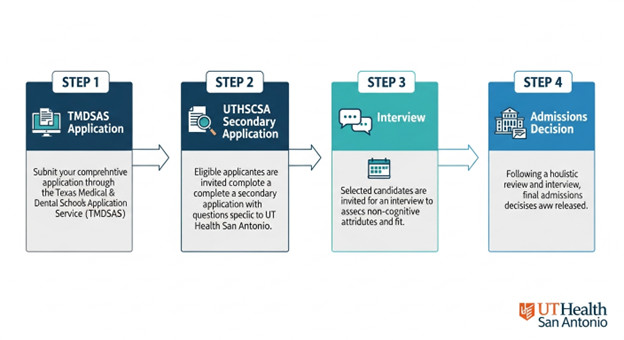
- Navigating the Application Process: Your Step-by-Step Guide
- Excelling in the Interview: Your Chance to Shine
- The UTHSCSA Medical School Curriculum: A Deep Dive into Learning
- Conclusion
Welcome to Aspiring Medical Professionals
The pursuit of a medical career is a significant undertaking, one that begins long before medical school applications are submitted. It’s a journey marked by academic rigor, extracurricular exploration, and a growing understanding of the profound responsibility that physicians hold. UT Health San Antonio School of Medicine stands as a premier institution, dedicated to training the next generation of leaders in healthcare, research, and medical education. Their commitment extends beyond the classroom, focusing on preparing physicians who are not only knowledgeable but also compassionate, innovative, and deeply connected to the communities they serve. For students who dream of making a tangible impact on patient lives and advancing medical science, UT Health San Antonio offers a distinctive and exceptional environment.
What This Guide Will Cover
This guide serves as your definitive roadmap to navigating the UT Health San Antonio School of Medicine admissions process. We will begin by exploring the unique appeal of UT Health San Antonio, examining its mission, its advantageous location in San Antonio, and its robust legacy in medical innovation and research. Subsequently, we will delve into the core philosophy of their admissions, focusing on the holistic review process and the key qualities that successful applicants embody, moving beyond mere academic metrics. Essential admission requirements, including academic prerequisites, GPA, MCAT scores, and letters of recommendation, will be detailed comprehensively. A significant portion of this guide is dedicated to a step-by-step walkthrough of the application process, from the initial TMDSAS application to the UTHSCSA-specific secondary application and considerations for international students. Furthermore, we will provide in-depth advice on how to prepare for and excel in the interview, a critical component of the selection process. Finally, we will offer a glimpse into the innovative UTHSCSA medical school curriculum, preparing you for what to expect in your medical education journey.
Why UT Health San Antonio? A Unique Path in Medical Education
Choosing a medical school is one of the most critical decisions an aspiring physician will make. UT Health San Antonio School of Medicine offers a compelling proposition, distinguished by its mission, its strategic location, and its enduring commitment to advancing healthcare through groundbreaking research and exceptional medical education. It is an institution that not only trains physicians but also cultivates compassionate caregivers and innovative thinkers dedicated to improving the health of Texas and beyond.
The UTHSCSA Mission and Vision
The University of Texas Health Science Center at San Antonio, often referred to as UT Health San Antonio, is driven by a profound mission: to discover, to learn, to heal, and to teach. This mission permeates every aspect of its operations, from pioneering research in its laboratories to providing comprehensive patient care and educating the healthcare professionals of tomorrow. The institution envisions a future where advanced medical knowledge and compassionate care are accessible to all, particularly in underserved communities. For the School of Medicine, this translates into a commitment to graduating physicians who possess not only a deep understanding of medical science but also a strong ethical compass, a dedication to lifelong learning, and a passion for serving diverse populations. Applicants who align with these values will find a strong resonance with the institution’s ethos.
Advantages of Studying in San Antonio
The vibrant city of San Antonio offers a unique and enriching environment for medical education. As the seventh-largest city in the United States, San Antonio boasts a burgeoning healthcare sector, providing students with unparalleled opportunities for clinical training and exposure to a wide array of health challenges and patient demographics. The city’s rich cultural tapestry, influenced by its deep Hispanic heritage, offers a unique perspective on community health and patient interaction, fostering cultural competency among students. Furthermore, San Antonio’s status as a major medical hub, home to the extensive South Texas Medical Center, allows UT Health San Antonio students to engage with a diverse ecosystem of hospitals, research institutions, and healthcare providers, facilitating invaluable networking and learning experiences. The cost of living in San Antonio is also generally more affordable compared to other major metropolitan areas in the United States, making it an attractive location for students managing the financial demands of medical school.
A Legacy of Innovation and Research Strength
UT Health San Antonio has long been recognized for its formidable research enterprise and its contributions to medical innovation. As a leading academic health science center, it is at the forefront of discoveries in areas such as cancer, neurosciences, aging, and infectious diseases. Students at the School of Medicine benefit directly from this environment, having the opportunity to engage with world-class faculty who are actively shaping the future of medicine. The institution fosters a culture where scientific inquiry is encouraged, providing students with ample opportunities to participate in cutting-edge laboratory research, contribute to clinical trials, and present their findings. This robust research infrastructure not only enhances the educational experience but also equips students with critical thinking skills and a deep understanding of evidence-based medicine, preparing them for diverse career paths that may include academic medicine and scientific discovery.
Understanding the UTHSCSA Applicant: Beyond GPA and MCAT Scores
The admissions committee at UT Health San Antonio School of Medicine seeks more than just high academic achievers. They are looking for individuals who demonstrate the potential to become compassionate, skilled, and ethical physicians, capable of thriving in a dynamic healthcare landscape and contributing meaningfully to the institution’s mission. Understanding their holistic review philosophy is key to crafting a successful application.
The Holistic Review Philosophy
UT Health San Antonio employs a holistic review process, meaning that every aspect of an applicant’s profile is considered. This approach recognizes that academic metrics, while important, do not tell the entire story of a candidate’s potential. The committee evaluates the entirety of an applicant’s experiences, background, and personal qualities to assess their suitability for medical school and the profession. This includes their academic record, standardized test scores, but also their extracurricular activities, volunteer work, research involvement, personal essays, letters of recommendation, and interview performance. The aim is to build a diverse class of students who bring a variety of perspectives, skills, and life experiences, enriching the learning environment for everyone and ensuring a well-rounded physician workforce for the future.
Key Qualities of Successful Applicants
Beyond strong academic credentials, UT Health San Antonio actively seeks applicants who exhibit a constellation of personal attributes crucial for success in medicine and for embodying the institution’s values. Leadership is highly valued; this can manifest in various ways, such as leading a student organization, initiating a community project, or taking on significant responsibilities in a team setting. Resilience and perseverance are essential, demonstrated through overcoming challenges, learning from setbacks, and maintaining commitment in the face of adversity. Empathy and compassion are fundamental qualities, showcased through meaningful interactions with diverse populations and a genuine desire to alleviate suffering. Teamwork and collaboration are critical in healthcare, so experiences where an applicant has worked effectively with others are highly regarded. Furthermore, critical thinking, problem-solving skills, and a commitment to service and community engagement are consistently sought. Applicants who can articulate how their experiences have cultivated these qualities, and how they align with UT Health San Antonio’s mission, will present a compelling case.
Essential Admission Requirements: Building Your Foundation
Meeting the fundamental academic and standardized testing requirements is the bedrock of any medical school application. UT Health San Antonio has specific prerequisites that all applicants must satisfy to be considered for admission.
Academic Prerequisites
Prospective students must demonstrate a strong foundation in the sciences. While a specific major is not mandated, applicants are expected to have completed a minimum number of credit hours in core science subjects. These typically include a full academic year each of:
- General Biology with laboratory
- General Chemistry with laboratory
- Organic Chemistry with laboratory
- Physics with laboratory
- Biochemistry
- Mathematics (Calculus and/or Statistics)
- English Composition and Literature
It is crucial for applicants to consult the most current official admissions requirements on the UT Health San Antonio School of Medicine website for the precise course equivalencies and any updated or additional prerequisite recommendations. Successful completion of these courses with strong grades indicates an applicant’s preparedness for the rigorous scientific coursework at the medical school level.
GPA and Academic Performance
A strong Grade Point Average (GPA) is a significant indicator of an applicant’s academic capability and discipline. UT Health San Antonio, like most medical schools, carefully reviews an applicant’s undergraduate transcripts. While there isn’t a strict cutoff GPA, applicants are generally expected to have a competitive overall GPA, with a particular emphasis on their GPA in science courses (often referred to as the “science GPA” or “BCPM GPA” – Biology, Chemistry, Physics, Math). A strong academic record reflects a sustained ability to master complex material and demonstrates the diligence required for medical education. Applicants with a lower GPA should strive to compensate with exceptional performance on the MCAT and a compelling narrative of growth and academic improvement throughout their college years.
The Medical College Admission Test (MCAT)
The MCAT is a standardized, multiple-choice examination designed to assess a student’s knowledge of science concepts and principles prerequisite to the study of medicine. It also evaluates critical analysis, reasoning, and writing skills. A strong MCAT score is a vital component of the application to UT Health San Antonio, serving as a standardized measure of academic readiness across all applicants. Applicants are typically advised to take the MCAT after completing most of their prerequisite coursework, ensuring they have a solid scientific foundation. It is essential to prepare thoroughly for the MCAT, as competitive scores signal a candidate’s ability to handle the demanding curriculum. Many applicants retake the MCAT to improve their scores. Applicants should aim for scores that align with the typical performance of admitted students, though the admissions committee again reviews this in the context of the applicant’s entire profile.
Letters of Recommendation
Letters of recommendation provide the admissions committee with invaluable third-party insights into an applicant’s character, academic abilities, work ethic, and personal attributes. UT Health San Antonio typically requires a minimum number of letters, often including at least one from a science professor and one from a pre-medical advisor or committee. Applicants should also seek recommendations from individuals who can speak to their experiences in leadership, research, volunteerism, or clinical settings, providing a well-rounded perspective. It is crucial to choose recommenders who know the applicant well and can write a detailed, personalized letter highlighting specific strengths and examples. Applicants should provide their recommenders with ample time, their CV, personal statement draft, and any specific instructions from the medical school to facilitate the strongest possible letter.
Navigating the Application Process: Your Step-by-Step Guide
The application process for UT Health San Antonio School of Medicine involves multiple stages, requiring meticulous attention to detail and strategic preparation. Understanding each step is crucial for submitting a complete and compelling application.
The Primary Application: TMDSAS
For applicants seeking admission to Texas medical schools, including UT Health San Antonio, the primary application is submitted through the Texas Medical and Dental Schools Application Service (TMDSAS). TMDSAS serves as the central portal for all public medical schools in Texas. Applicants must create an account on the TMDSAS website and complete the comprehensive application, which includes sections for biographical information, academic history (listing all college courses and grades), standardized test scores (MCAT), extracurricular activities (detailing volunteer work, research, employment, leadership roles, and other experiences), personal essays (including the personal statement), and letters of recommendation. The TMDSAS application requires detailed descriptions of experiences, encouraging applicants to highlight their skills, insights gained, and contributions. It is advisable to begin working on the TMDSAS application well in advance of the deadline, as it is an extensive document.
The Secondary Application: UTHSCSA Specifics
Once TMDSAS verifies your primary application, UT Health San Antonio will invite selected applicants to complete a secondary application. This application is specific to the institution and provides an opportunity for applicants to further demonstrate their interest in UT Health San Antonio and address specific aspects of their candidacy. The secondary application typically includes several essay questions, often probing an applicant’s motivations for pursuing medicine, their understanding of UTHSCSA’s mission and values, their experiences with diverse populations, their contributions to leadership and teamwork, and their awareness of current healthcare issues. Applicants should approach each essay thoughtfully, providing specific examples and genuine insights that reflect their unique experiences and aspirations. Thorough research into UTHSCSA’s programs, faculty, and community initiatives is essential for tailoring responses effectively.
Background Check and Ethical Considerations
Throughout the application process, honesty and integrity are paramount. Applicants will undergo background checks, and any discrepancies or omissions on the application can have serious consequences, including disqualification. It is essential to be transparent and accurate in all submitted information, from academic transcripts and test scores to descriptions of extracurricular activities and any past disciplinary actions. UT Health San Antonio, like all medical schools, holds its students to high ethical standards, and this is assessed from the very initial stages of the application. Any history of academic dishonesty, criminal activity, or professional misconduct must be disclosed truthfully.
For International Applicants
International applicants, including those from countries outside the United States, must meet the same rigorous academic and testing requirements as domestic applicants. They will also need to submit official transcripts, which may require evaluation by a credential evaluation service to determine their US equivalency. International applicants must demonstrate proficiency in English, often through standardized tests like the TOEFL or IELTS, unless their undergraduate education was conducted entirely in English. Furthermore, international applicants need to address their visa status and financial resources to support their medical education in the United States. It is strongly recommended that international applicants meticulously review the specific requirements outlined on the UT Health San Antonio School of Medicine’s admissions website, as these can be nuanced and require careful planning well in advance of the application cycle.
Transfer or Advanced Standing Applications
For individuals seeking to transfer from another medical school or apply for advanced standing, the process is highly competitive and often limited. UT Health San Antonio School of Medicine generally does not accept transfer students unless there are exceptional circumstances, such as completing the first two years of medical education at an accredited institution and seeking to transfer due to extenuating personal reasons. Decisions are made on a case-by-case basis, and applicants are typically required to submit a detailed explanation of their reasons for seeking a transfer, along with all relevant academic credentials and letters of recommendation. Advanced standing is rarely granted. Prospective applicants should contact the admissions office directly for the most up-to-date information on policies regarding transfers and advanced standing.
Excelling in the Interview: Your Chance to Shine
The interview is a pivotal stage in the admissions process, offering the admissions committee a deeper understanding of your personality, communication skills, and your suitability for medical education at UT Health San Antonio. It’s an opportunity to showcase the qualities that may not be fully captured on paper.
Understanding the Interview Format
UT Health San Antonio typically utilizes a multi-component interview process, which may include traditional one-on-one interviews with faculty members, current medical students, or members of the admissions committee. In some cases, they may employ a Multiple Mini-Interview (MMI) format, which consists of several short, independent stations designed to assess different skills and attributes, such as critical thinking, ethical reasoning, communication, and problem-solving in various simulated scenarios. The exact format can vary from year to year, so it is essential to stay informed by checking the official admissions website for the most current information. Regardless of the format, the interview aims to provide a comprehensive assessment of the applicant beyond their academic record.
Preparing for Success
Thorough preparation is the cornerstone of a successful interview. Begin by deeply understanding UT Health San Antonio’s mission, vision, curriculum (particularly the CIRCLE curriculum), and its role within San Antonio and the broader healthcare landscape of Texas. Review your own application thoroughly, refreshing your memory on the experiences and essays you have submitted. Practice articulating your motivations for medicine, your career goals, and how your experiences have prepared you. Engage in mock interviews with peers, mentors, or pre-medical advisors to refine your responses and become comfortable discussing your strengths and weaknesses. Prepare thoughtful questions to ask the interviewer, demonstrating your engagement and genuine interest in the institution. Professional attire and punctual attendance are standard expectations for any interview.
What Interviewers Are Looking For
During the interview, the committee is assessing a range of competencies. They are keen to gauge your communication skills, including your ability to articulate thoughts clearly, listen attentively, and engage in thoughtful dialogue. Critical thinking and problem-solving abilities will be evaluated, often through situational judgment questions or discussions about challenging experiences. Ethical reasoning and judgment are paramount; interviewers will be looking for your ability to navigate complex ethical dilemmas with maturity and sound judgment. Your self-awareness, including your understanding of your strengths and areas for development, is also important. Above all, they seek to understand your motivation for medicine, your commitment to service, and whether you possess the empathy and professionalism necessary to be an excellent physician. Demonstrating a genuine interest in UT Health San Antonio and a clear alignment with its values will significantly strengthen your candidacy.
The UTHSCSA Medical School Curriculum: A Deep Dive into Learning
The curriculum at UT Health San Antonio School of Medicine is designed to provide students with a comprehensive and forward-thinking medical education, preparing them to meet the evolving challenges of modern healthcare.
The Innovative CIRCLE Curriculum
UT Health San Antonio has implemented the CIRCLE curriculum (Curriculum for Integrated, Relevant, Collaborative, and Lifelong Learning). This innovative approach moves away from traditional, siloed learning by integrating basic sciences with clinical medicine from the outset. The CIRCLE curriculum emphasizes active learning, problem-based learning, and early clinical exposure. Students engage in interdisciplinary case studies, fostering a deeper understanding of diseases and patient care by connecting foundational scientific principles directly to clinical application. This integrated approach aims to develop critical thinking, clinical reasoning, and collaborative skills from the beginning of a student’s medical journey.
Preclinical Years: Building Foundational Knowledge
The initial years of medical education at UTHSCSA are dedicated to building a robust foundation in the biomedical sciences. Through the CIRCLE curriculum, students will delve into subjects such as anatomy, physiology, biochemistry, pharmacology, and pathology, but these will be taught within the context of clinical scenarios. This means students will begin to understand how these scientific principles translate into patient symptoms, diagnoses, and treatment strategies early on. Learning methods often include lectures, small group discussions, laboratory experiences, and simulation-based training, all designed to promote active engagement and knowledge retention. Emphasis is placed on developing strong study habits and critical thinking skills necessary for lifelong learning.
Clinical Years: Hands-On Patient Care
The latter years of medical school at UT Health San Antonio focus heavily on clinical experiences, providing students with essential hands-on patient care opportunities. Students rotate through various core medical specialties, including internal medicine, pediatrics, surgery, obstetrics and gynecology, psychiatry, and neurology. These rotations take place within the extensive network of affiliated hospitals and clinics in San Antonio, part of the bustling South Texas Medical Center. Under the supervision of experienced faculty physicians and residents, students will participate directly in patient management, develop diagnostic skills, and refine their clinical decision-making abilities. This immersive experience is crucial for solidifying knowledge, developing essential interpersonal skills, and preparing for residency training.
Conclusion
Gaining admission to UT Health San Antonio School of Medicine is a competitive but achievable goal for dedicated and well-prepared applicants. This guide has illuminated the multifaceted aspects of the admissions process, from understanding the institution’s distinctive mission and values to navigating the rigorous academic requirements and the intricate application stages. Emphasizing a holistic approach, UT Health San Antonio seeks individuals who not only excel academically but also demonstrate leadership, compassion, resilience, and a deep commitment to service. By meticulously preparing your application, highlighting your unique experiences, and thoughtfully articulating your motivations through essays and interviews, you can effectively showcase your potential to thrive within their esteemed medical education program. The innovative CIRCLE curriculum and the vibrant San Antonio environment further underscore why UT Health San Antonio remains a premier choice for aspiring physicians dedicated to making a profound impact on healthcare. Your journey to becoming a physician at UT Health San Antonio begins with a clear understanding of these elements and a strategic approach to each step of the admissions process.
Frequently Asked Questions About UT Health San Antonio Medical School
1. What GPA do you need to get into UT Health San Antonio Long School of Medicine?
The average GPA for enrolled students at the Joe R. and Teresa Lozano Long School of Medicine is approximately 3.87. The school considers both science (BCPM) and cumulative GPA, and a strong upward trend can partially offset earlier academic struggles. Because this is a Texas public medical school, applicants apply through TMDSAS (Texas Medical and Dental Schools Application Service), not AMCAS, and the TMDSAS application opens each May for the following entering class.
2. What MCAT score do you need for UT Health San Antonio Long School of Medicine?
The average MCAT score for matriculants at Long School of Medicine is 518, which places the typical admitted student around the 96th percentile. Competitive applicants generally aim for a score of 513 or higher, though the school evaluates candidates holistically. MCAT scores are reviewed alongside GPA, experiences, and personal attributes to assess overall readiness for the rigors of medical training.
3. What is the acceptance rate at UT Health San Antonio Long School of Medicine?
The overall acceptance rate at Long School of Medicine is approximately 4%, making it one of the more selective public medical schools in Texas. For the 2025–2026 academic year, roughly 232 students enrolled in the entering class. Because the school strongly prioritizes Texas residents, in-state applicants face meaningfully better odds than the headline acceptance rate suggests for out-of-state applicants.
4. How many applicants does UT Health San Antonio Long School of Medicine receive each year?
Long School of Medicine typically receives several thousand applications through TMDSAS each application cycle. The majority of applicants are Texas residents, as the school’s admissions mission centers on producing physicians who will serve the citizens of Texas, particularly in underserved South Texas communities. Out-of-state and international applicants comprise a very small fraction of the applicant pool.
5. Does UT Health San Antonio Long School of Medicine accept out-of-state applicants?
Long School of Medicine is primarily a Texas-focused institution and the vast majority of its seats are reserved for Texas residents who apply through TMDSAS. A small number of out-of-state applicants may be considered, but they face significantly lower odds of admission and higher tuition — $41,764 per year compared to $26,348 for in-state residents for 2025–2026. Out-of-state applicants should demonstrate an exceptionally compelling reason to train and practice medicine in Texas.
6. What is the interview format at UT Health San Antonio Long School of Medicine?
Interview invitations at Long School of Medicine involve two components. First, all invited applicants must complete a Standard One-Way Video Interview (SOWVI), which must be submitted no later than the day of the on-site interview. The live interview day itself is a traditional format with one faculty committee member and one medical student interviewer; interview days are held primarily on Fridays from August through December, with some Tuesday dates also available.
7. Does UT Health San Antonio Long School of Medicine require secondary essays?
Long School of Medicine does not require written secondary essays as part of its secondary application, making it one of the more streamlined secondaries in the TMDSAS system. The school does require applicants to complete both CASPer and Duet assessments prior to or by the interview date; however, these results are not used for screening and are only reviewed after a candidate has been interviewed. This means the TMDSAS primary application and the one-way video interview carry the most weight in initial evaluation.
8. How much does it cost to attend UT Health San Antonio Long School of Medicine?
For the 2025–2026 academic year, tuition and fees at Long School of Medicine are approximately $26,348 per year for Texas residents and $41,764 per year for non-residents. As a state-funded Texas institution, it offers among the lowest tuition rates for in-state medical students in the country. When room, board, and living expenses in San Antonio are included, the total estimated cost of attendance runs higher, but the school’s affordability for Texas residents is a significant draw.
9. What is the South Texas and border health focus at UT Health San Antonio Long School of Medicine?
Long School of Medicine has an explicit institutional mission to address the health needs of South Texas and the U.S.-Mexico border region, which is home to a large, medically underserved Hispanic population. The school trains physicians with particular cultural and clinical competency for this community, and research programs specifically target diabetes, cancer, and aging — diseases that disproportionately affect this population. San Antonio’s demographics, which mirror projected future U.S. national demographics, make it an ideal site for translational clinical research and community medicine training.
10. What research strengths does UT Health San Antonio Long School of Medicine offer?
UT Health San Antonio is the largest academic research institution in South Texas, with an annual research portfolio exceeding $436 million. The Long School of Medicine houses world-recognized programs in Alzheimer’s disease, diabetes, cancer, aging, and kidney disease, and is home to the only NCI-designated Cancer Center in Central and South Texas. The school’s Office for Research also places a special emphasis on health disparities affecting Hispanic and military populations, reflecting San Antonio’s unique position as both a border city and a major U.S. military hub.