
Charting Your Path to HMSOM
Embarking on the journey to medical school is a significant undertaking, demanding meticulous preparation, a deep understanding of institutional philosophies, and a clear vision of one’s future role in healthcare. For aspiring physicians drawn to a model of medical education that champions innovation, embraces a profound commitment to community, and leverages the power of a vast, integrated health network, the Hackensack Meridian School of Medicine (HMSOM) stands out. This guide serves as your insider’s perspective, dissecting the essence of HMSOM and providing a strategic roadmap to navigate its competitive admissions process. We aim to demystify the application, illuminate the unique strengths of HMSOM, and empower you to present your most compelling case for admission.
This blog will cover:
- Charting Your Path to HMSOM
- Why an “Insider’s Guide”?
- What Makes HMSOM Unique: A Vision for Future Physicians
- The Ideal HMSOM Applicant: Beyond the Numbers
- Navigating the Application Process: A Step-by-Step Guide
- Financing Your Medical Education: Practical Considerations
- What to Expect After Applying: Interviews and Decisions
- The HMSOM Experience: Life as a Medical Student
- Conclusion: Your Journey to Becoming a Physician
Welcome to a New Era of Medical Education
The landscape of medical education is in constant evolution, adapting to the dynamic needs of healthcare and the burgeoning complexities of patient care. HMSOM emerged from this understanding, founded with a clear mission to train physicians who are not only scientifically rigorous and clinically adept but also deeply compassionate, socially conscious, and prepared to lead in an ever-changing world. Unlike traditional institutions, HMSOM was conceived to integrate cutting-edge educational methodologies with unparalleled clinical opportunities, fostering an environment where learning extends far beyond the classroom. The school’s establishment represents a forward-thinking approach to medical training, prioritizing the development of the whole physician, equipped to address the diverse health challenges of the 21st century.
Why an “Insider’s Guide”?
Navigating the medical school application process can feel like deciphering an intricate puzzle. While numerous resources offer general advice, an “insider’s guide” provides a more nuanced and targeted perspective. This article aims to bridge the gap between external perception and internal realities. We delve into the specific ethos, curriculum design, and applicant expectations that define HMSOM. By understanding what truly sets HMSOM apart—from its innovative Smart 3+1 curriculum to its deep integration with Hackensack Meridian Health—applicants can better align their own experiences and aspirations with the school’s core values. This guide is designed to equip you with the specific knowledge needed to articulate your fit, showcase your potential, and ultimately, enhance your chances of a successful application to this esteemed institution.
What Makes HMSOM Unique: A Vision for Future Physicians
The Hackensack Meridian School of Medicine is more than just an academic institution; it is a living embodiment of a commitment to transforming healthcare through education, research, and service. Its uniqueness stems from a confluence of innovative educational structures, a profound dedication to humanistic values, and the strategic advantage of being embedded within one of New Jersey’s largest and most comprehensive healthcare systems. HMSOM envisions physicians who are not only masters of medicine but also stewards of public health, advocates for equity, and leaders in innovation, prepared to serve the diverse communities of New Jersey and beyond.
A Forward-Thinking Curriculum: The Smart 3+1 Structure
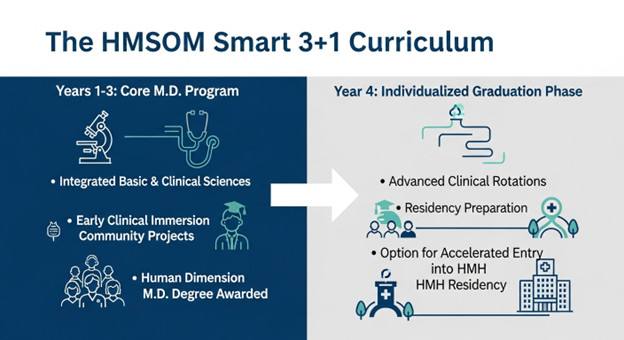
At the heart of HMSOM’s innovative approach lies its distinctive Smart 3+1 curriculum. This model redefines the traditional medical school progression, offering a dynamic and immersive learning experience. The first three years are dedicated to foundational medical sciences and early clinical exposure, utilizing a problem-based learning approach that encourages critical thinking and interdisciplinary collaboration. This phase is designed to build a robust scientific understanding while simultaneously integrating students into clinical settings, allowing them to apply theoretical knowledge to real-world patient care scenarios from an early stage. Virtual reality (VR) and augmented reality (AR), for instance, are increasingly used tools for anatomy education and surgical training, offering immersive learning experiences, and are among the top medical education trends of 2024 [PMLiVE, July 2024]. This forward-thinking integration of technology ensures that HMSOM students are at the forefront of educational innovation.
The fourth year is a capstone experience, offering significant flexibility for advanced clinical electives, focused research endeavors, and personalized learning paths. This structured yet adaptable framework ensures that graduates are not only academically prepared for their medical licensing exams but are also well-positioned for competitive residency programs and the diverse demands of modern medical practice. The 3+1 structure is a deliberate design choice aimed at producing physicians who are adaptable, deeply knowledgeable, and ready for the challenges of residency and beyond, possessing a unique blend of early clinical acumen and specialized expertise.
The Human Dimension: Cultivating Compassionate Leaders
Beyond academic rigor, HMSOM places a profound emphasis on the “Human Dimension.” This core philosophy recognizes that true medical excellence is inseparable from empathy, cultural competency, and a deep-seated commitment to service. The Human Dimension program is woven into the fabric of the curriculum and student life, aiming to cultivate physicians who understand and address the multifaceted needs of their patients. This includes developing strong interpersonal skills, ethical reasoning, and an awareness of the social determinants of health. Students are encouraged to engage with diverse populations, fostering an understanding of various cultural perspectives and individual patient experiences.
This focus cultivates a physician workforce that is not only adept at treating illness but also skilled in providing compassionate care, advocating for vulnerable communities, and promoting health equity. By prioritizing these humanistic qualities, HMSOM actively shapes medical students into leaders who are driven by a genuine desire to serve and improve the well-being of all. This commitment ensures that graduates are well-prepared to navigate the ethical complexities of medicine and to become compassionate advocates for their patients and communities.
Leveraging a World-Class Health Network for Clinical Excellence
A defining characteristic of the Hackensack Meridian School of Medicine is its profound integration with Hackensack Meridian Health (HMH), one of New Jersey’s largest and most comprehensive healthcare systems. This affiliation provides HMSOM medical students with unparalleled opportunities for clinical immersion across a vast network of hospitals, outpatient centers, and specialized facilities. Students gain exposure to an incredibly diverse patient population, encompassing a wide spectrum of socioeconomic backgrounds, cultural identities, and health conditions. This breadth of experience is crucial for developing well-rounded physicians capable of treating a broad range of medical issues.
The HMH network offers a rich environment for hands-on learning under the guidance of leading physicians and specialists across virtually every medical discipline. From large academic medical centers like Hackensack University Medical Center to community hospitals and specialized institutes, students encounter varied healthcare settings, equipping them with practical skills and diverse clinical perspectives. This direct engagement within a leading health system provides invaluable mentorship opportunities and ensures that HMSOM graduates are not only academically prepared but are also seasoned by extensive, real-world clinical practice, setting them apart as they enter residency and their careers.
A Hub for Discovery and Innovation
HMSOM is committed to advancing medical knowledge through robust research initiatives. The school fosters a vibrant culture of inquiry, encouraging medical students to engage in discovery and innovation alongside distinguished faculty. Students have access to a wide array of research opportunities, spanning basic science, translational research, clinical trials, and community-based health studies. This engagement with research is an integral part of the educational experience, designed to cultivate scientific curiosity, analytical skills, and an understanding of evidence-based medicine.
The school’s location within the Hackensack Meridian Health system provides unique advantages for research, allowing students to contribute to studies that have direct clinical impact and address the health needs of the local population. By participating in research, HMSOM medical students develop critical thinking abilities and learn to contribute to the ever-evolving field of medicine, preparing them to be lifelong learners and innovators in their chosen specialties. This commitment to research ensures that HMSOM is not only educating future physicians but also contributing to the discovery of new treatments and advancements in healthcare.
The Ideal HMSOM Applicant: Beyond the Numbers
The admissions committee at the Hackensack Meridian School of Medicine employs a holistic review process, seeking individuals who possess not only strong academic credentials but also a genuine alignment with the school’s mission and values. While quantitative measures are important, they are considered within the broader context of an applicant’s experiences, character, and potential to contribute to the medical profession and the HMSOM community.
Academic Foundations: MCAT and GPA Insights
A solid academic record is foundational for medical school admission. Applicants are expected to demonstrate a strong performance in prerequisite coursework and on the Medical College Admission Test (MCAT). While HMSOM values academic excellence, it is crucial to understand that specific GPA and MCAT score cutoffs are not rigidly defined. Instead, the admissions committee reviews these metrics as indicators of an applicant’s preparedness for the rigorous academic demands of medical school. Applicants should aim for scores that reflect a strong understanding of scientific principles and problem-solving abilities. The average cost of tuition and fees for a first-year medical student in the 2023-2024 school year was $58,327 [SoFi, August 2025], underscoring the significant financial commitment alongside academic preparation.
Demonstrating Mission Alignment and Values
A critical aspect of the HMSOM application is demonstrating how your personal values and experiences align with the school’s core mission. HMSOM is deeply committed to social justice, diversity, equity, and community engagement. Applicants are encouraged to reflect on their experiences—whether through volunteer work, personal narratives, or advocacy—that showcase a genuine commitment to these principles. Highlighting experiences that demonstrate an understanding of health disparities, a passion for serving underserved populations, or a dedication to promoting equity in healthcare will resonate strongly with the admissions committee. This alignment signals that you are not only seeking to become a physician but to become a physician who embodies HMSOM’s ethos of compassionate, equitable, and community-focused care.
Essential Qualities: More Than Just Grades
Beyond academics and mission alignment, HMSOM seeks individuals who exhibit essential personal qualities that are vital for success in medicine and for contributing positively to the school’s community. These include leadership potential, resilience in the face of challenges, strong communication and interpersonal skills, intellectual curiosity, and a demonstrable commitment to service. Experiences that showcase teamwork, problem-solving under pressure, empathy, and a willingness to learn from diverse perspectives are highly valued. The admissions committee looks for candidates who are not only intelligent but also possess the maturity, integrity, and drive to excel as future physicians and contribute meaningfully to the healthcare field.
Navigating the Application Process: A Step-by-Step Guide
The path to admission at HMSOM, like any competitive medical school, involves a structured and thorough application process. Understanding each stage and approaching it with strategic preparation is key to presenting your candidacy effectively.
The AMCAS Primary Application: Your First Impression
The application process begins with the American Medical College Application Service (AMCAS) primary application. This comprehensive document serves as your initial introduction to the admissions committee. It requires detailed information about your academic history, including transcripts, GPA, and MCAT scores. Crucially, it includes your Personal Statement, where you articulate your motivations for pursuing medicine and your aspirations. The Work and Activities section is your opportunity to detail your experiences in research, clinical shadowing, volunteer work, leadership roles, and any other relevant involvements. Each entry should be concise yet descriptive, highlighting your contributions, lessons learned, and the impact you made. The total number of students enrolled in U.S. medical schools reached a new high of 99,562 in the 2024-25 academic year, an increase of 1.8% from the previous school year [AAMC, January 2025], indicating a competitive but growing field.
Crafting a Compelling Secondary Application
Upon initial review of your AMCAS application, eligible applicants will receive an invitation to complete HMSOM’s secondary application. This stage provides a more personalized opportunity to demonstrate your fit with the school. Secondary applications typically include specific essay prompts designed to delve deeper into your experiences, motivations, and alignment with HMSOM’s mission. These prompts often focus on areas such as your understanding of healthcare disparities, your commitment to diversity, your leadership experiences, and your reasons for choosing HMSOM specifically.
When responding to these prompts, authenticity, introspection, and specificity are paramount. Connect your experiences directly to the values and mission of HMSOM. For instance, if a prompt asks about your commitment to social justice, draw upon concrete examples from your past that illustrate this commitment and explain what you learned from those experiences. This is your chance to showcase your unique perspective and personality beyond the more standardized format of the primary application.
The CASPer Examination
Certain medical schools, including potentially HMSOM, may require applicants to complete the CASPer (Computer-Based Assessment for Sampling Personal Characteristics) examination. CASPer is an online situational judgment test designed to assess non-cognitive skills such as empathy, ethics, and professionalism. It presents real-life scenarios and asks candidates to respond to questions about how they would act or what their reasoning is. Preparation for CASPer involves understanding its format and practicing responses to common types of scenarios. It is another layer in the holistic review process, aiming to evaluate qualities that are difficult to assess through traditional academic metrics. Applicants should always verify the most current application requirements on the official HMSOM admissions website.
Letters of Recommendation and Supporting Documents
Letters of recommendation (LORs) play a pivotal role in an applicant’s file. It is essential to secure these letters from individuals who know you well and can speak to your strengths, character, and potential for medical school. Typically, applicants will need a letter from a pre-health advisor or committee, and often one or two additional letters from professors or mentors who can attest to your academic abilities, research contributions, or personal qualities. Provide your recommenders with ample time, along with your CV, personal statement, and any relevant information about HMSOM’s mission and values, to help them write a strong, personalized letter. Supporting documents also include official transcripts, which are verified during the application process.
The Application Review Process: What Happens Next
Once your complete application—including the AMCAS, secondary essays, LORs, and any required standardized tests—is submitted, it undergoes a thorough review. HMSOM utilizes a holistic admissions process, meaning that all aspects of your application are considered in conjunction with one another. This process involves initial screening, committee review, and eventually, invitations for interviews. The goal is to gain a comprehensive understanding of each applicant, assessing not only their academic preparedness but also their potential for success as a physician and their alignment with the school’s values. The United States is projected to face a physician shortage of up to 86,000 physicians by 2036 [AAMC, March 2024], underscoring the critical need for well-trained physicians graduating from institutions like HMSOM.
Financing Your Medical Education: Practical Considerations
The pursuit of a medical education is a significant financial undertaking. Understanding the costs involved and the available financial aid opportunities is a crucial part of the planning process for aspiring medical students.
Understanding Tuition and Costs
The cost of medical school encompasses tuition, fees, living expenses, books, and other supplies. While tuition varies by institution, the average cost of tuition and fees for a first-year medical student in the 2023-2024 school year was $58,327 [SoFi, August 2025]. HMSOM provides detailed information regarding tuition and associated costs on its official website. Prospective applicants are strongly encouraged to thoroughly review this information to gain a clear understanding of the financial commitment required for their medical education at HMSOM. Planning early for these expenses is essential.
Scholarship and Financial Aid Opportunities
To help alleviate the financial burden, HMSOM offers various scholarship and financial aid opportunities. These can include institutional scholarships, grants, federal student loans, and external scholarship programs. The school’s financial aid office is dedicated to assisting students in navigating the complex landscape of financial aid and exploring all available avenues for funding their medical education. Applicants should actively research these opportunities, understand eligibility requirements, and adhere to application deadlines. The median medical school education debt for the Class of 2023 was $200,000 [AAMC, October 2023], highlighting the importance of seeking financial support.
What to Expect After Applying: Interviews and Decisions
The application process culminates in interviews and the final admissions decision. These stages are critical for both the applicant and the admissions committee to determine the best fit.
The Interview Experience
Following a review of your application, highly qualified candidates may be invited for an interview. The interview serves as a crucial opportunity for the admissions committee to assess your interpersonal skills, critical thinking abilities, communication style, and personal attributes that are not fully captured in written materials. HMSOM typically employs an interview format designed to engage candidates in meaningful conversation. Preparation is key: thoroughly understand your application, reflect on your motivations for medicine and for HMSOM specifically, and be ready to discuss your experiences and perspectives on current healthcare issues. Practicing with mock interviews can be beneficial.
The Decision Process
After completing interviews, the admissions committee deliberates on each candidate. Decisions are typically communicated after all interviews have concluded. Applicants may receive an acceptance, be placed on a waitlist, or receive a rejection. For those accepted, congratulations are in order! You will receive detailed information regarding next steps, including how to accept the offer of admission, financial aid updates, and orientation schedules. The 2024 Main Residency Match successfully filled 93.8% of all positions offered [NRMP, March 2024], demonstrating the strong pathway to residency for graduates. If placed on a waitlist, it signifies that you are a strong candidate, and there is a possibility of admission should space become available. Applicants are encouraged to understand the timeline for decisions and to patiently await communication from the admissions office.
The HMSOM Experience: Life as a Medical Student
Life as a medical student at HMSOM is an immersive journey characterized by rigorous academic pursuit, extensive clinical engagement, and a supportive community. The school’s unique structure and affiliations provide a rich and varied experience that prepares students for successful careers in medicine.
Life on the Nutley Campus
The primary campus of the Hackensack Meridian School of Medicine is located in Nutley, New Jersey. This state-of-the-art facility provides a modern and conducive learning environment. Students benefit from advanced laboratories, collaborative study spaces, and access to cutting-edge educational technologies. The campus is designed to foster interaction among students, faculty, and researchers, creating a dynamic academic atmosphere. Beyond academics, student life at HMSOM is enriched by various student organizations, interest groups, and wellness initiatives that support the holistic development of its medical students.
Clinical Rotations and Affiliates
The integration with Hackensack Meridian Health is central to the HMSOM student experience. Clinical rotations begin early in the curriculum, allowing students to gain practical experience across the system’s diverse network of hospitals and clinical sites. This exposure spans various specialties and care settings, from urban academic centers to suburban clinics, providing a comprehensive understanding of patient care delivery. This broad clinical experience is invaluable, preparing medical students for the realities of residency and practice. Women comprised 56.6% of applicants, 55.4% of matriculants, and 54.6% of total enrollment in U.S. medical schools in 2023-24, marking the fifth consecutive year they formed the majority in these three distinct groups [AAMC, December 2023].
Residency and Career Paths
Graduates of the Hackensack Meridian School of Medicine are exceptionally well-prepared for the next stage of their careers. The combination of the Smart 3+1 curriculum, extensive clinical exposure within the HMH network, and a strong foundation in research and humanistic values equips them for highly competitive residency matches across a wide range of specialties. The school provides robust career counseling and support services to guide students in selecting and applying to residency programs. The commitment to fostering physician leaders also means that HMSOM graduates are prepared to pursue careers in academic medicine, community practice, public health, and beyond, addressing critical needs such as the projected physician shortage of up to 86,000 by 2036 [AAMC, March 2024].
Accreditation and Quality Assurance
The Hackensack Meridian School of Medicine is fully accredited by the Liaison Committee on Medical Education (LCME). This accreditation signifies that the school meets rigorous standards for medical education quality, ensuring that graduates receive a high-caliber education and are eligible for licensure and further training. The LCME accreditation process involves comprehensive reviews of curriculum, faculty, resources, and student outcomes. This commitment to quality assurance provides prospective students with confidence in the academic rigor and institutional standing of HMSOM, assuring them that they are receiving an education that is recognized nationally for its excellence. As of December 2023, over half (169 million) of the U.S. population lives in a Mental Health Professional Shortage Area (HPSA) [HRSA, December 2023], highlighting the importance of training physicians in specialized fields.
Conclusion: Your Journey to Becoming a Physician
The Hackensack Meridian School of Medicine offers a distinctive and compelling path for aspiring physicians. Its innovative Smart 3+1 curriculum, deep integration with the Hackensack Meridian Health network, and unwavering commitment to the human dimension of medicine create a unique educational ecosystem. HMSOM seeks not just academically proficient students, but individuals whose values align with its mission of compassionate, equitable, and community-focused healthcare. By understanding the school’s vision, meticulously preparing your application, and authentically showcasing your alignment with its core principles, you can significantly enhance your candidacy. Remember that the admissions process is holistic, valuing your experiences, character, and potential to contribute to the vibrant HMSOM community and the broader medical field. Your journey to becoming a physician is a profound one, and with strategic preparation and a clear understanding of what makes HMSOM exceptional, you can chart a successful course toward achieving your aspirations at this forward-thinking institution.
Frequently Asked Questions About Hackensack Meridian School of Medicine
1. What GPA do you need to get into Hackensack Meridian School of Medicine?
The median GPA for admitted students at Hackensack Meridian School of Medicine (HMSOM) is 3.89. The school considers both science GPA and cumulative GPA, so a strong performance in prerequisite science courses is essential. Given how competitive admissions are, applicants below a 3.7 GPA will face a significantly uphill battle, though strong MCAT scores, clinical experience, and fit with the school’s mission can help offset a slightly lower GPA.
2. What MCAT score do you need for Hackensack Meridian School of Medicine?
The median MCAT score for matriculants at HMSOM is 515, placing admitted students well above the national average of around 511. A score in the 512–518 range is considered competitive for this school. Because HMSOM draws applicants from across the country, having a section score balanced across all four MCAT areas — rather than a high total carried by one strong section — tends to strengthen an application.
3. What is the acceptance rate at Hackensack Meridian School of Medicine?
HMSOM has an acceptance rate of approximately 3.3%, making it one of the more selective medical schools in the United States. In-state New Jersey residents have a notably higher acceptance rate of around 6.8%, compared to roughly 1.6% for out-of-state applicants — a meaningful difference even though HMSOM is a private institution without a formal preference policy. With only around 162 seats in the entering class, competition is intense regardless of residency.
4. How many people apply to Hackensack Meridian School of Medicine each year?
Approximately 5,000 applicants apply to HMSOM each year, and only around 162 students are offered seats in the entering class. The applicant pool skews heavily out-of-state, with about 80% of applicants coming from outside New Jersey. Despite the large national applicant pool, the school enrolls a relatively small class, which keeps acceptance rates low and the community intimate.
5. Does Hackensack Meridian School of Medicine accept out-of-state applicants?
Yes, HMSOM accepts out-of-state applicants — in fact, roughly 49% of each entering class comes from outside New Jersey. However, because HMSOM is a private school with strong ties to the state’s healthcare system and community, New Jersey residents have a significantly higher acceptance rate (6.8% vs. 1.6% for out-of-state). Out-of-state applicants should be especially intentional about articulating why they want to practice medicine in New Jersey and how they align with the school’s mission of serving diverse state communities. Importantly, HMSOM charges the same tuition for in-state and out-of-state students.
6. What is the interview format at Hackensack Meridian School of Medicine?
HMSOM uses a traditional one-on-one interview format, conducted virtually via Zoom. Interviews are described by past applicants as conversational and relatively relaxed, with common questions around “why medicine,” “why Hackensack Meridian,” conflict resolution, and behavioral scenarios. The school does not use an MMI (Multiple Mini-Interview) format. Receiving an interview invitation is itself competitive, as only a small fraction of applicants advance to this stage.
7. What are the secondary essay prompts at Hackensack Meridian School of Medicine?
HMSOM’s secondary application includes three essays, each up to 500 words: (1) Why are you interested in attending Hackensack Meridian School of Medicine? (2) Describe a time when you engaged with a perspective, culture, or experience different from your own — what did you learn, and how did it influence your development? (3) Describe your experiences in medicine or a related field that have prepared you for advanced study, including coursework, clinical work, research, adversity, volunteer work, or employment. The secondary application fee is $80, with fee waivers available through FAP. The deadline has historically fallen in early December, so prompt completion is advised.
8. How much does Hackensack Meridian School of Medicine cost?
Annual tuition and fees at HMSOM are $78,335 for the 2025–2026 academic year, with no distinction between in-state and out-of-state students. When room and board, books, and personal expenses are factored in, total cost of attendance is approximately $118,787 per year. Over four years, total costs can easily exceed $475,000, making it important for prospective students to research scholarship opportunities, loan repayment programs, and HMSOM’s own financial aid offerings.
9. Is Hackensack Meridian School of Medicine the newest private medical school in New Jersey?
Yes — HMSOM opened in 2015 and is the first new private medical school in New Jersey to open in decades, making it one of the newest allopathic medical schools in the country. It was founded in partnership with Hackensack Meridian Health, one of New Jersey’s largest and most comprehensive health networks, giving students immediate and deep access to a 17-hospital health system. This unique founding means the school blends the academic resources of a standalone medical school with the clinical breadth of an integrated health system from day one.
10. What research opportunities are available at Hackensack Meridian School of Medicine?
HMSOM offers robust research opportunities anchored by the Center for Discovery and Innovation (CDI), a world-class research institute established in 2019 with faculty recruited from leading institutions nationwide, with special focus on oncology, infectious diseases, Parkinson’s disease, and musculoskeletal medicine. The school has also launched a Master of Medical Sciences/M.D. dual-degree pathway designed to produce the next generation of physician-scientists with advanced research training. The integrated 3+1 curriculum structure gives students a dedicated fourth year that can be devoted to research, electives, or other scholarly pursuits, making it easier to pursue meaningful projects without sacrificing core clinical training.