
Your Path to Wake Forest School of Medicine
The journey to becoming a physician is a demanding yet deeply rewarding path, and for many aspiring doctors, Wake Forest University School of Medicine represents a pinnacle of excellence in medical education. Known for its innovative curriculum, strong emphasis on research, and commitment to community health, Wake Forest attracts a competitive pool of applicants each year. Navigating the intricacies of the medical school application process can feel daunting, but with a strategic approach and a thorough understanding of what Wake Forest seeks in its students, your chances of success can be significantly enhanced.
This comprehensive guide is designed to demystify the admissions landscape at Wake Forest University School of Medicine. We will delve into the school’s unique ethos, explore the foundational academic and experiential requirements, break down the multifaceted application journey, and highlight special pathways for prospective students. Our aim is to equip you with the knowledge and strategies necessary to craft a compelling application that resonates with the admissions committee, ultimately helping you crack the code to Wake Forest.
This blog will cover:
- Your Path to Wake Forest School of Medicine
- Understanding the Wake Forest Ethos: Beyond the Metrics
- Building Your Foundation: Essential Prerequisites and Experiences
- The Application Journey: A Strategic Step-by-Step Guide
- Special Pathways and Considerations for Applicants
- Financial Planning and the Cost of Medical School
- Conclusion
Welcome to Your Comprehensive Guide
Embarking on the journey toward medical school admissions requires more than just academic prowess; it demands a deep understanding of the institutions you wish to join and a clear articulation of your personal motivations and capabilities. This guide serves as your authoritative roadmap to understanding and successfully navigating the application process for Wake Forest University School of Medicine. We are here to provide you with the insights, strategies, and practical advice needed to present your strongest possible candidacy.
Why Wake Forest Medical School Stands Out: A Legacy of Innovation and Care
Wake Forest University School of Medicine is not just another institution within the vast landscape of medical schools; it is a dynamic and forward-thinking entity committed to shaping the future of medicine. Its reputation is built on a foundation of pioneering educational approaches, groundbreaking research, and an unwavering dedication to patient care and community well-being. Understanding these core tenets is the first step in demonstrating your alignment with their vision.
What This Guide Will Cover: Your Strategic Roadmap to Admission
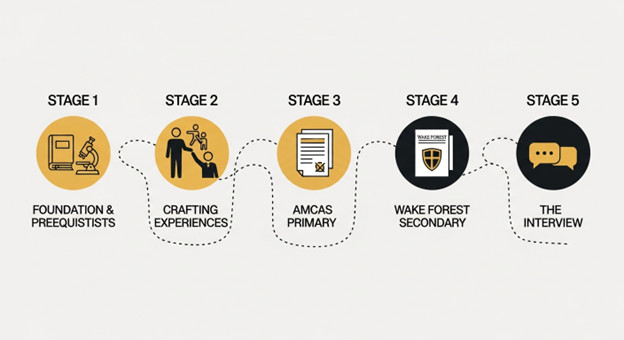
This guide will provide a holistic overview of the Wake Forest admissions process, from understanding the school’s mission and values to the granular details of application components. We will cover essential prerequisites, the strategic presentation of your experiences, the nuances of the AMCAS and secondary applications, and the crucial interview phase. Whether you are just beginning your premed journey or are a seasoned applicant, this resource aims to offer clarity and strategic direction.
Understanding the Wake Forest Ethos: Beyond the Metrics
At Wake Forest University School of Medicine, admission is about more than just impressive numbers. The institution deeply values a holistic approach, seeking individuals who embody its core principles and are poised to contribute meaningfully to the medical community and society at large. Understanding and aligning with the Wake Forest ethos is paramount for a successful application.
The Wake Forest Mission and Values: A Commitment to Community, Health Equity, and Innovation
The mission of Wake Forest University School of Medicine is deeply rooted in its commitment to advancing health, discovering new knowledge, and educating compassionate and skilled physicians. Central to this mission are the values of innovation, collaboration, diversity, and a profound dedication to addressing health disparities and promoting health equity within communities, particularly in Winston-Salem and the broader North Carolina region. Applicants are encouraged to demonstrate how their own experiences and aspirations align with these fundamental principles. This means showing not just an interest in medicine, but a genuine passion for serving diverse populations, tackling complex health challenges, and contributing to a culture of continuous learning and improvement.
The “Wake Ready” Curriculum: An Innovative Approach to Medical Education
Wake Forest is renowned for its innovative “Wake Ready” curriculum, a program designed to prepare students for the evolving landscape of healthcare. This competency-based curriculum emphasizes early clinical exposure, interprofessional collaboration, and the development of essential skills such as critical thinking, problem-solving, and lifelong learning. The curriculum moves beyond traditional lecture-based learning to incorporate active learning strategies, case-based scenarios, and significant opportunities for hands-on experience. Demonstrating an understanding of and enthusiasm for this pedagogical approach can significantly strengthen your application, showing that you are not only academically prepared but also intellectually curious and eager to embrace innovative learning methodologies.
Research Excellence and Clinical Opportunities
Wake Forest University School of Medicine places a strong emphasis on research, viewing it as integral to medical education and the advancement of patient care. Students have ample opportunities to engage in cutting-edge research alongside faculty members across a wide range of disciplines. This can range from basic science investigations to clinical and translational research. Furthermore, the school is deeply integrated with its clinical partners, offering robust clinical experiences from the early stages of medical training. These experiences, particularly within the vibrant healthcare ecosystem of Winston-Salem, allow students to develop practical skills, gain exposure to diverse patient populations, and understand the complexities of patient care in real-world settings. Your application should reflect a genuine engagement with research and a clear understanding of the physician’s role in both discovery and practice.
Diversity and Inclusion: Cultivating a Rich Learning Environment
Wake Forest University School of Medicine is committed to fostering a diverse and inclusive learning environment. The institution recognizes that a variety of backgrounds, perspectives, and experiences enriches the educational journey for all students and ultimately leads to better patient care. This commitment is reflected in their efforts to recruit a diverse student body, faculty, and staff, and to create a culture where all individuals feel valued and respected. In recent years, while U.S. medical schools have faced shifts in diversity metrics, with Black or African American matriculants dropping 11.6% and Hispanic, Latino, or of Spanish Origin matriculants falling by 10.8% in the 2024-2025 application cycle according to AAMC data source: AAMC, 2024-2025, institutions like Wake Forest continue to strive for greater representation. When crafting your application, consider how your unique background, experiences, and commitment to diversity can contribute to this vibrant community.
The Winston-Salem and Charlotte Campuses: Expanding Reach and Impact
Wake Forest University School of Medicine operates across two primary campuses: its historic main campus in Winston-Salem and a newer, rapidly growing campus in Charlotte. The Winston-Salem campus, home to the Bowman Gray Center for Medical Education and the Innovation Quarter, offers a rich environment for research and clinical training. The Charlotte campus expands Wake Forest’s reach, providing additional opportunities for clinical education and community engagement in a larger metropolitan setting. This dual-campus structure allows students to experience diverse healthcare environments and prepares them for a wide range of practice settings. When considering your application, reflect on how exposure to either or both of these environments aligns with your career aspirations.
Building Your Foundation: Essential Prerequisites and Experiences
A strong application to Wake Forest Medical School is built upon a solid foundation of academic achievement, standardized test proficiency, and meaningful experiences. These elements collectively demonstrate your readiness for the rigors of medical school and your potential to excel as a future physician.
Academic Excellence: GPA and Prerequisite Courses
Academic success is a cornerstone of any medical school application. Wake Forest University School of Medicine, like other leading medical schools, looks for applicants who have demonstrated a strong command of foundational scientific knowledge and a consistent track record of academic achievement. For the 2025 entering class, the median undergraduate GPA for matriculants was 3.88, and the mean MCAT score was 512.1 source: AAMC, 2025. While these figures represent impressive academic benchmarks, it’s important to remember that Wake Forest employs a holistic review process. This means that while a strong GPA is crucial, it is evaluated in the context of your overall application. Specific prerequisite courses typically include biology, chemistry (general and organic), physics, and mathematics. Applicants are strongly advised to review the most current prerequisite course requirements directly on the Wake Forest University School of Medicine admissions website, as these can be subject to change.
Mastering the MCAT: Your Standardized Test Strategy
The Medical College Admission Test (MCAT) is a critical component of your application, assessing your knowledge of scientific concepts and principles, as well as your critical analysis and reasoning skills. Achieving a competitive MCAT score is essential for standing out in the applicant pool. As noted, the mean MCAT score for matriculants was 512.1 for the 2025 entering class source: AAMC, 2025. While it’s important to aim for the highest score possible, the AAMC emphasizes that the highest MCAT attempt is reviewed. This means that while multiple attempts are permissible, strategic preparation and focused study are key. Developing a comprehensive study plan, utilizing practice tests, and understanding your strengths and weaknesses are vital steps in preparing for the MCAT.
Clinical Experiences: Hands-On Patient Care and Understanding the Medical Profession
Meaningful clinical experiences are fundamental for any aspiring physician. Wake Forest University School of Medicine seeks applicants who have gained firsthand exposure to patient care settings, allowing them to develop empathy, communication skills, and a genuine understanding of the medical profession. This can encompass a variety of roles, such as shadowing physicians, volunteering in hospitals or clinics, working as a medical scribe, or engaging in direct patient care roles like EMT or Certified Nursing Assistant. The goal is to not only observe medicine but to actively participate in and reflect upon your experiences. These roles provide invaluable insights into the daily realities of being a physician and the challenges and rewards of caring for patients.
Research Opportunities: Cultivating Curiosity and Critical Thinking
Engaging in research is a hallmark of a strong medical school applicant, and Wake Forest University School of Medicine places a significant emphasis on scholarly inquiry. Research experiences demonstrate your ability to think critically, analyze data, and contribute to the advancement of medical knowledge. This can take many forms, from laboratory-based investigations in biology or chemistry to clinical research projects or even public health studies. It is important to not only list your research activities but also to articulate what you learned from the experience, the challenges you faced, and any contributions you made. This allows the admissions committee to gauge your scientific curiosity and your potential as a future investigator.
Community Service and Volunteering: A Commitment to Service
A deep-seated commitment to service is a core value at Wake Forest University School of Medicine. The institution seeks individuals who are dedicated to improving the lives of others and addressing community needs, particularly those related to health. Long-term, consistent involvement in community service activities demonstrates your commitment and allows you to develop a nuanced understanding of diverse populations and their health challenges. This could include volunteering at a local free clinic, participating in health education initiatives, or dedicating time to causes that promote social justice and well-being. Wake Forest looks for applicants who have genuinely invested themselves in serving others, showcasing a compassionate and altruistic spirit.
Extracurricular Activities and Leadership: Showcasing Well-Roundedness
Beyond academics and clinical experiences, your extracurricular activities and leadership roles offer crucial insights into your character, time management skills, and ability to collaborate. Wake Forest University School of Medicine values well-rounded individuals who demonstrate passion, commitment, and leadership potential. The AMCAS Work/Activities section allows you to list a maximum of 15 experiences, with the option to designate up to three as ‘most meaningful’ for extended description, emphasizing depth over quantity source: AAMC, 2024 AMCAS Application. Whether you have held leadership positions in student organizations, pursued artistic or athletic endeavors, or dedicated time to unique personal projects, these activities provide a platform to showcase your diverse talents and your ability to balance multiple commitments. Leadership roles, in particular, demonstrate your capacity to inspire others, manage teams, and take initiative.
The Application Journey: A Strategic Step-by-Step Guide
Navigating the medical school application process requires meticulous planning and strategic execution. Wake Forest University School of Medicine, like most medical schools in the United States, utilizes the American Medical College Application Service (AMCAS) as its primary application platform. Understanding each component of this journey is crucial for presenting a cohesive and compelling narrative.
The AMCAS Primary Application: Crafting Your Story
The AMCAS primary application is the foundational document for your medical school application. It includes your biographical and demographic information, academic history, a comprehensive list of your experiences (work, volunteer, research, etc.), a personal statement, and letters of recommendation. Your personal statement is your opportunity to articulate your motivations for pursuing medicine, your journey, and your aspirations. It should be a narrative that reflects your unique voice, passion, and commitment. The Work/Activities section is where you detail your experiences, highlighting achievements and personal growth. Given the limit of 15 experiences, it is crucial to be selective and focus on those that best exemplify the qualities Wake Forest values source: AAMC, 2024 AMCAS Application.
Letters of Evaluation: Powerful Endorsements
Letters of evaluation, or recommendation letters, play a pivotal role in your application. Wake Forest University School of Medicine typically requires a committee letter from your undergraduate institution if one is available, or a minimum of three individual letters from faculty members who know you well, particularly those who can speak to your academic abilities and character. It is essential to cultivate strong relationships with your letter writers early on and to provide them with ample information about your achievements, aspirations, and the specific qualities you wish them to highlight. A well-written letter from a credible source can significantly bolster your application, offering an external perspective on your potential as a future physician.
The Wake Forest Secondary Application: Deep Dive into Fit
Once your AMCAS application is reviewed, eligible applicants will receive an invitation to complete the Wake Forest University School of Medicine secondary application. These secondary essays provide an opportunity for Wake Forest to gain a deeper understanding of your specific fit with their institution and its mission. The prompts are designed to elicit personal reflections on your motivations, experiences, and how you align with Wake Forest’s values, such as their commitment to community health, innovation, and health equity. The Wake Forest secondary prompts have historically not changed drastically year to year, making it a good candidate for pre-writing once you receive the invitation source: Cracking Med Admissions. Authenticity, introspection, and a clear connection to Wake Forest’s ethos are key to crafting compelling responses.
The Altus Suite: Assessing Non-Cognitive Skills
Wake Forest University School of Medicine, like many other medical schools, utilizes the Altus Suite to assess non-cognitive skills deemed essential for successful physicians. This suite includes the CASPer test, which is a situational judgment test designed to evaluate attributes such as empathy, professionalism, and ethical judgment. For Wake Forest, the CASPer test is a required component of the application process. Applicants are advised to prepare for CASPer by understanding its format and practicing responses to common scenarios. It’s important to note that while other schools might require the full Altus Suite (including Snapshot and Duet), Wake Forest specifically requires CASPer source: AcceptedTogether. This assessment provides the admissions committee with insights into how you might handle real-world situations encountered in medical practice.
The Interview Process: Demonstrating Your Potential and Fit
For applicants who successfully pass the initial screening of their AMCAS and secondary applications, the next stage is the interview. The interview is a critical opportunity for the Wake Forest admissions committee to assess your communication skills, critical thinking abilities, personality, and overall fit with the school. Interviews at Wake Forest are typically conducted by faculty members and sometimes current medical students. They often take a conversational format, allowing for a deeper exploration of your experiences, motivations, and your understanding of Wake Forest’s mission and values. Preparation is key; thoroughly review your own application, research Wake Forest’s programs and values, and practice articulating your thoughts clearly and concisely. The interview is a two-way street; it’s also your chance to ask informed questions and determine if Wake Forest is the right fit for you.
Post-Interview Strategies and Decision-Making
Following your interview, it is customary and highly recommended to send a thank-you note to your interviewers. This can be done via email and should reiterate your interest in Wake Forest University School of Medicine and briefly mention a point of discussion from your interview. The admissions committee will then deliberate on your application, considering all aspects of your profile. Decisions are typically released on a rolling basis. For applicants accepted into U.S. medical schools, the Main Residency Match process is a significant step. In the 2024 Main Residency Match, 93.5% of U.S. MD seniors successfully matched into a first-year residency position source: NRMP, 2024, underscoring the value of a medical degree from an accredited institution. If you receive an acceptance, take time to carefully consider the offer in relation to other opportunities you may have, and ensure it aligns with your long-term career goals.
Special Pathways and Considerations for Applicants
Wake Forest University School of Medicine offers several special pathways designed to support and guide specific groups of applicants. Understanding these options can be crucial for tailoring your application strategy and maximizing your chances of admission.
Early Decision Program (EDP): Is It Right for You?
Wake Forest University School of Medicine does not currently offer a traditional Early Decision Program (EDP) for the MD program. However, it is always advisable to check the official Wake Forest School of Medicine admissions website for the most up-to-date information regarding application pathways, as program offerings can evolve. For applicants who have a strong, definitive commitment to a particular medical school, an EDP can offer an accelerated decision process. It is crucial to be certain about your commitment, as EDPs typically bind applicants to matriculate if accepted.
Early Assurance Program (EAP): A Unique Opportunity for Wake Forest University Undergraduates
Wake Forest University offers an Early Assurance Program (EAP) specifically for outstanding undergraduate students enrolled at Wake Forest University. This program provides highly qualified juniors with the opportunity to secure conditional acceptance to Wake Forest University School of Medicine, bypassing the standard competitive application cycle. Applicants to the EAP must demonstrate exceptional academic achievement, strong leadership potential, and a deep commitment to service. This pathway underscores Wake Forest’s commitment to nurturing talent from within its own undergraduate population, providing a structured route for its students to pursue medical education at their alma mater.
Post-Baccalaureate Programs: Strengthening Your Application
For individuals who may not have met the initial academic or MCAT benchmarks for direct admission, post-baccalaureate programs can be an invaluable resource. These programs are designed to enhance an applicant’s academic record, provide additional research and clinical experience, and offer mentorship to prepare them for medical school applications. While Wake Forest University School of Medicine may not offer its own specific post-baccalaureate program, applicants who have benefited from such programs elsewhere can highlight their strengthened academic foundation and renewed readiness for medical school in their applications. These programs demonstrate initiative and a proactive approach to addressing any perceived weaknesses in an applicant’s profile.
Reapplicant Strategies: Turning Challenges into Strengths
For individuals reapplying to Wake Forest University School of Medicine, it is essential to demonstrate growth and development since your previous application. A reapplication strategy should involve a thorough self-assessment to identify areas for improvement. This might include retaking the MCAT to achieve a higher score, gaining additional meaningful clinical or research experience, seeking out leadership opportunities, or strengthening your understanding of Wake Forest’s mission and how you align with it. The admissions committee wants to see that you have learned from your previous application and have taken concrete steps to enhance your candidacy. Address any weaknesses directly and showcase how you have evolved into a more competitive applicant.
Financial Planning and the Cost of Medical School
The pursuit of a medical degree is a significant financial undertaking. For the Class of 2026, the average four-year cost of attendance at public medical schools was $297,745, and at private medical schools, it was $408,150 source: AAMC, Class of 2026. Furthermore, 70% of medical school graduates from the Class of 2025 carried education debt, with an average amount of $223,130 source: AAMC, 2025. Wake Forest University School of Medicine offers various financial aid options, including scholarships, grants, and loans, to help students finance their education. Prospective applicants are encouraged to thoroughly research tuition costs, living expenses in Winston-Salem or Charlotte, and available financial aid resources on the school’s official website. Developing a comprehensive financial plan early on is crucial for managing the costs associated with medical school.
Conclusion
Cracking the admissions process at Wake Forest University School of Medicine is a multifaceted endeavor that requires a strategic blend of academic excellence, robust experiential engagement, and a profound understanding of the institution’s unique ethos. By focusing on demonstrating your alignment with Wake Forest’s mission of innovation, community health, and health equity, you can differentiate yourself in a competitive applicant pool.
Your journey should be guided by a clear understanding of their “Wake Ready” curriculum and a commitment to holistic development. Ensure your academic foundation is strong, with competitive GPA and MCAT scores, but equally emphasize the depth and meaning of your clinical experiences, research endeavors, community service, and leadership roles. Remember that Wake Forest values authenticity and a genuine passion for service.
The application itself, from the AMCAS primary to the Wake Forest secondary application and the CASPer assessment, is your narrative canvas. Craft your story with care, highlighting how your experiences have shaped you and prepared you to contribute to the Wake Forest community and the future of medicine. The interview is your chance to let your personality and potential shine through, so prepare diligently and engage thoughtfully.
For those considering special pathways, explore the Early Assurance Program if you are a Wake Forest undergraduate, or leverage post-baccalaureate programs to strengthen your profile if needed. If reapplying, focus on demonstrating demonstrable growth and learning.
Ultimately, success in gaining admission to Wake Forest University School of Medicine hinges on presenting a cohesive, authentic, and compelling profile that showcases not only your capabilities as a future physician but also your alignment with the values and vision that define this exceptional institution. Approach each step with diligence, introspection, and a clear sense of purpose, and you will be well-positioned to embark on your medical education at Wake Forest.
Frequently Asked Questions About Cracking Wake Forest Medical School
1. What GPA do you need to get into Wake Forest University School of Medicine?
The average GPA of enrolled students at Wake Forest University School of Medicine is 3.85. Both science (BCPM) and cumulative GPAs are considered, and the admissions committee looks for consistent academic performance and an upward trend if early grades were lower. A GPA below 3.6 would make admission highly competitive, though strong MCAT scores and other distinguishing factors can partially offset a lower GPA.
2. What MCAT score do you need to get into Wake Forest University School of Medicine?
The average MCAT score for enrolled students at Wake Forest University School of Medicine is 512. Scores are considered holistically alongside GPA, research, clinical experience, and personal qualities. A score of 510 or above is generally considered competitive, though applicants with lower scores who excel in other areas are still considered.
3. What is the acceptance rate at Wake Forest University School of Medicine?
Wake Forest University School of Medicine has an acceptance rate of approximately 1.5%, making it one of the most selective medical schools in the United States. Out of roughly 12,800 applicants in a recent cycle, approximately 194 students matriculated. The highly competitive admissions process reflects the school’s strong reputation and national standing.
4. How many students apply to Wake Forest University School of Medicine each year?
Wake Forest University School of Medicine receives approximately 12,800 applications per year through AMCAS. Of those, a significantly smaller pool is invited to complete secondary applications, and an even smaller group is offered interviews. The entering class size is approximately 194 students per year.
5. Does Wake Forest University School of Medicine accept out-of-state applicants?
Yes, Wake Forest University School of Medicine is a private institution and accepts students from all U.S. states. There is no geographic preference or in-state tuition advantage, so out-of-state applicants are evaluated on the same criteria as North Carolina residents. This makes it equally competitive for applicants regardless of their home state.
6. What is the interview format at Wake Forest University School of Medicine?
For the 2025–2026 application cycle, all interviews at Wake Forest University School of Medicine are conducted virtually. Interviews take place between September and March, and completing both the virtual interview and a virtual informational session is required before the Committee on Admissions makes a final decision. The interview is a critical component of the holistic review.
7. What are the secondary essay prompts for Wake Forest University School of Medicine?
The 2025–2026 secondary application includes five essay prompts, each capped at 200 words. Prompts ask applicants to address how they will help improve health for all (aligned with the school’s mission), describe a non-academic challenge they have overcome, expand on a most meaningful AMCAS experience, share a collaboration experience, and outline future goals shaped by past experiences. Secondary applications are due by November 30, 2025. CASPer is also required and scores must be submitted directly to the school.
8. How much does it cost to attend Wake Forest University School of Medicine?
Tuition and fees for the Wake Forest University School of Medicine MD program are $64,947 for the 2025–2026 academic year. When living expenses such as housing, food, transportation, books, and personal expenses are included, the estimated total cost of attendance rises to approximately $99,067 per year. As a private institution, this cost applies equally to all students regardless of state residency.
9. What is the Wake Forest Institute for Regenerative Medicine, and how does it benefit students?
The Wake Forest Institute for Regenerative Medicine (WFIRM) is an internationally recognized leader in translating regenerative science into clinical therapies, with over 400 researchers working on more than 40 different tissues and organs. MD students gain access to cutting-edge research opportunities within this institute, which is located in Winston-Salem’s Innovation Quarter — a 200-acre biomedical and technology hub. This proximity gives students rare exposure to organ bioengineering, 3D bioprinting, and translational research at the forefront of medicine.
10. How does Wake Forest University School of Medicine’s Atrium Health partnership shape medical education?
Wake Forest University School of Medicine is deeply integrated with Atrium Health Wake Forest Baptist, one of the largest academic health systems in the southeastern United States. This partnership gives students clinical training across a large, diverse patient population at a Level I trauma center and a major academic medical center, all adjacent to the Bowman Gray Center for Medical Education. The combined system receives over $400 million in extramural research funding annually, providing students with abundant research, clinical, and innovation opportunities.