
Embarking on the journey to become a physician is a profound commitment, one that requires not only academic rigor but also a deep alignment with the values and mission of the medical school you choose. For aspiring doctors drawn to a community-focused approach, innovative education, and a dedication to serving underserved populations, the California University of Science and Medicine (CUSM) MD Program presents a compelling path. Nestled in the heart of Southern California’s Inland Empire, CUSM is carving a unique niche in medical education, emphasizing compassion, professionalism, and a forward-thinking approach to healthcare.
This comprehensive guide is designed to equip you, the prospective CUSM student, with the knowledge and insights needed to navigate the admissions process successfully. We will delve into CUSM’s distinctive identity, illuminate the qualities of an ideal applicant, provide a step-by-step breakdown of the application journey, prepare you for the crucial interview stage, and showcase the innovative curriculum and vibrant student life that define the CUSM MD program. Whether you’re just beginning your pre-med studies or are a seasoned applicant, this guide will serve as your roadmap to understanding what makes CUSM a standout institution and how you can best present yourself as a candidate for their esteemed MD Program.
This blog will cover:
- Your Path to Becoming a CUSM Physician
- The Interview Stage: Impressing the Admissions Committee
- CUSM’s Distinctive MD Program: Curriculum, Clinicals, and Student Life
- Conclusion
Your Path to Becoming a CUSM Physician
1. Welcome to the California University of Science and Medicine (CUSM) MD Program
The California University of Science and Medicine (CUSM) MD Program represents a modern vision for medical education, rooted in the specific needs of the Inland Empire region of California. Established with a commitment to address healthcare disparities and foster a new generation of compassionate, skilled physicians, CUSM offers a dynamic and supportive environment for students dedicated to making a tangible impact. This program is more than just a pathway to a medical degree; it’s an immersive experience designed to cultivate critical thinking, ethical practice, and a lifelong commitment to patient care and community service. For any student aspiring to a career in medicine with a strong sense of social responsibility, the CUSM MD program stands as a beacon of opportunity.
2. Why CUSM Stands Out: An Overview of Its Unique Mission and Focus
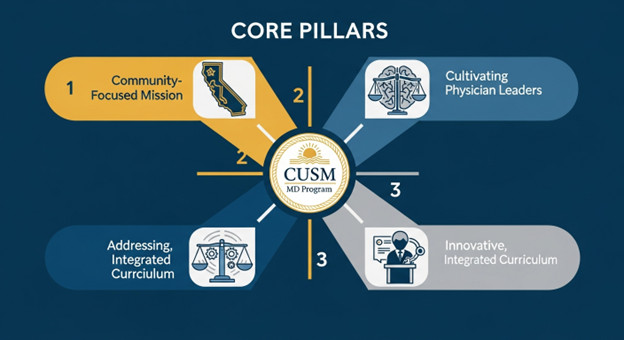
What truly distinguishes CUSM is its unwavering dedication to its mission. Unlike many medical schools, CUSM places a profound emphasis on serving the Inland Empire, a region often facing significant health challenges and disparities. This focus translates into a curriculum and clinical training model designed to immerse students in community-based healthcare settings from early on. The university’s vision extends beyond simply training competent physicians; it aims to cultivate physician leaders who are not only scientifically advanced but also deeply empathetic, culturally competent, and committed to advocacy. This distinct mission shapes every aspect of the CUSM experience, from its admissions process to its educational philosophy and the ultimate career paths of its graduates.
3. Navigating This Guide: Your Roadmap to Admissions Success
This guide is meticulously crafted to serve as your comprehensive resource for understanding and navigating the CUSM MD program’s admissions process. We will systematically explore the core identity of CUSM, dissecting its mission, vision, and values to help you understand the institution’s ethos. Subsequently, we will outline the profile of an ideal CUSM applicant, detailing both academic expectations and the invaluable personal qualities and experiences that resonate with the Admissions Committee. The heart of this guide lies in a detailed, step-by-step walkthrough of the application process, covering everything from the primary AMCAS application to the secondary application, letters of recommendation, and the critical MCAT exam. We will also shed light on the interview stage, offering strategies to effectively communicate your fit with CUSM, and finally, we will explore the distinctive curriculum, clinical training, and student life that await successful applicants. By the end of this guide, you will possess a clear, actionable plan to enhance your application and articulate your aspirations to join the CUSM MD program.
Unveiling CUSM’s Core Identity: Mission, Vision, and Values
1. A Community-Focused Medical School in the Inland Empire
The California University of Science and Medicine is fundamentally a community-focused medical school, with its roots deeply planted in the Inland Empire. This geographical and philosophical anchor drives its commitment to addressing the specific health needs of this diverse and often underserved region. CUSM’s mission explicitly states its dedication to advancing medical education, research, and compassionate healthcare delivery, with a particular emphasis on serving the underserved and advocating for the elimination of health disparities. This means that experiences gained at CUSM are directly relevant to tackling real-world health challenges within a defined community. For a student aspiring to make a difference, CUSM offers an unparalleled opportunity to engage with and understand the complexities of healthcare delivery in a setting that mirrors many of the nation’s most pressing public health issues.
2. CUSM’s Educational Philosophy: Empathy, Professionalism, and Innovation
At its core, CUSM’s educational philosophy is built upon three pillars: empathy, professionalism, and innovation. The institution believes that true medical care requires not only a deep understanding of scientific principles but also the ability to connect with patients on a human level. Empathy is fostered through early and sustained patient interaction and a curriculum that emphasizes understanding the patient’s perspective. Professionalism is instilled through rigorous ethical training, a commitment to integrity, and the expectation that all members of the CUSM community uphold the highest standards of conduct. Innovation is encouraged by pushing the boundaries of traditional medical education, incorporating cutting-edge technology, and fostering a spirit of critical inquiry and creative problem-solving. This tripartite philosophy ensures that CUSM graduates are well-rounded physicians prepared for the evolving landscape of healthcare.
3. The Essence of “Mission Fit”: What it Truly Means for CUSM Applicants
“Mission fit” is a term frequently discussed in medical school admissions, but for CUSM, it carries profound significance. It signifies an applicant’s genuine alignment with the university’s core values and its explicit mission to serve the Inland Empire and address health disparities. This is not merely about ticking boxes on an application; it’s about demonstrating through experiences, essays, and interviews that you understand and are personally driven by CUSM’s commitment to community health, advocacy, and compassionate care. Demonstrating mission fit involves articulating how your past experiences—whether in research, volunteering, clinical work, or personal life—have prepared you to contribute to CUSM’s unique environment and how your future aspirations align with the institution’s goals. The Admissions Committee looks for applicants who can not only excel academically but also embody the spirit of service and dedication that defines CUSM.
Understanding the Ideal CUSM Applicant Profile
1. Academic Foundations: Bachelor’s Degree and Essential Prerequisites
A strong academic foundation is the bedrock of any successful medical school application, and CUSM is no exception. Prospective students must possess a completed bachelor’s degree from an accredited institution prior to matriculation. While CUSM emphasizes a holistic review, a solid academic record is crucial. The minimum GPA requirement is a 3.00, but successful applicants typically present a significantly higher GPA, reflecting consistent academic excellence. Beyond the bachelor’s degree, specific prerequisite courses are mandatory. These typically include a year each of biology with lab, general chemistry with lab, organic chemistry with lab, physics with lab, and English composition. It is essential to verify the most current prerequisite list on the CUSM admissions website, as requirements can be updated. While a strong GPA and successful completion of prerequisites are necessary, CUSM views these as foundational rather than the sole determinants of an applicant’s potential.
2. Beyond Academics: Valued Experiences and Qualities
CUSM actively seeks applicants who demonstrate a rich tapestry of experiences and qualities that extend far beyond their academic transcripts. Clinical experience is paramount, allowing applicants to gain firsthand exposure to patient care and the realities of the medical field. This can include shadowing physicians, volunteering in hospitals or clinics, or participating in medical missions. Significant volunteer experience, particularly with underserved populations, strongly aligns with CUSM’s mission. Leadership roles in extracurricular activities, research involvement, and opportunities that showcase a commitment to teamwork, problem-solving, and perseverance are also highly valued. Beyond these tangible experiences, CUSM looks for intrinsic qualities such as empathy, resilience, intellectual curiosity, ethical integrity, and strong communication skills. These attributes are critical for navigating the challenges of medical school and for providing compassionate, patient-centered care.
3. CUSM’s Technical Standards: Practical Implications for Medical Students
In addition to academic and experiential qualifications, CUSM, like all medical schools, maintains Technical Standards that define the essential abilities and qualities required of all students in the MD Program. These standards ensure that students can successfully complete the entire curriculum and graduate as competent physicians. They encompass abilities in observation, communication, motor function, intellectual-conceptual, integrative, and quantitative reasoning, and behavioral/social attributes. For instance, students must be able to observe demonstrations, experiments, and patients; communicate effectively both verbally and in writing; possess sufficient motor skills to perform diagnostic and therapeutic procedures; and demonstrate the intellectual capacity to learn, assimilate, analyze, and synthesize complex information. Prospective students must be able to certify that they meet these standards, with or without reasonable accommodation. Understanding these standards is crucial for aspiring medical students to self-assess their readiness for the rigors of medical education.
4. Who Thrives at CUSM? Insights Beyond GPA and MCAT Scores
While a competitive GPA and MCAT score are important metrics in the admissions process—the mean MCAT score for matriculants to U.S. MD-granting medical schools in 2023-2024 was 506.3—CUSM explicitly seeks to identify candidates who will thrive within its unique environment, looking beyond these quantitative measures. Applicants who demonstrate a genuine passion for serving others, particularly those from underserved communities, and who can articulate this passion compellingly are more likely to succeed. Individuals who are resilient in the face of adversity, possess strong ethical compasses, and exhibit intellectual curiosity and a desire for continuous learning are highly valued. CUSM thrives on a collaborative and innovative spirit, so candidates who are adept at teamwork, open to new ideas, and proactive in their learning will find a supportive and enriching environment. Ultimately, those who exhibit a clear understanding of and commitment to CUSM’s mission of advancing healthcare in the Inland Empire and beyond are the ones most likely to flourish.
The CUSM Application Process: A Detailed Step-by-Step Guide
1. The Primary Application: American Medical College Application System (AMCAS)
The initial gateway to the CUSM MD Program is the American Medical College Application System (AMCAS) primary application. AMCAS is the centralized application service used by virtually all U.S. MD-granting medical schools. Completing this application accurately and thoroughly is paramount. Key components include your biographical information, educational background, coursework details, a comprehensive work and activities section where you detail your experiences (clinical, research, volunteer, etc.), and a personal essay. This personal essay is your opportunity to convey your motivations for pursuing medicine and to begin showcasing your journey and unique perspective. CUSM reviews primary applications as they are received, making early submission a strategic advantage. The number of applicants to medical schools declined by 4.7% for the 2023-24 academic year, while first-year matriculants increased by 1.2% AAMC, December 2023, underscoring the need for a strong and complete primary application.
2. Letters of Recommendation (LORs): Securing Strong Support
Letters of recommendation (LORs) provide the Admissions Committee with crucial third-party perspectives on your character, capabilities, and potential as a medical student and future physician. CUSM typically requires a minimum of three to five letters of recommendation. It is strongly advised to obtain letters from individuals who know you well in various capacities, such as your undergraduate professors (especially in science courses), research mentors, supervisors from clinical or volunteer experiences, and potentially employers. When requesting LORs, provide your recommenders with ample time (at least 4-6 weeks in advance) and offer them essential information, including your CV or resume, a personal statement draft, and details about the specific experiences you shared with them. Clearly communicate CUSM’s mission and what qualities they value, such as empathy, leadership, and commitment to service. A well-written, specific, and enthusiastic letter can significantly bolster your application.
3. The MCAT Exam: Score Expectations and Strategic Planning
The Medical College Admission Test (MCAT) is a critical component of your application to the CUSM MD Program. It assesses your knowledge of scientific concepts and principles prerequisite to the study of medicine, as well as your critical analysis, reasoning, and problem-solving skills. CUSM, like most medical schools, reviews MCAT scores as part of a holistic evaluation. While there isn’t a strict cutoff, a competitive MCAT score is essential. The mean MCAT score for matriculants to U.S. MD-granting medical schools in 2023-2024 was 506.3. Some sources suggest CUSM prefers scores of 504+, but it’s crucial to understand that this is considered alongside your entire application. Strategic planning for the MCAT involves dedicated study time, utilizing practice tests, and choosing a test date that allows ample time for score reporting and potential retakes if necessary. The exam is rigorous, and preparation requires a well-structured plan and significant commitment.
4. The CUSM Secondary Application: Showcasing Your Unique Story
Once CUSM reviews your AMCAS primary application and determines you meet their initial criteria, you will typically be invited to complete a Secondary Application. This is a vital opportunity to further elaborate on your qualifications and demonstrate your specific interest in and fit with CUSM. The secondary application usually consists of several essay prompts designed to probe deeper into your experiences, motivations, and understanding of CUSM’s mission. Prompts may ask about your reasons for choosing CUSM, your experiences with underserved populations, your resilience, or how you would contribute to the CUSM community. This is where you can truly shine by providing specific examples and personal reflections that connect directly to CUSM’s values. The application fee for the secondary application is $100. Crafting thoughtful, well-written responses that showcase your unique story and align with CUSM’s mission is crucial for advancing to the next stage of the admissions process.
5. The Altus Suite: CASPer, Snapshot, and Duet
In addition to the traditional application components, CUSM utilizes the Altus Suite, which includes CASPer, Snapshot, and Duet. CASPer (Computer-Based Assessment for Sampling Personal Characteristics) is a standardized, online assessment taken by over 90% of U.S. medical schools. It evaluates crucial non-cognitive skills and attributes such as ethics, empathy, professionalism, and resilience through video-recorded responses to real-world scenarios. Snapshot is a brief, asynchronous video response tool where applicants record short answers to specific prompts. Duet is a “values alignment” assessment, designed to help CUSM understand how your personal values and aspirations align with those of the institution. These assessments are integral to CUSM’s holistic review, providing additional insights beyond GPA, MCAT score, and essays. Preparation for the Altus Suite involves understanding its purpose, practicing response strategies for video-based assessments, and reflecting on your personal values and experiences.
6. Key Application Deadlines and Strategic Timelines
Adhering to strict deadlines is critical for a successful medical school application. While specific dates can vary annually, a general timeline for applying to the CUSM MD Program is as follows:
- Early May: AMCAS application opens for the following application cycle.
- Early June: AMCAS applications can be submitted. CUSM begins sending out secondary applications to eligible candidates shortly after receiving verified primary applications.
- Mid-August to Early September: Recommended deadlines for submitting the CUSM Secondary Application and Altus Suite assessments. It is highly advisable to submit your application as early as possible, ideally within weeks of receiving the secondary application.
- September through February: Interview invitations are typically extended during this period.
- October through March/April: Interviews are conducted.
- Mid-March onwards: Admissions decisions are released.
A strategic timeline involves preparing your AMCAS application, securing letters of recommendation, and planning your MCAT and Altus Suite administrations well in advance of these deadlines. Early submission allows the Admissions Committee ample time to review your application thoroughly and increases your chances of receiving an interview invitation.
The Interview Stage: Impressing the Admissions Committee
1. CUSM’s Interview Format: Preparing for Your Virtual Engagement Day
CUSM typically conducts interviews through a virtual format, often referred to as a Virtual Engagement Day. This format allows for greater accessibility and efficiency. The interview generally consists of one-on-one sessions with members of the CUSM Admissions Committee, faculty, or current medical students. These interviews are designed to be conversational, offering a platform for mutual learning and assessment. The goal is not to stump you with obscure questions, but rather to gauge your understanding of CUSM, your motivations for medicine, and your suitability for the program. Prepare to discuss your background, experiences, and how they align with CUSM’s mission. Familiarize yourself with the virtual platform being used and ensure you have a stable internet connection, a quiet space, and appropriate professional attire.
2. Mastering Your “Why CUSM”: Articulating Your Fit and Aspirations
A cornerstone of the CUSM interview is effectively articulating your “Why CUSM.” This means clearly and convincingly explaining your specific reasons for choosing this medical school over others. Go beyond generic statements and connect your personal experiences, values, and career aspirations directly to CUSM’s mission, vision, and unique offerings. Research specific faculty members whose work interests you, programs that align with your passions (e.g., community health initiatives, research areas), and the specific role you see yourself playing within the Inland Empire community. Demonstrate that you have done your homework and that your interest is genuine and deeply considered. Your ability to articulate this “fit” showcases your understanding of the institution and your commitment to its values.
3. Demonstrating Key Qualities: Empathy, Communication Skills, and Professionalism
The interview is your prime opportunity to showcase the essential qualities that CUSM values: empathy, communication skills, and professionalism. Be prepared to share specific examples from your experiences that illustrate these traits. For empathy, discuss situations where you showed understanding and compassion towards others, particularly in healthcare or service contexts. For communication skills, speak clearly and concisely, actively listen to the interviewer, and ask thoughtful questions. Demonstrate professionalism through your demeanor, punctuality, respectful communication, and appropriate attire. Behavioral interview questions, often using the STAR method (Situation, Task, Action, Result), are common. Prepare anecdotes that highlight your ability to handle challenging situations, work in teams, lead, and learn from mistakes. These qualities are critical for success in medical school and in the practice of medicine.
4 Post-Interview Best Practices: Follow-Up and Patience
After your interview, it is customary and highly recommended to send a thank-you note to your interviewers and the admissions committee. This can be done via email within 24-48 hours of your interview. Reiterate your continued interest in CUSM and briefly mention something specific you discussed or learned during the interview that reinforced your enthusiasm for the program. Avoid excessive follow-up; the admissions process takes time, and decisions are made by the Admissions Committee after careful deliberation. Trust the process and be patient. While waiting for a decision, continue to focus on your academic pursuits and personal development. Understanding that your application is being holistically reviewed, including your interview performance, will help you manage the waiting period.
CUSM’s Distinctive MD Program: Curriculum, Clinicals, and Student Life
1. An Innovative Curriculum for Modern Medical Education
CUSM’s MD program curriculum is designed to be innovative, student-centered, and deeply integrated with the healthcare needs of the Inland Empire. It employs a systems-based approach to learning, ensuring that foundational sciences are taught in a relevant context. A key feature is the early and continuous exposure to clinical settings, beginning in the first year. This hands-on experience allows students to apply theoretical knowledge directly to patient care scenarios, fostering practical skills and a deeper understanding of medical practice. The curriculum emphasizes critical thinking, problem-solving, and interprofessional collaboration. Furthermore, it incorporates elements of health equity, cultural competence, and community engagement, directly reflecting CUSM’s mission. This comprehensive approach ensures that graduates are not only clinically proficient but also prepared to address the multifaceted challenges of modern healthcare, particularly in underserved communities.
2. Clinical Training Excellence and Strategic Partnerships
The clinical training component of the CUSM MD program is a critical differentiator. Through strategic partnerships with hospitals and healthcare systems across the Inland Empire, CUSM provides its students with extensive hands-on experience in diverse clinical environments. Students engage in rotations in various specialties, gaining exposure to a wide range of patient populations and medical conditions. This early and sustained immersion in clinical practice allows students to develop essential diagnostic, therapeutic, and interpersonal skills. CUSM’s commitment to serving the Inland Empire means that students will often work in settings where the need for skilled physicians is greatest, providing invaluable real-world experience in addressing health disparities. This approach ensures that CUSM graduates are exceptionally well-prepared for residency training and the practice of medicine.
3. Research Opportunities and Scholarly Pursuits
CUSM fosters a strong culture of research and scholarly inquiry among its students. While the program’s primary focus is on community-based clinical education, opportunities for students to engage in research are readily available. These opportunities span various disciplines, including clinical research, health services research, and basic science research, often focused on issues pertinent to the Inland Empire’s health landscape. Students are encouraged to identify faculty mentors whose research interests align with their own. Engaging in research not only enhances a student’s understanding of evidence-based medicine but also develops critical analytical skills and contributes to the advancement of medical knowledge. Scholarly pursuits are viewed as an integral part of becoming a well-rounded physician, prepared to contribute to the evolving field of medicine.
Conclusion
The California University of Science and Medicine MD Program offers a distinctive and compelling pathway for aspiring physicians committed to service, innovation, and community well-being. By thoroughly understanding CUSM’s mission, embodying its core values, and meticulously preparing your application, you can effectively present yourself as a strong candidate. Remember that CUSM seeks more than just academic prowess; they are looking for individuals with empathy, resilience, and a genuine desire to make a difference, particularly within the Inland Empire. The admissions process, from the AMCAS application and MCAT to the secondary essays and interview, is designed to assess your holistic potential.
Your journey to becoming a CUSM physician is a testament to your dedication and aspirations. By leveraging the insights provided in this guide, you are better equipped to navigate each step with confidence. Always refer to the official CUSM admissions website for the most current and detailed information. Embrace the opportunity to showcase your unique story and your alignment with CUSM’s profound mission. With careful planning and a genuine reflection of your commitment to serving others, your path to becoming a CUSM physician can become a reality.
Frequently Asked Questions About California University of Science and Medicine (CUSM)
1. What GPA do you need to get into California University of Science and Medicine (CUSM)?
The average GPA for matriculants at CUSM is approximately 3.6. While the school does not publish a hard minimum, competitive applicants typically present a science GPA close to this benchmark alongside a strong upward trend if earlier coursework was weaker. CUSM values academic resilience and mission alignment, so a slightly lower GPA can sometimes be offset by compelling research, community service, or a background connected to the Inland Empire’s underserved communities.
2. What MCAT score do you need for California University of Science and Medicine (CUSM)?
The average MCAT score among CUSM matriculants is 513, which falls roughly at the 82nd percentile nationally. CUSM does not publish a formal minimum cutoff, but scores below 510 may require an especially strong overall application to remain competitive. Applicants are encouraged to retake the MCAT if their score falls meaningfully below the class average, since CUSM is highly selective despite its focus on mission-driven candidates.
3. What is the acceptance rate at California University of Science and Medicine (CUSM)?
CUSM’s acceptance rate for the 2025–2026 admissions cycle was approximately 2.81%, making it one of the most selective medical schools in California. Of roughly 4,630 applicants, only about 130 students matriculated. This ultra-low acceptance rate reflects both intense national demand and the school’s small, mission-focused class size.
4. How many people apply to California University of Science and Medicine (CUSM) each year?
Approximately 4,630 applicants submitted applications to CUSM for the 2025–2026 cycle. Given the class size of around 130 students, competition is extremely fierce. Early submission through AMCAS is strongly recommended, as CUSM reviews applications on a rolling basis and secondary invitations are extended to a select pool.
5. Does California University of Science and Medicine (CUSM) accept out-of-state applicants?
CUSM does accept out-of-state applicants, but the school strongly prioritizes California residents — particularly those with ties to the Inland Empire region of San Bernardino and Riverside counties. The school’s founding mission is to address physician shortages and health disparities in this specific region, so out-of-state applicants should demonstrate a clear, compelling connection to California or a background serving underserved communities. Tuition is the same for all students at approximately $70,200 per year regardless of residency.
6. What is the interview format at California University of Science and Medicine (CUSM)?
CUSM uses a virtual interview format consisting of timed, pre-recorded video responses that take approximately 30–60 minutes to complete at the applicant’s convenience. In some cases, in-person traditional panel interviews may also be scheduled. The format evaluates communication skills, professionalism, and alignment with CUSM’s mission to serve diverse and disadvantaged communities. CASPer is also required as part of the holistic review process prior to the interview stage.
7. What are the secondary essay prompts at California University of Science and Medicine (CUSM)?
CUSM’s secondary application includes six essay prompts, each with a 150-word limit. The prompts ask applicants to address: (1) how they would contribute to class diversity, (2) how they handled criticism from a peer or supervisor, (3) how they managed a difficult colleague, (4) an example demonstrating personal integrity, (5) their ten-year career vision if admitted, and (6) an explanation of any semesters with fewer than 12 academic credits. The secondary application requires a non-refundable $100 fee and must be submitted alongside a completed CASPer assessment.
8. How much does California University of Science and Medicine (CUSM) cost?
Annual tuition and fees at CUSM for the 2025–2026 academic year are approximately $70,200, with no distinction between in-state and out-of-state students. Over four years, total tuition alone approaches $280,000 before living expenses, books, and other costs of attendance. Prospective students should research CUSM’s financial aid offerings and federal loan eligibility; as an LCME-accredited institution, CUSM students are eligible for federal student aid programs.
9. Is CASPer required for California University of Science and Medicine (CUSM)?
Yes, CASPer is required for all applicants who receive a secondary application from CUSM. The CASPer (Computer-Based Assessment for Sampling Personal characteristics) is a situational judgment test designed to evaluate non-cognitive skills such as empathy, collaboration, and ethical decision-making — qualities central to CUSM’s mission-driven model. Applicants should register and complete CASPer early, as scores must be submitted as part of the complete secondary application package before the December 30 deadline.
10. What makes California University of Science and Medicine (CUSM) unique compared to other medical schools?
CUSM is the newest LCME-accredited medical school in California and was specifically founded to address the severe physician shortage and health disparities in the Inland Empire — a region of more than 4 million people that ranks in the lower half of California counties for physicians per capita. The school maintains a primary clinical teaching affiliation with Arrowhead Regional Medical Center and reports a 99% residency match rate, with more than 70% of graduates staying in California and the Inland Empire to practice. This strong regional retention record underscores CUSM’s success in fulfilling its core social mission.