
Charting Your Course to MCW
Embarking on the journey to medical school is a significant undertaking, fraught with challenges and brimming with aspirations. For those with a keen interest in pursuing a distinguished medical education, particularly within the vibrant landscape of Wisconsin, the Medical College of Wisconsin (MCW) stands as a premier institution. Navigating the intricacies of its admissions process, however, requires more than just academic prowess; it demands a strategic understanding of MCW’s unique mission, its innovative educational approach, and what the Admissions Committee truly seeks in its future physicians. This comprehensive guide is meticulously crafted to serve as your roadmap, illuminating every critical step and offering actionable insights to help you present your strongest application.
This blog will cover:
- Charting Your Course to MCW
- Why the Medical College of Wisconsin? Unveiling MCW’s Distinctive Appeal
- Laying the Foundation: Academic and Experiential Prerequisites for MCW
- Letters of Recommendation (LORs): Strategic Selection and Content
- The Application Journey: Step-by-Step Through the MCW Process
- The Interview: Your Opportunity to Connect with MCW
- Choosing Your Path: MCW’s Diverse Campus Options
- Understanding MCW’s Holistic Review: Beyond the Numbers
- Conclusion: Your Journey to Becoming an MCW Physician
Why This Guide Matters: Navigating a Competitive Medical School Landscape
The path to medical school is undeniably competitive, with an ever-increasing number of highly qualified applicants vying for limited seats. In this demanding environment, simply meeting the basic requirements is often insufficient. Prospective medical students must demonstrate a profound understanding of their chosen institutions, articulate a clear vision for their future contributions to medicine, and showcase a well-rounded profile that aligns with the specific values and goals of the medical school. Many guides offer generic advice, but success hinges on a nuanced approach tailored to the institution at hand. This guide specifically addresses the Medical College of Wisconsin, cutting through the generalities to provide targeted strategies and essential information. By understanding MCW’s distinctive appeal, its curriculum, its campuses, and its holistic review process, you can significantly enhance your chances of acceptance.
What You’ll Discover: A Strategic Roadmap to MCW Admissions Success
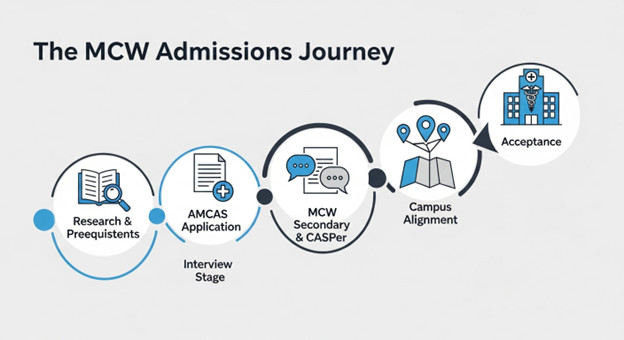
This guide is designed to be your comprehensive companion, demystifying the MCW admissions process from start to finish. You will gain a deep understanding of MCW’s mission and why it is a compelling choice for aspiring physicians. We will meticulously break down the academic and experiential prerequisites, offering insights into what constitutes a competitive profile. The intricate application journey, from the initial AMCAS submission to the crucial secondary applications and supplementary assessments like CASPer, will be laid bare. Furthermore, we will prepare you for the pivotal interview stage, guiding you on how to effectively connect with the Admissions Committee. Recognizing MCW’s diverse campus options—Milwaukee, Green Bay, and Central Wisconsin—we will explore how to align your interests with each campus’s unique mission. Ultimately, this roadmap will empower you with the knowledge and strategy necessary to navigate the competitive landscape and articulate your unique value to the Medical College of Wisconsin.
Why the Medical College of Wisconsin? Unveiling MCW’s Distinctive Appeal
The Medical College of Wisconsin is more than just a medical school; it is an integral part of the state’s healthcare ecosystem, a hub for groundbreaking research, and a community dedicated to nurturing compassionate and skilled physicians. Choosing MCW means aligning yourself with an institution that boasts a rich history of service and innovation, a forward-thinking curriculum, and a deep commitment to its students and the communities it serves. Understanding these core pillars is the first step in building a compelling application.
A Legacy of Innovation and Impact: Serving Wisconsin and Beyond
Founded in 1893, the Medical College of Wisconsin has a long-standing legacy of advancing health and well-being. Its mission is deeply rooted in serving the state of Wisconsin, addressing its unique healthcare needs, and producing physicians who are committed to its communities. MCW’s impact extends far beyond the borders of Wisconsin, however, with its alumni contributing to medical advancements and patient care globally. The institution consistently ranks among the top medical schools for primary care and research, a testament to its dual commitment to educating excellent physicians and driving scientific discovery. This robust history, coupled with its forward-looking approach, makes MCW a particularly attractive choice for students who value both tradition and innovation.
The MCW Fusion Curriculum: Modern Medical Education for Future Physicians
MCW distinguishes itself through its innovative “Fusion Curriculum,” a dynamic educational model designed to prepare medical students for the evolving complexities of modern healthcare. This curriculum emphasizes an integrated approach, blending foundational scientific knowledge with early clinical experiences, extensive research opportunities, and a strong focus on professionalism and interprofessional collaboration. The Fusion Curriculum aims to foster critical thinking, problem-solving skills, and adaptability, equipping future physicians with the competencies needed to excel in diverse medical settings. It moves beyond traditional rote memorization, encouraging students to become lifelong learners and compassionate caregivers, ready to tackle the challenges of patient care and medical advancement.
Research and Scholarly Pathways: Beyond the MD Degree
For students driven by scientific curiosity and a desire to contribute to the advancement of medical knowledge, MCW offers robust research opportunities. The institution fosters a strong culture of scholarly inquiry, encouraging medical students to engage in research projects alongside faculty members. These opportunities span a wide range of disciplines, from basic science to clinical and translational research. MCW provides structured scholarly pathways that allow students to delve deeply into specific areas of interest, publish their findings, and present at national conferences. This commitment to research not only enriches the student experience but also plays a crucial role in shaping future physicians who are equipped with a scientific mindset and the ability to critically evaluate and advance medical practice.
A Diverse Community and Culture: Finding Your Place in the MCW Community
MCW is committed to fostering a diverse and inclusive community where all individuals feel valued and respected. This commitment extends to its student body, faculty, and staff, creating an environment that mirrors the diverse patient populations it serves. The college actively promotes a culture of collaboration, mutual respect, and support, recognizing that diverse perspectives enrich learning and enhance patient care. Prospective students are encouraged to consider how their own backgrounds, experiences, and values align with MCW’s dedication to diversity and inclusion. Finding your place within this vibrant community is an essential aspect of a fulfilling medical school experience, and MCW strives to provide an environment where every medical student can thrive.
Laying the Foundation: Academic and Experiential Prerequisites for MCW
The journey to MCW begins with a strong foundation built upon academic excellence and meaningful experiences. Admissions committees carefully evaluate applicants based on a range of criteria, looking for individuals who have not only mastered the scientific underpinnings of medicine but have also demonstrated a genuine commitment to the field through practical engagement.
Core Academic Requirements: Competitive GPA and MCAT Scores
Academic achievement is a cornerstone of any medical school application. MCW seeks applicants who have demonstrated a consistent record of academic success, reflected in their undergraduate Grade Point Average (GPA). While specific cutoffs are not publicly disclosed, successful applicants typically possess a GPA well above the average, often in the 3.7-3.8 range or higher, with strong performance in science coursework.
Equally critical is the Medical College Admission Test (MCAT). The MCAT assesses a student’s knowledge of science concepts and principles prerequisite to the study of medicine, as well as their ability to reason, problem-solve, and think critically. A competitive MCAT score is essential, and applicants should aim for scores that reflect their academic potential and readiness for the rigorous demands of medical school. It is advisable for applicants to take the MCAT well in advance of application submission deadlines to allow ample time for retakes if necessary. Reviewing the AAMC’s official guidelines for MCAT preparation is highly recommended.
Essential Prerequisite Courses: Building Your Scientific and Humanistic Foundation
MCW requires a specific set of prerequisite courses to ensure that all applicants possess a fundamental understanding of the sciences and humanities essential for medical study. These typically include:
- General Biology: A comprehensive course covering cellular and molecular biology, genetics, and organismal biology.
- General Chemistry: A thorough grounding in chemical principles, including atomic structure, bonding, reactions, and stoichiometry.
- Organic Chemistry: A detailed exploration of carbon-containing compounds and their reactions.
- Physics: Courses covering mechanics, thermodynamics, electricity, magnetism, and optics.
- Mathematics: Typically, a course in calculus or statistics is required.
- English/Writing: Demonstrating strong written communication skills is crucial.
Beyond these core science requirements, MCW also values applicants with a foundation in the social sciences and humanities. Courses in psychology, sociology, or ethics can provide valuable insights into patient behavior, societal influences on health, and the ethical considerations inherent in medical practice. Applicants should carefully review MCW’s official website for the most current and detailed list of prerequisite courses and their specific requirements.
Demonstrating Commitment: Clinical Experience, Research, and Service
Beyond academics, MCW seeks individuals who have actively demonstrated their commitment to medicine and to serving others. This is best showcased through a variety of experiences:
- Clinical Experience: Gaining direct exposure to patient care is paramount. This can include shadowing physicians in various specialties, volunteering in hospital settings, working as a medical scribe, or participating in patient advocacy roles. These experiences should provide insights into the realities of patient care and the physician’s role.
- Research Experience: As highlighted earlier, MCW places a strong emphasis on research. Engaging in research, whether in a laboratory setting or through clinical studies, demonstrates critical thinking, analytical skills, and a passion for scientific inquiry. Presenting research at conferences or contributing to publications significantly strengthens an application.
- Volunteer Service: Demonstrating a commitment to altruism and community engagement is crucial. This can involve volunteering with underserved populations, participating in health education initiatives, or contributing to causes that align with MCW’s mission. These experiences showcase empathy, compassion, and a desire to make a positive impact.
The depth and breadth of these experiences, along with the applicant’s ability to reflect upon and articulate the lessons learned, are critically important to the Admissions Committee.
Letters of Recommendation (LORs): Strategic Selection and Content
Letters of Recommendation (LORs) provide the Admissions Committee with insights into your character, work ethic, and potential as a future physician from the perspective of those who know you best. It is crucial to select individuals who can speak authoritatively and specifically about your strengths, not just those who hold prestigious titles.
Ideally, you should secure letters from:
- Professors: Especially those in your science courses who can attest to your academic performance and intellectual curiosity.
- Physicians you have shadowed or worked with: They can provide firsthand accounts of your clinical aptitude, professionalism, and patient interaction skills.
- Supervisors from research or volunteer experiences: They can speak to your dedication, teamwork, and contributions in these capacities.
Requesting letters well in advance of deadlines is essential. Provide your recommenders with your CV, personal statement, and specific details about the programs you are applying to, including MCW’s mission and values. This will help them write more personalized and impactful letters that highlight your most relevant attributes.
The Application Journey: Step-by-Step Through the MCW Process
The application process for MCW, like most medical schools in the United States, involves several key stages managed through the American Medical College Application Service (AMCAS) and MCW’s own supplemental materials.
The Primary Application: AMCAS Submission
The initial step in applying to MCW is to complete and submit the primary AMCAS application. This comprehensive document serves as the foundation of your application and includes:
- Biographical Information: Personal details and demographic data.
- Academic History: A detailed listing of all undergraduate and graduate institutions attended, along with your transcripts and GPA calculation.
- Coursework: Specific details on all courses taken, including grades and credit hours.
- Work Experience: A section to detail significant employment, research, volunteer, and other relevant experiences.
- Personal Statement: A crucial essay where you articulate your motivations for pursuing medicine and your journey thus far. This is your opportunity to tell your story and explain why you are a strong candidate.
- Letters of Recommendation: While letters are submitted through AMCAS, you will designate which individuals you wish to send them.
It is imperative to complete the AMCAS application with meticulous attention to detail and accuracy. Early submission is always recommended, as it allows the application to be processed and forwarded to MCW promptly, giving you more time for the subsequent steps.
Crafting a Compelling Secondary Application: Your Unique Story to MCW
Once MCW receives your verified AMCAS application, you will be invited to complete a secondary application, provided you meet their initial screening criteria. The secondary application is MCW’s opportunity to gather more specific information about your interests, experiences, and alignment with their mission and specific campus goals. This often includes a series of essays or short answer prompts.
This is where you can truly differentiate yourself. Tailor your responses directly to MCW. Reflect on the specific experiences and qualities that make you a good fit for this medical college and its campuses. If MCW emphasizes community service in Wisconsin, highlight your relevant experiences and your commitment to serving the state. If research is a focus, elaborate on your scholarly contributions. Your secondary application essays are a critical chance to showcase your understanding of MCW’s values and demonstrate how you will contribute to its community as a future physician. Do not submit generic responses; make each answer unique and reflective of your personal journey and aspirations in relation to MCW.
Acuity Insights Assessments: Understanding CASPer and AAMC PREview
In recent years, many medical schools, including MCW, have begun incorporating situational judgment tests (SJTs) to gain further insight into an applicant’s non-cognitive abilities. These assessments are designed to evaluate traits such as ethics, professionalism, resilience, empathy, and teamwork, which are vital for success in medical school and as a physician.
MCW may require applicants to complete the CASPer (Computer-based Assessment for Sampling Personal Characteristics) test, and/or the AAMC PREview Professional Readiness Examination. The CASPer test presents applicants with a series of hypothetical scenarios and requires them to answer questions based on their judgment and reasoning. The AAMC PREview assesses professional attributes crucial for medical education. Understanding the purpose of these assessments is key: they are not designed to test knowledge, but rather to evaluate your character and how you might respond in real-world professional situations. Prepare by reflecting on your experiences and understanding the core competencies these tests aim to assess. Researching common CASPer question formats and practicing your responses can be beneficial.
Eligibility for Application: DACA and Other Considerations
MCW is committed to fostering a diverse and inclusive student body and considers applicants from various backgrounds. For individuals with Deferred Action for Childhood Arrivals (DACA) status, MCW evaluates applications on a case-by-case basis, consistent with their commitment to providing opportunities to qualified individuals. Applicants are encouraged to contact the MCW Admissions Office directly to discuss their specific eligibility and any documentation requirements related to DACA status or other unique circumstances. This proactive approach ensures that all potential applicants understand the college’s policies and can navigate the application process with clarity and confidence.
The Interview: Your Opportunity to Connect with MCW
For many applicants, the interview stage represents the most personal and direct opportunity to connect with the Medical College of Wisconsin. It is a two-way street, allowing the Admissions Committee to assess your suitability for MCW and allowing you the chance to further evaluate if MCW is the right fit for your medical education.
Invitation to Interview: What to Expect During Interview Season
An invitation to interview signifies that your application has passed the initial review stages and that the Admissions Committee sees significant potential in you. Interview invitations are typically extended throughout the fall and winter months. The format of the interview can vary, but many medical schools, including MCW, utilize multiple mini-interviews (MMIs) or traditional one-on-one interviews, or a combination thereof. MMIs typically involve a series of independent stations, each with a unique scenario or question designed to assess different competencies, such as ethical reasoning, communication skills, and problem-solving. Traditional interviews are more conversational and allow for deeper exploration of your application materials.
Regardless of the format, expect questions that delve into your motivations for applying to MCW, your understanding of the medical profession, your experiences, and how you handle challenging situations. The goal is to understand your thought processes, your personal qualities, and your potential to contribute to MCW’s mission.
Preparing for Success: Research, Reflection, and Practice
Thorough preparation is key to a successful interview. Start by thoroughly reviewing your own AMCAS application and secondary essays. Be ready to elaborate on any experience or statement you have made. Equally important is understanding MCW: research its mission, its curriculum, its research initiatives, and its specific campus values. Familiarize yourself with the populations served by each campus (Milwaukee, Green Bay, Central Wisconsin) and consider how your interests align with them.
Reflect on common medical school interview questions and practice articulating your responses. Focus on demonstrating your maturity, empathy, critical thinking, and understanding of ethical dilemmas. Practice with friends, family, or mentors to build confidence and refine your communication. Remember that the interview is a conversation; be genuine, enthusiastic, and respectful. Showing your authentic self and your passion for medicine and for MCW is paramount.
After the Interview: Thoughtful Follow-up and Reflection
Following your interview, a thoughtful thank-you note or email is a professional courtesy and can reinforce your interest in MCW. Keep it concise and reiterate your enthusiasm for the institution. Beyond this, the post-interview period is a time for continued reflection. Consider your interactions, the information you gathered, and how your understanding of MCW has evolved. This personal reflection will be valuable as you await the admissions decision and as you consider potential acceptances from multiple institutions. The Admissions Committee will then deliberate on all aspects of your application, including your interview performance, to make their final decisions.
Choosing Your Path: MCW’s Diverse Campus Options
A distinctive feature of the Medical College of Wisconsin is its multi-campus structure, offering applicants the choice of three distinct learning environments, each with a unique mission and focus. This allows prospective medical students to find a setting that best aligns with their personal and professional goals.
MCW-Milwaukee: The Urban Academic Medical Center Experience
The Milwaukee campus serves as MCW’s flagship location and is a bustling urban academic medical center. This campus provides students with extensive exposure to a diverse patient population, complex medical cases, and cutting-edge medical technology. Students benefit from close collaboration with leading physicians and researchers across numerous specialties. The Milwaukee campus offers a comprehensive medical education experience within a dynamic urban setting, ideal for students seeking a broad and intensive introduction to academic medicine.
MCW-Green Bay: Community-Focused, Accelerated Medicine
MCW-Green Bay offers a unique, accelerated four-year medical education program with a strong emphasis on community-based learning and primary care. This program is designed for students who are particularly interested in serving rural and underserved populations in Wisconsin and who thrive in a more intimate, community-focused educational environment. The curriculum is designed for rapid immersion in clinical settings, allowing students to develop essential skills and build meaningful relationships within the Green Bay community. This option is ideal for those with a clear vision for a career in primary care and a deep commitment to community health.
MCW-Central Wisconsin (Wausau): Serving Underserved Populations
Similar to the Green Bay campus, MCW-Central Wisconsin, located in Wausau, offers a four-year medical education program with a distinct mission to address the healthcare needs of rural and underserved populations. Students at this campus gain invaluable experience working with diverse patient groups in community-based settings. The program emphasizes developing physicians who are well-equipped to practice in areas facing physician shortages and who are dedicated to improving health equity. This campus is particularly attractive to applicants who are passionate about rural health and addressing healthcare disparities.
Tailoring Your Application: Aligning Interests with Campus Missions
When applying to MCW, it is crucial to understand the specific mission and focus of each campus and to articulate how your interests and goals align with them. During the application process, you will likely have the opportunity to indicate your preference for a particular campus or campuses.
When crafting your secondary application essays and preparing for your interview, be specific about why you are interested in MCW-Milwaukee, MCW-Green Bay, or MCW-Central Wisconsin. If you are drawn to the urban academic environment, explain your interest in the diverse patient populations and research opportunities in Milwaukee. If you are passionate about rural health and primary care, articulate why the community-focused, accelerated programs in Green Bay or Wausau are a better fit for your aspirations. Demonstrating a clear understanding of and alignment with a campus’s mission will significantly strengthen your application.
Understanding MCW’s Holistic Review: Beyond the Numbers
MCW, like many leading medical schools, employs a holistic review process. This means that while academic metrics such as GPA and MCAT scores are important, they are considered alongside a wide range of other factors that contribute to an applicant’s overall profile and potential to succeed as a physician.
The Admissions Committee’s Perspective: What They Truly Seek
The Admissions Committee at MCW is tasked with selecting individuals who will not only excel in medical school but will also become compassionate, ethical, and skilled physicians who contribute positively to the healthcare landscape. They look beyond numerical data to assess qualities such as:
- Maturity and Personal Qualities: Resilience, empathy, integrity, and a strong sense of responsibility.
- Motivation and Commitment: A genuine passion for medicine, demonstrated through consistent effort and dedication.
- Leadership Potential: The ability to inspire, guide, and collaborate effectively with others.
- Communication and Interpersonal Skills: The capacity to connect with patients from diverse backgrounds and work effectively within a healthcare team.
- Understanding of Healthcare and Society: Awareness of current healthcare issues, health disparities, and the social determinants of health.
- Alignment with MCW’s Mission: A clear understanding of and commitment to MCW’s values, including service to Wisconsin and a dedication to innovation in medicine.
Your entire application, from your personal statement and experiences to your interview responses, provides the Admissions Committee with the data points to evaluate these crucial attributes.
The Wisconsin Advantage: Residency and Commitment to the State
Choosing MCW offers a unique advantage for those interested in building a medical career within Wisconsin. The institution’s deep roots and commitment to the state mean that its graduates are exceptionally well-prepared to enter residency programs and practice within Wisconsin.
MCW has a strong track record of its medical students matching into competitive residency programs across the nation, with a significant number choosing to complete their residency training within Wisconsin. This trend reflects the strong relationships MCW has forged with residency programs throughout the state and the high regard in which MCW graduates are held. By training at MCW, you are not only receiving a top-tier medical education but are also becoming an integral part of the future of healthcare for Wisconsin, whether through direct patient care, research, or leadership in addressing the state’s health challenges. This commitment to serving Wisconsin communities is a hallmark of MCW physicians.
Conclusion: Your Journey to Becoming an MCW Physician
Navigating the admissions process to the Medical College of Wisconsin is a journey that demands preparation, authenticity, and a clear understanding of MCW’s distinct mission and values. By meticulously addressing the academic prerequisites, thoughtfully crafting your AMCAS and secondary applications, and preparing thoroughly for interviews, you can effectively showcase your potential. Remember that MCW values a holistic approach, seeking not only academic excellence but also individuals with strong character, a commitment to service, and a genuine desire to contribute to the health of Wisconsin and beyond. The Fusion Curriculum, the robust research opportunities, and the diverse campus environments offer unique pathways to becoming a skilled and compassionate physician.
Your path to becoming an MCW physician is challenging, but it is also incredibly rewarding. Embrace the process, learn from every step, and let your passion for medicine shine through. The Medical College of Wisconsin is looking for dedicated individuals ready to make a difference, and with strategic planning and genuine self-reflection, you can present your strongest case for joining their esteemed community.
Frequently Asked Questions About Medical College of Wisconsin
1. What GPA do you need to get into Medical College of Wisconsin?
The average GPA for accepted students at the Medical College of Wisconsin (MCW) is approximately 3.8. Both science (sGPA) and cumulative (cGPA) GPAs are reviewed holistically alongside the rest of your application. MCW does not publish a hard minimum cutoff, but competitive applicants typically hold a cGPA of 3.7 or higher. Trends in your GPA — particularly an upward trajectory — are also considered during the review process.
2. What MCAT score do you need for Medical College of Wisconsin?
The average MCAT score for matriculants at MCW is approximately 511–512, which falls around the 81st–83rd percentile nationally. MCW reviews MCAT scores holistically and considers all attempts, though a recent and competitive score strengthens your application. Aim for at least 510 to be a competitive applicant, with section scores ideally balanced across all four sections.
3. What is the acceptance rate at Medical College of Wisconsin?
The acceptance rate at the Medical College of Wisconsin is approximately 2.56%, making it one of the more selective medical schools in the country. Out of roughly 10,711 applicants, about 274 students matriculate each year. This acceptance rate is significantly below the national average of around 5–6%, so a strong, well-rounded application is essential.
4. How many people apply to Medical College of Wisconsin each year?
Approximately 10,711 applicants apply to the Medical College of Wisconsin in a typical application cycle. Of those, a fraction receive secondary applications, a smaller group are invited to interview, and 274 ultimately matriculate. MCW is a competitive school and applicants should apply early in the AMCAS cycle to maximize their chances of receiving a secondary invitation.
5. Does Medical College of Wisconsin accept out-of-state applicants?
Yes, the Medical College of Wisconsin is a private institution and accepts applicants from all 50 states — there is no preference for Wisconsin residents as there would be at a public medical school. Because MCW is not state-funded, out-of-state applicants are on equal footing with in-state applicants during the review process. This makes MCW an attractive option for strong applicants regardless of their home state.
6. What is the interview format at Medical College of Wisconsin?
MCW uses a traditional interview format, typically consisting of one-on-one or panel interviews held at the applicant’s chosen campus (Milwaukee, Green Bay, or Wausau). Interview season runs from September through March. Applicants rank their preferred campus when applying, and MCW assigns interview invitations based on those preferences. Interviews may be conducted in person or virtually depending on the cycle.
7. What are the secondary essay prompts at Medical College of Wisconsin?
MCW’s secondary application includes several essay prompts. Recent prompts have asked applicants to: (1) explain how their unique background, identity, interests, or talents will contribute to the MCW learning community (approx. 1,000 characters); (2) recount a decision they regret and what they learned from it (approx. 2,000 characters); and (3) describe what they have learned from working with people from different cultural backgrounds and how they plan to contribute to health equity as a physician. Prompts may vary slightly by cycle, so check the official MCW admissions page for the most current requirements.
8. How much does Medical College of Wisconsin cost?
Tuition and fees at the Medical College of Wisconsin for the 2025–2026 academic year are approximately $70,844 per year. As a private institution, this rate applies to both in-state and out-of-state students. Total cost of attendance, including living expenses, health insurance, and supplies, will be higher — typically exceeding $90,000–$100,000 per year. MCW offers financial aid, scholarships, and loan programs to help students manage the cost of their medical education.
9. Does Medical College of Wisconsin require CASPer?
Yes, the Medical College of Wisconsin requires CASPer (Computer-Based Assessment for Sampling Personal Characteristics) as part of its application process. CASPer scores must be received by MCW — which typically takes about 4 weeks after test completion — before your application is considered complete and reviewed for interview selection. MCW uses CASPer as one data point among many non-cognitive variables, not as a screening tool. Applicants are strongly encouraged to take CASPer early in the cycle given the 4-week processing window.
10. What makes Medical College of Wisconsin unique, and what is its research profile?
MCW is the largest private research institution in Wisconsin, with over $1.64 billion in research funding over the past decade and the largest research enterprise in the Milwaukee metropolitan area. Students have direct access to federally funded research labs, early clinical experiences, and specialized centers including the Center for Imaging Research and the Clinical and Translational Science Institute (CTSI). MCW also operates regional campuses in Green Bay and Wausau specifically to address the rural physician shortage across Wisconsin. This combination of urban research depth and regional community health mission sets MCW apart from other private medical schools.