
Embarking on the journey to medical school is a profound undertaking, a path marked by rigorous study, unwavering dedication, and a deep-seated desire to serve. For aspiring physicians drawn to the exceptional legacy and innovative spirit of New York Medical College (NYMC), understanding the admissions landscape is paramount. This guide is meticulously crafted to serve as your comprehensive roadmap, demystifying the process and illuminating the specific requirements and nuances of applying to NYMC’s School of Medicine. We will navigate the essential steps, from laying a robust academic foundation to mastering the nuances of the application, interview, and beyond. By providing clear, actionable insights, this guide aims to empower you to present your strongest candidacy and align your aspirations with the distinctive mission of New York Medical College.
This blog will cover:
- Charting Your Path to NYMC School of Medicine
- Why New York Medical College? Unpacking Its Unique Appeal
- Step 1: Laying the Foundation – Pre-Application Essentials
- Step 2: The Primary Application – AMCAS Submission
- Step 3: The NYMC Secondary Application – Your Opportunity to Shine
- Step 4: The Interview Stage – Connecting with NYMC
- Step 5: Post-Interview & Decision Day
- Conclusion
Charting Your Path to NYMC School of Medicine
Welcome to New York Medical College Admissions
Welcome to the gateway of your medical education aspirations. New York Medical College (NYMC) stands as a venerable institution, recognized for its commitment to educating skilled, compassionate, and ethical physicians. The School of Medicine, located in Valhalla, New York, is a pivotal component of this esteemed institution, offering a transformative educational experience. Navigating the admissions process for such a respected medical school can seem daunting, but with a structured approach and clear understanding, it becomes an achievable objective. This guide is designed to provide that clarity, breaking down the complex journey into manageable steps, ensuring you are well-equipped to present your unique qualifications and aspirations to the NYMC Admissions Committee.
Why This Guide Matters: Your Comprehensive Roadmap
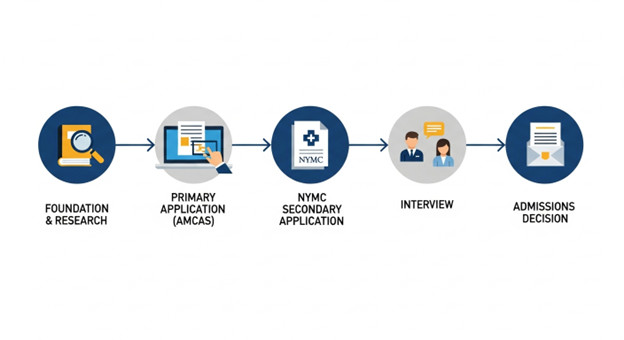
The path to medical school is competitive, and applying to a distinguished institution like New York Medical College requires more than just good grades and high MCAT scores. It demands a strategic understanding of what NYMC seeks in its future medical students. This guide serves as your comprehensive roadmap, offering an in-depth, step-by-step strategy tailored specifically to the NYMC admissions process. It aims to demystify each stage, from understanding the institution’s core values and the holistic review process to meticulously preparing your primary and secondary applications, excelling in your interview, and navigating the crucial post-interview period. By consolidating essential information and providing actionable advice, this resource empowers you to approach your application with confidence and strategic precision.
The NYMC Advantage: A Legacy of Healing and Learning
New York Medical College boasts a rich legacy that spans over 185 years, a testament to its enduring commitment to medical education, research, and patient care. This storied history has fostered a unique environment where tradition meets innovation, preparing medical students to address the evolving challenges of healthcare. The college has consistently produced physicians who are not only clinically proficient but also deeply committed to serving diverse communities. This historical strength provides a solid foundation for academic excellence and ethical practice, setting the stage for a distinguished career in medicine. The very essence of NYMC is built upon a dual commitment to advancing medical knowledge through rigorous research and to nurturing compassionate healers dedicated to the well-being of their patients and communities.
Why New York Medical College? Unpacking Its Unique Appeal
New York Medical College distinguishes itself within the competitive landscape of medical schools through a confluence of factors: its unwavering mission, its commitment to a holistic review of applicants, and its vibrant academic and community environment. Understanding these elements is crucial for prospective students to discern if NYMC is the right fit for their personal and professional development. This section delves into what makes NYMC a compelling choice for aspiring physicians.
NYMC’s Enduring Mission, Vision, and Values
At the heart of New York Medical College’s admissions philosophy lies its deeply ingrained mission, vision, and values. The mission is centered on educating physicians and other healthcare professionals to serve the community, with a particular emphasis on those in underserved regions. This commitment translates into a curriculum and clinical experience designed to foster empathy, cultural competence, and a strong sense of social responsibility. NYMC envisions a future where its graduates are leaders in medicine, driving advancements in healthcare delivery and medical science. The core values of integrity, compassion, excellence, diversity, and service are not mere platitudes; they are actively cultivated and assessed throughout the application process. Prospective applicants are encouraged to reflect on how their own personal ethics and aspirations align with these fundamental tenets, demonstrating a genuine understanding and embodiment of NYMC’s guiding principles.
The Holistic Review Philosophy at NYMC
New York Medical College employs a holistic review process, a philosophy that extends beyond standardized test scores and GPAs to evaluate the entirety of an applicant’s experiences, attributes, and potential. This approach recognizes that exceptional physicians are developed through a diverse range of life experiences, personal qualities, and demonstrated commitments. The Admissions Committee seeks to understand who you are beyond your academic record, looking for evidence of resilience, leadership, teamwork, critical thinking, communication skills, and a genuine passion for medicine. This means that significant life experiences, meaningful volunteer work, research endeavors, leadership roles, and personal challenges overcome all play a vital role in presenting a comprehensive and compelling application. NYMC’s commitment to holistic review signifies an investment in individuals who will contribute meaningfully to the medical profession and society.
A Glimpse into the NYMC Experience: Location, Affiliations, and Community
Nestled in Valhalla, New York, the NYMC campus provides a conducive environment for rigorous academic pursuits while being strategically positioned within the broader New York metropolitan area. This location offers unparalleled access to a diverse patient population and a wide array of clinical training sites, including major hospitals and healthcare systems affiliated with the college. These affiliations, such as Westchester Medical Center, a leading academic medical center, and others across the region, provide students with rich and varied clinical experiences essential for developing broad medical competency. Beyond its academic and clinical strengths, NYMC fosters a strong sense of community among its medical students. Collaborative learning, peer support, and engagement with faculty and alumni create a supportive ecosystem designed to help students thrive throughout their demanding medical education.
Is NYMC the Right Fit for You? Self-Assessment and Alignment
Before embarking on the application journey, a crucial step is self-assessment. Reflect deeply on your motivations for pursuing a career in medicine and, specifically, why New York Medical College resonates with you. Consider your academic strengths and areas for growth, your extracurricular passions, and your personal qualities that align with NYMC’s mission and values—particularly its emphasis on community service, underserved populations, and ethical practice. Are you drawn to the rigorous academic environment, the breadth of clinical opportunities offered by its extensive affiliations, or the unique community it fosters? Genuine alignment between your aspirations and NYMC’s core principles is vital. The Admissions Committee seeks individuals who not only possess the intellectual capacity for medicine but also the character, empathy, and dedication to uphold the standards of the profession and contribute positively to the college’s mission. Understanding this fit will inform your application essays, interview responses, and ultimately, your decision should you receive an offer of admission.
Step 1: Laying the Foundation – Pre-Application Essentials
The journey to a medical school application begins long before submitting a primary application. This foundational stage involves building a robust academic profile, preparing for standardized tests, engaging in meaningful experiences, and cultivating strong relationships with potential recommenders. Excelling in this phase sets the stage for a competitive application to NYMC and other medical schools.
Academic Readiness: GPA, Prerequisite Courses, and Core Scientific Subjects
Academic excellence is a cornerstone of medical school admissions. New York Medical College, like all reputable medical schools, expects applicants to demonstrate a strong command of the sciences. This typically involves achieving a competitive GPA, ideally in the sciences (BCPM – Biology, Chemistry, Physics, Math). While NYMC emphasizes a holistic review, a solid academic record is foundational. Specific prerequisite courses are mandatory, usually including a year of biology with lab, a year of general chemistry with lab, a year of organic chemistry with lab, and often physics with lab, along with English and mathematics. Beyond these prerequisites, demonstrating a sustained interest and aptitude in core scientific subjects through advanced coursework or electives can further strengthen your application. The Admissions Committee looks for a trajectory of academic success, especially in challenging science curricula, indicating readiness for the demanding coursework at NYMC.
Mastering the MCAT: The Medical College Admissions Test
The Medical College Admissions Test (MCAT) is a standardized, multiple-choice examination designed to assess your problem-solving skills, critical thinking, and your knowledge of scientific concepts and principles prerequisite to the study of medicine. It is a critical component of your application, and your MCAT scores provide the Admissions Committee with a standardized measure of your academic readiness for medical school. While NYMC, adhering to a holistic review, does not typically publish strict cutoffs for MCAT scores, a competitive score is essential for increasing your chances of admission. Prospective students should dedicate significant time and effort to MCAT preparation, utilizing study guides, practice tests, and potentially review courses. Understanding the exam’s structure and content, and developing effective test-taking strategies, is crucial for achieving your best possible score.
Extracurricular Activities: Building a Compelling Profile
Beyond academics and standardized tests, your extracurricular activities reveal your passions, commitments, and character. NYMC values applicants who demonstrate a genuine interest in medicine and a commitment to service through a variety of experiences. These can include clinical experience (shadowing physicians, volunteering in hospitals or clinics), research (in academic labs, contributing to scientific discovery), volunteer work (especially with underserved populations, reflecting NYMC’s mission), leadership roles (in student organizations, community initiatives), and other meaningful pursuits that showcase diverse skills and interests. The emphasis is on quality over quantity; deeply engaging in a few activities where you can make a significant impact and demonstrate growth is more valuable than superficial involvement in many. Documenting your contributions, responsibilities, and what you learned from each experience is paramount for the application.
Letters of Recommendation: Choosing Your Advocates
Strong letters of recommendation are indispensable for painting a comprehensive picture of your suitability for medical school. These letters provide the Admissions Committee with external perspectives on your academic abilities, personal qualities, work ethic, and potential as a future physician. When selecting individuals to write your letters, choose those who know you well and can speak authoritatively about your strengths, character, and contributions. This often includes professors from science courses who can attest to your academic performance and intellectual curiosity, as well as mentors or supervisors from your extracurricular activities who can highlight your leadership, commitment, and interpersonal skills. Provide your recommenders with ample time, a detailed resume, your personal statement draft, and information about NYMC’s mission and values to help them craft a tailored and impactful letter.
Step 2: The Primary Application – AMCAS Submission
The formal application process to New York Medical College, like most U.S. medical schools, begins with the submission of a primary application through the American Medical College Application Service (AMCAS). This comprehensive document serves as the initial screening tool for the Admissions Committee.
Navigating the American Medical College Application Service (AMCAS)
The American Medical College Application Service (AMCAS) is the centralized application service used by most U.S. medical schools. Completing the AMCAS application requires meticulous attention to detail and a strategic approach. You will need to provide biographical information, a detailed listing of all your undergraduate and graduate coursework, your MCAT scores, and a comprehensive summary of your extracurricular activities. The application opens in early May, with the earliest submission date typically in late May or early June. It is highly advisable to submit your AMCAS application as early as possible in the cycle to maximize your chances of receiving a secondary application promptly from NYMC. Allow ample time for verification, which can take several weeks. Thoroughly review all instructions and deadlines on the AAMC website to ensure a smooth and accurate submission.
Crafting Your Compelling Personal Statement
Your personal statement is a critical essay within the AMCAS application, offering you the opportunity to articulate your journey into medicine, your motivations, and what makes you a unique candidate for New York Medical College. This is your chance to tell your story in your own voice, showcasing your growth, resilience, and commitment to a career in medicine. Focus on a central theme or narrative that authentically reflects your experiences and aspirations. Illustrate your passion for medicine through specific examples, demonstrating not just why you want to become a doctor, but why you are particularly drawn to NYMC’s mission and values. Aim for authenticity, introspection, and clarity, avoiding clichés or generic statements. The Admissions Committee seeks to understand your personal journey, your capacity for empathy, and your readiness to contribute to the medical community.
Documenting Experiences: Maximizing the AMCAS Activities Section
The AMCAS Activities section is where you will detail your significant experiences outside of coursework. This section is vital for demonstrating the breadth and depth of your commitment to medicine and your personal development. You can list up to 15 activities, categorizing them as Medical, Non-Medical, Research, or Shadowing. For each activity, you are allowed a brief description and a designation of your role and the time commitment. Focus on providing concise, impactful descriptions that highlight your responsibilities, achievements, and what you learned. Quantify your contributions whenever possible (e.g., “volunteered 100 hours,” “led a team of 5”). This section is crucial for showcasing your engagement in clinical settings, research, community service, leadership, and other areas that align with the holistic review philosophy at NYMC.
Financial Assistance for Your Application: The AAMC-Sponsored Fee Assistance Program (FAP-Fee Waiver)
The cost of applying to medical school, including the primary application fees, can be substantial. The AAMC offers a Fee Assistance Program (FAP) designed to provide financial assistance to applicants with limited financial means. If you qualify for FAP, your AMCAS application fees, as well as fees for MCAT exams and other AAMC products, will be significantly reduced or waived. It is highly recommended to apply for FAP as early as possible in your application cycle, as eligibility is determined retrospectively, and the application process itself can take time. This program ensures that financial constraints do not prevent deserving students from pursuing their medical education aspirations.
Step 3: The NYMC Secondary Application – Your Opportunity to Shine
Once your primary AMCAS application is received and verified, eligible applicants will be invited to complete a secondary application directly through New York Medical College. This stage is critical for demonstrating your specific interest in NYMC and further elaborating on your qualifications in response to tailored prompts.
The Invitation to Apply: Understanding NYMC’s Secondary Application
Following the initial review of your AMCAS application, New York Medical College will extend an invitation to complete its secondary application. This invitation typically arrives via email and contains instructions on how to access the secondary application portal. It is crucial to respond promptly, as there is often a deadline for submission, typically within two to four weeks of receiving the invitation. The secondary application is your opportunity to provide more specific details about your experiences, address why you are interested in NYMC, and respond to essay prompts designed to assess your suitability for the institution’s specific mission and values. Completing this stage thoroughly and thoughtfully is essential for advancing your candidacy.
Cracking the NYMC Secondary Essays: Insider Strategies
The secondary application for New York Medical College includes specific essay prompts designed to elicit deeper insights into your motivations, experiences, and alignment with the college’s mission. These essays are your chance to provide context and personality beyond the structured format of the AMCAS application. Carefully analyze each prompt. What are they truly asking? How can you connect your experiences to NYMC’s emphasis on community service, integrity, and excellence? Use specific examples to illustrate your points. Showcase your understanding of NYMC’s unique programs, research opportunities, or community initiatives that appeal to you. Authenticity and specificity are key. Demonstrate that you have researched NYMC thoroughly and that your aspirations align with its core values. Proofread meticulously for grammar and spelling errors, as these can detract from your message.
Mastering the CASPer™ Assessment: Your NYMC Advantage
New York Medical College requires applicants to complete the CASPer™ (Computer-based Assessment for Sampling Personal Characteristics) assessment, which is part of the Altus Suite. CASPer™ is an online, standardized test designed to evaluate non-cognitive skills and personal characteristics such as empathy, ethics, professionalism, and communication. It consists of a series of video-based scenarios followed by open-ended written responses or video-recorded responses. The assessment is timed, requiring applicants to think critically and respond efficiently. To prepare, familiarize yourself with the test format and practice responding to various hypothetical situations. Focus on demonstrating your thought process, ethical reasoning, and your ability to consider multiple perspectives. The goal is to showcase your preparedness for the interpersonal and ethical challenges inherent in medicine, aligning with NYMC’s holistic review of its applicants.
NYMC-Specific Supplemental Information: Additional Forms and Questions
In addition to essays and CASPer™, the NYMC secondary application may include other supplemental forms or specific questions. These could range from requests for additional contact information, academic updates, or specific questions that further probe your experiences and background. For instance, NYMC might ask about your experience with diverse populations or your understanding of healthcare challenges. Treat all sections of the secondary application with the same seriousness as the essays. Ensure all information provided is accurate, consistent with your AMCAS application, and presented in a clear, organized manner. Carefully read all instructions and respond directly to each question, providing thoughtful and relevant information that further strengthens your candidacy for the School of Medicine.
Step 4: The Interview Stage – Connecting with NYMC
The interview is often the most significant step in the admissions process, offering a direct opportunity to engage with the Admissions Committee and for them to assess your fit with New York Medical College beyond your application materials.
Navigating the NYMC Interview: From Preparation to Performance
New York Medical College typically utilizes a Multiple Mini Interview (MMI) format. This involves a series of short, independent interview stations, each presenting a different scenario. These scenarios are designed to assess core competencies such as critical thinking, ethical reasoning, communication skills, empathy, and self-awareness, rather than testing your recall of medical knowledge. Preparation is key. Understand the MMI format and practice responding to various types of prompts (ethical dilemmas, teamwork scenarios, personal experiences, academic challenges). Focus on developing a structured approach to your responses: analyze the situation, consider different perspectives, articulate your reasoning clearly, and demonstrate self-reflection. During the interview, maintain composure, listen carefully to each prompt, and respond thoughtfully and authentically.
What the Admissions Committee Seeks During Interviews
The Admissions Committee at NYMC uses the interview stage to gauge your suitability for their institution and the medical profession. They are looking for more than just academic prowess; they seek individuals who embody the values of integrity, compassion, professionalism, and a commitment to service. Committee members assess your ability to communicate effectively, articulate your thoughts clearly, and engage in critical thinking. They are interested in how you handle challenging situations, your capacity for empathy, and your understanding of ethical principles. Beyond these core competencies, they want to see your genuine enthusiasm for medicine and for New York Medical College specifically. Demonstrating self-awareness, resilience, and a proactive approach to challenges are also highly valued. Authenticity and honesty are paramount; it is better to be genuine and reflective than to try to provide what you think interviewers want to hear.
Post-Interview Etiquette and Demonstrating Continued Interest
After your interview, it is standard professional etiquette to send a thank-you note to the interviewer(s) or the admissions committee. This gesture can be made via email or a handwritten card, depending on the preference indicated by NYMC. Your thank-you note should be concise, professional, and reiterate your continued interest in New York Medical College. Briefly mention something specific you discussed or learned during your interview that resonated with you, reinforcing your engagement. Avoid being overly effusive or demanding. Beyond the thank-you note, continue to demonstrate your commitment to medicine and your interest in NYMC through any relevant updates or achievements, should the admissions office allow for such communications. Patience is crucial during the waiting period, but maintaining professionalism and sincere interest can leave a positive final impression.
Step 5: Post-Interview & Decision Day
The period following your interview can be filled with anticipation. This stage involves understanding the timeline for decisions, preparing for potential offers, and critically, addressing the financial realities of medical education.
The period following your interview can be filled with anticipation. This stage involves understanding the timeline for decisions, preparing for potential offers, and critically, addressing the financial realities of medical education.
Financial Assistance for Your Education: Tuition and Expenses
Understanding the financial commitment involved in medical school is a critical component of planning. New York Medical College, like other private medical institutions, has a significant tuition structure. For the most current and precise figures, always refer to the official NYMC website. Generally, tuition for medical school represents a substantial investment, often running into tens of thousands of dollars annually. Beyond tuition, medical students must also budget for fees, living expenses, books, supplies, and health insurance.
Scholarship and Financial Aid Opportunities:
Fortunately, NYMC offers various avenues for financial support. New York Medical College provides a range of institutional scholarships, merit-based awards, and need-based financial aid programs. These can significantly alleviate the financial burden on medical students. Applicants are strongly encouraged to thoroughly research and apply for all available scholarships and financial aid through both the college and external organizations. Federal student loans are also a common source of funding. The admissions and financial aid offices are valuable resources; don’t hesitate to contact them for personalized guidance on navigating the financial aspects of your education. Developing a comprehensive financial plan early on is essential for ensuring you can successfully complete your medical education at NYMC.
Conclusion
Navigating the admissions process for New York Medical College is a journey that demands meticulous preparation, strategic thinking, and a genuine alignment with the institution’s core mission. From laying a strong academic foundation and excelling on the MCAT to crafting compelling application essays and demonstrating your suitability in interviews, each step is an opportunity to showcase your potential as a future physician. The holistic review philosophy at NYMC ensures that the Admissions Committee evaluates the complete applicant, valuing not just academic achievements but also character, empathy, and a commitment to service, particularly within the diverse communities New York serves.
As you progress through the application stages—mastering the AMCAS primary, responding thoughtfully to the NYMC secondary, and preparing for the MMI interview—always remember to connect your experiences and aspirations back to the values and mission of New York Medical College. Leverage the resources available, particularly the official NYMC website, for the most up-to-date information on requirements, tuition, and financial aid. The journey to becoming a physician is challenging yet incredibly rewarding, and by approaching the application process with diligence, authenticity, and a clear understanding of what makes NYMC unique, you can effectively present your candidacy for acceptance into this esteemed School of Medicine. Your dedication and passion are the cornerstones of your application, paving the way for a successful future in medicine and a meaningful career that begins at New York Medical College.
Frequently Asked Questions About New York Medical College
1. What GPA do you need to get into New York Medical College?
The average GPA for enrolled students at New York Medical College (NYMC) is approximately 3.8, though the typical entering class reports an average overall GPA of around 3.6. NYMC does not enforce a minimum GPA cutoff and uses a holistic admissions process. Competitive applicants should aim for a science GPA and cumulative GPA both above 3.6 to be a strong candidate.
2. What MCAT score do you need for New York Medical College?
The average MCAT score for admitted students at NYMC is 516, which sits at approximately the 90th percentile nationally. NYMC does not enforce a minimum MCAT requirement and evaluates applicants holistically. However, scoring at or above 515 will make you most competitive for an interview invitation.
3. What is the acceptance rate at New York Medical College?
New York Medical College has an acceptance rate of approximately 2.45% based on recent admissions cycle data. Out of roughly 9,525 applicants, about 233 students ultimately matriculate each year. This makes NYMC a highly selective allopathic (MD) program, and applicants should treat it as a competitive reach school.
4. How many people apply to New York Medical College each year?
Approximately 9,525 applicants submit applications to New York Medical College in a typical admissions cycle. Of those, a much smaller pool receives secondary application invitations, and around 233 students ultimately enroll. The entering class across all four years totals roughly 934 students — one of the larger MD class sizes in the country.
5. Does New York Medical College accept out-of-state applicants?
Yes, New York Medical College is a private institution and actively accepts students from all 50 states and internationally. Because it is not a state-funded school, there is no residency preference and no separate in-state tuition rate. All students pay the same tuition regardless of where they are from, making the geographic location of your application a neutral factor.
6. What is the interview format at New York Medical College?
NYMC uses the Multiple Mini Interview (MMI) format, which consists of a series of short, structured stations designed to assess non-cognitive skills such as ethical decision-making, communication, empathy, and cultural competence. Each station typically presents a scenario or prompt that applicants must respond to within a set time window. Preparing with practice MMI scenarios is strongly recommended, as this format differs significantly from traditional one-on-one interviews.
7. What are the secondary essay prompts at New York Medical College?
NYMC’s supplemental application is notably lighter than most schools — it primarily includes short administrative questions such as whether you have family members affiliated with the college and acknowledgment of the school’s social media policy, rather than lengthy personal essay prompts. The secondary application fee is $135 (non-refundable), and the deadline is January 31. Because no major essays are required, focus your energy on submitting promptly and ensuring the rest of your application is polished.
8. How much does New York Medical College cost?
Tuition and fees for the MD program at New York Medical College are $70,134 for the 2025–2026 academic year. As a private institution, this rate applies equally to all students regardless of residency. When factoring in living expenses, health insurance, and other costs of attendance in the Valhalla/Westchester area, total annual cost of attendance typically exceeds $90,000.
9. Is CASPer required to apply to New York Medical College?
Yes, CASPer is required for all applicants to New York Medical College, including re-applicants. NYMC strongly encourages applicants to complete CASPer as early in the cycle as possible, though your application can still move forward if your score is pending. CASPer is a situational judgment test administered online that evaluates professionalism and interpersonal skills — budget time to prepare for its scenario-based format.
10. What makes New York Medical College unique compared to other MD programs?
NYMC offers a distinctive blend of suburban campus life and world-class urban clinical exposure: the main campus sits on 54 acres in Valhalla, New York, adjacent to Westchester Medical Center, while Midtown Manhattan is only a 30-minute train ride away, giving students access to major NYC health systems. The college also houses BioInc@NYMC, the only fully equipped biotechnology incubator on a health sciences campus, supporting biotech and medtech startups. More than half of NYMC’s research funding comes from the NIH, with strengths in cardiovascular disease, cancer, neuroscience, and vaccine development across more than 200,000 square feet of dedicated research space.