
Embarking on the journey to medical school is a significant undertaking, and for aspiring physicians drawn to the unique challenges and profound rewards of serving diverse communities, the Paul L. Foster School of Medicine (PLFSOM) at Texas Tech University Health Sciences Center El Paso (TTUHSC El Paso) represents a compelling destination. This institution stands out not just for its rigorous academic environment but for its deep-seated commitment to the health and well-being of the El Paso region and the broader US-Mexico border area. Navigating the admissions process for such a specialized and mission-driven School of Medicine requires a thorough understanding of its values, requirements, and strategic application pathways. This comprehensive guide is meticulously designed to equip you with the knowledge and insights necessary to present your strongest candidacy to PLFSOM.
This blog will cover:
- Why PLFSOM? Decoding Its Unique Mission and Values
- Building Your Foundation: Prerequisite Courses and Academic Profile
- The MCAT: Strategic Preparation for PLFSOM Admissions
- Navigating the Texas Medical and Dental Schools Application Service (TMDSAS)
- The PLFSOM Secondary Application: Your Tailored Narrative for Texas Tech El Paso
- The Interview Stage: Proving Your Fit at Paul L. Foster School of Medicine
- Conclusion
Welcome to Your Comprehensive Guide
This guide serves as your indispensable companion through the intricate landscape of Texas Tech El Paso Medical School admissions. We understand that applying to medical school can often feel like deciphering a complex code. Our objective is to demystify this process, offering clear, actionable advice tailored specifically to the Paul L. Foster School of Medicine. We will break down each critical component, from understanding the school’s unique mission to preparing your application materials, excelling on standardized tests, navigating the TMDSAS system, and ultimately, presenting your most authentic self during the interview. Whether you are just beginning to explore your options or are in the midst of refining your application, this guide is structured to provide you with the foundational knowledge and strategic guidance required to pursue your medical education at TTUHSC El Paso.
Why PLFSOM El Paso? A Unique Medical Education Experience
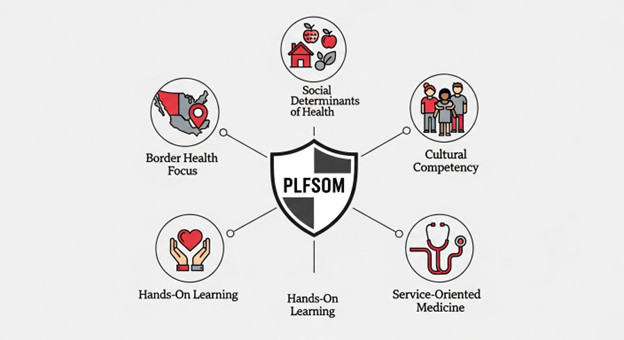
Choosing a medical school is a decision that extends beyond academic prestige; it involves aligning your personal aspirations and professional goals with an institution’s core philosophy and educational approach. The Paul L. Foster School of Medicine at Texas Tech University Health Sciences Center El Paso offers a distinct and exceptionally valuable medical education experience, particularly for those drawn to service-oriented medicine and the complexities of border health. Located in a vibrant, binational community, PLFSOM provides unparalleled opportunities for hands-on learning in an environment that directly reflects the diverse patient populations and healthcare challenges of the US-Mexico border. This unique setting is not merely a backdrop but an integral part of the learning experience, fostering cultural competency and a deep understanding of the social determinants of health.
What This Guide Offers You
This guide is your roadmap to understanding and successfully navigating the admissions process for the Paul L. Foster School of Medicine. We aim to provide a holistic overview, covering essential aspects such as academic prerequisites, the critical role of the MCAT, the intricacies of the TMDSAS application, the strategic approach to the secondary application, and preparation for the interview stage. Beyond detailing the procedural steps, we delve into the ethos of PLFSOM, helping you understand how to best demonstrate your alignment with the school’s mission. You will find information on crafting a compelling personal statement, securing impactful letters of recommendation, and understanding the nuances of holistic review as applied by the TTUHSC El Paso admissions committee. Our goal is to empower you with knowledge, enabling you to submit a thoughtful, well-prepared application that highlights your unique strengths and commitment to medicine, especially within the context of community and underserved populations.
Why PLFSOM? Decoding Its Unique Mission and Values
The Paul L. Foster School of Medicine is more than an academic institution; it is a vital component of the Texas Tech University Health Sciences Center (TTUHSC) system, deeply embedded in the fabric of its community. Understanding its mission and values is paramount for any prospective applicant. PLFSOM is unequivocally dedicated to educating a diverse group of students who will serve the healthcare needs of Texas and beyond, with a particular emphasis on the unique populations and health challenges present in the El Paso region and along the US-Mexico border. This focus shapes every aspect of the school, from its curriculum to its research endeavors and, critically, its admissions criteria.
The Heart of PLFSOM: Community Engagement and Underserved Populations
A defining characteristic of the Paul L. Foster School of Medicine is its profound commitment to community engagement and serving underserved populations. This isn’t merely an addendum to the educational experience; it is woven into the very fabric of the school’s identity. PLFSOM actively seeks applicants who demonstrate a genuine passion for giving back, a capacity for empathy, and a commitment to addressing the health disparities that affect vulnerable communities. Experiences that showcase your dedication to service, your ability to work with diverse groups, and your understanding of the social determinants of health are highly valued. This focus stems from the understanding that effective healthcare extends beyond clinical skills to encompass cultural humility, community advocacy, and a dedication to equitable access to medical care.
The El Paso Advantage: Integrating Community into Medical Education
The El Paso location is not just a geographical marker for the Foster School of Medicine; it is a strategic advantage that profoundly enriches the medical education experience. Situated on the US-Mexico border, El Paso offers a unique, dynamic patient population characterized by its rich cultural diversity, a mix of socioeconomic backgrounds, and specific health concerns prevalent in the region. This environment provides an unparalleled training ground for future physicians. Applicants are encouraged to understand and articulate how this unique context aligns with their own aspirations. Whether through clinical rotations in diverse settings, engagement with community health initiatives, or research focused on border health issues, PLFSOM leverages its location to prepare its students to be compassionate, culturally competent, and adaptable physicians ready to serve a wide spectrum of needs.
Innovative Curriculum and Learning Environment at TTUHSC El Paso
The curriculum at the Paul L. Foster School of Medicine, part of the Texas Tech University Health Sciences Center, is designed with innovation and early clinical integration at its core. From the outset, students are exposed to patient care scenarios, allowing them to apply foundational scientific knowledge in practical, real-world settings. This integrated approach moves beyond traditional, compartmentalized learning to foster a more comprehensive understanding of medicine. The learning environment encourages collaboration, critical thinking, and continuous inquiry. Students benefit from small class sizes, dedicated faculty mentors, and access to state-of-the-art facilities within the health sciences center. This structure ensures that graduates are not only well-versed in medical science but are also skilled communicators and problem-solvers, prepared for the demands of residency and beyond.
Research Opportunities and the Scholarly Activity and Research Program
While not a mandatory requirement for admission, engagement in research and scholarly activity is a significant component of the educational experience at PLFSOM. The Scholarly Activity and Research Program (SARP) is designed to immerse students in the scientific process, fostering critical thinking and contributing to the advancement of medical knowledge. Students have opportunities to participate in research projects across various disciplines, many of which are focused on health issues pertinent to the El Paso region and border populations, such as diabetes, obesity, and mental health. Familiarity with research protocols and the ability to articulate your contributions and insights from any research experience are crucial, as these often form the basis for in-depth discussions during the interview process. Demonstrating an inquisitive mind and a capacity for scientific inquiry can significantly enhance your application.
Building Your Foundation: Prerequisite Courses and Academic Profile
A strong academic foundation is a non-negotiable prerequisite for medical school admissions. The Paul L. Foster School of Medicine, like other institutions, evaluates applicants based on their academic record to gauge their preparedness for the rigorous demands of medical school coursework and future clinical practice. This involves not only achieving competitive grades but also completing specific prerequisite courses that ensure a baseline understanding of the sciences fundamental to medicine.
Essential Undergraduate Coursework for MD Applicants
The Paul L. Foster School of Medicine requires applicants to have successfully completed a minimum of 90 semester hours of undergraduate coursework from an accredited college or university. While a bachelor’s degree is preferred, it is not strictly mandated. Specific prerequisite courses are essential to demonstrate proficiency in foundational scientific subjects. These typically include a full academic year (two semesters or three quarters) of biology with laboratory, general chemistry with laboratory, organic chemistry with laboratory, and physics with laboratory. Additionally, strong performance in English composition and mathematics, including statistics, is expected. It is crucial to consult the most current PLFSOM admissions website for the definitive list of prerequisite courses, as requirements can be updated.
GPA Expectations and Demonstrating Academic Rigor
While PLFSOM does not publish strict GPA cutoffs, a highly competitive GPA is essential for admission consideration. The average GPA for matriculants often falls in the high 3.0s to low 4.0s. However, the admissions committee employs a holistic review process, meaning that GPA is considered alongside numerous other factors. This includes not only your overall GPA but also your science GPA (SGPA), which reflects your performance in core science courses. An upward trend in your GPA throughout your undergraduate career can demonstrate resilience and growth. Beyond just the numbers, the rigor of your coursework matters. Excelling in challenging advanced science courses and maintaining a strong academic record in demanding programs signals your ability to handle the intellectual demands of medical school.
Beyond the Classroom: Experience Matters for a Holistic Application
A standout application to the Paul L. Foster School of Medicine extends far beyond academic transcripts and MCAT scores. PLFSOM, in line with the broader philosophy of TTUHSC El Paso, emphasizes a holistic review of each candidate. This means they are looking for individuals who have cultivated a diverse range of experiences that demonstrate maturity, commitment, leadership potential, and a genuine alignment with the school’s mission of serving communities, particularly underserved populations. Meaningful clinical experience, including direct patient care and shadowing physicians, is vital for understanding the realities of the medical profession. Robust community service, especially initiatives related to health equity or serving vulnerable populations in the El Paso area, showcases your dedication to the school’s core values. Research experience, leadership roles in student organizations, and impactful extracurricular activities all contribute to painting a comprehensive picture of your capabilities and potential as a future physician.
The MCAT: Strategic Preparation for PLFSOM Admissions
The Medical College Admission Test (MCAT) is a standardized, multiple-choice examination that serves as a critical benchmark in the medical school admissions process across the United States. For the Paul L. Foster School of Medicine, as with most medical schools, the MCAT is an essential component of the application, providing a standardized measure of a candidate’s knowledge base, critical thinking, and problem-solving skills in subjects relevant to medicine.
Understanding the Medical College Admission Test (MCAT)
The MCAT is administered by the Association of American Medical Colleges (AAMC) and assesses four main content areas: Chemical and Physical Foundations of Biological Systems; Critical Analysis and Reasoning Skills (CARS); Biological and Biochemical Foundations of Living Systems; and Psychological, Social, and Biological Foundations of Behavior. The test is designed to evaluate not only factual recall but also the application of knowledge and reasoning skills necessary for success in medical school and practice. Applicants are expected to have completed coursework equivalent to at least two years of undergraduate study prior to taking the MCAT, ensuring they possess the foundational scientific and reasoning skills required.
When to Take the MCAT: Strategic Timing for the Application Season
Strategic timing of the MCAT exam is crucial for a successful application to PLFSOM. The general recommendation is to take the MCAT no later than June of the year prior to when you intend to matriculate. This timing allows your scores to be available for initial review when the Texas Medical and Dental Schools Application Service (TMDSAS) application opens and is processed by the admissions committee. Taking the exam earlier ensures that your application can be reviewed promptly, increasing your chances of being considered for early interview invitations. While it is possible to take the MCAT later, it may delay the review of your application and potentially impact your chances of securing an interview, especially for early decision programs or the initial interview cycles. Planning your study schedule meticulously and aiming for a June test date is a widely adopted strategy among successful applicants.
Competitive MCAT Scores and Their Role in Admissions
While the Paul L. Foster School of Medicine, as part of TTUHSC El Paso, advocates for a holistic review of applications, the MCAT score remains a significant factor. For the most recent matriculating classes, the average MCAT score for applicants has been around 508, with successful matriculants often scoring within this range or higher. However, it is vital to understand that these are averages, not absolute cutoffs. PLFSOM explicitly states that there is no single factor that guarantees or excludes an applicant. An applicant with a slightly lower MCAT score but exceptional experiences, a compelling personal statement, and strong letters of evaluation may still be a highly competitive candidate, particularly if their profile aligns exceptionally well with the school’s mission. Conversely, an outstanding MCAT score alone is insufficient without supporting evidence of clinical experience, commitment to service, and personal attributes.
Navigating the Texas Medical and Dental Schools Application Service (TMDSAS)
For applicants seeking admission to medical schools within the state of Texas, the Texas Medical and Dental Schools Application Service (TMDSAS) serves as the central application portal. This service streamlines the application process, allowing prospective students to submit a single application to multiple Texas medical schools, including the Paul L. Foster School of Medicine. Understanding the structure and requirements of the TMDSAS application is fundamental to presenting a comprehensive and compelling profile.
TMDSAS: Your Primary Application Hub for Texas Medical Schools
The TMDSAS application is the gateway for virtually all applicants to Texas public medical schools. It collects essential information about your academic history, extracurricular activities, personal background, and essays. This comprehensive platform allows the admissions committee at PLFSOM to gain a detailed understanding of your qualifications, experiences, and motivations. It is crucial to approach the TMDSAS application with meticulous attention to detail, ensuring all information is accurate, complete, and professionally presented. The application typically opens in May, with the deadline for submission usually set for October 1st, although it is always advisable to confirm these dates annually on the official TMDSAS website and the PLFSOM admissions page.
Key Sections of the TMDSAS Application
The TMDSAS application is divided into several critical sections, each requiring careful consideration and thoughtful input. These include: Biographical Information, where you provide personal details; Academic History, where you list all post-secondary institutions attended and upload official transcripts; Work/Activities, a section designed to detail your significant experiences, including clinical work, volunteer service, research, leadership roles, and any other relevant activities; Personal Essay, a crucial opportunity to articulate your journey and motivations; and Letters of Evaluation, where you request and manage letters of recommendation. Each section plays a vital role in demonstrating your fit for medical school and specifically for PLFSOM. Be thorough in describing your experiences, highlighting your roles, responsibilities, and the impact you made, particularly as these relate to the school’s mission.
Crafting a Compelling Personal Statement
Your personal statement within the TMDSAS application is your primary narrative, offering a unique opportunity to connect with the admissions committee on a personal level. This essay should articulate your journey into medicine, explain your motivations for pursuing a medical career, and, importantly, demonstrate why you are specifically drawn to the Paul L. Foster School of Medicine and its mission. Avoid generic platitudes. Instead, weave a compelling story that highlights your experiences, challenges overcome, and personal growth that have shaped your commitment to medicine. Connect your past experiences and future aspirations directly to PLFSOM’s focus on community service, underserved populations, and border health. Authenticity, introspection, and a clear articulation of your “why” are key to crafting a statement that resonates with the admissions committee.
Securing Strong Letters of Evaluation
Letters of evaluation, or letters of recommendation, provide third-party perspectives on your character, abilities, and potential as a future physician. The Paul L. Foster School of Medicine requires a specific number of these letters, typically including at least one from a pre-health advisor or committee (if your institution has one) and other letters from individuals who can speak to your academic and personal qualities, such as professors, research mentors, supervisors, or physicians you have worked with. It is crucial to request letters well in advance of the deadline and to provide your recommenders with ample information about your goals, your application, and the specific qualities you hope they will highlight. Choosing individuals who know you well and can offer specific anecdotes and insights will result in more impactful and persuasive letters that significantly bolster your application.
Joint Admissions Medical Program (JAMP) for Aspiring Physicians
For highly qualified Texas residents from economically disadvantaged backgrounds, the Joint Admissions Medical Program (JAMP) offers a unique pathway to consider. While not a direct part of the standard PLFSOM application, JAMP provides dedicated support and a potential early assurance of admission to medical school for eligible students. Applicants interested in JAMP should explore its specific criteria and application process, which is managed separately from TMDSAS. Successful JAMP participants typically demonstrate strong academic performance and a commitment to serving the medically underserved. If you meet the eligibility requirements, applying to JAMP can provide an additional structured pathway toward medical education at institutions like PLFSOM.
The PLFSOM Secondary Application: Your Tailored Narrative for Texas Tech El Paso
Following the submission of your primary application through TMDSAS, many medical schools, including the Paul L. Foster School of Medicine, will invite selected applicants to complete a secondary application. This is a critical stage where you have the opportunity to further tailor your application, providing specific details and reflections that directly address the unique mission, values, and community context of PLFSOM.
What is the Secondary Application?
The secondary application is an extension of your primary application, allowing the admissions committee to gather more in-depth information about your fit with their specific institution. For PLFSOM, this typically involves a series of essays or short answer questions designed to assess your understanding of and commitment to their mission, particularly concerning community engagement, service to underserved populations, and the unique challenges and opportunities presented by the El Paso and border health environment. It is your chance to elaborate on experiences mentioned in your primary application and to demonstrate that you have researched PLFSOM thoroughly and have genuine reasons for wanting to attend their School of Medicine.
Strategic Responses to PLFSOM’s Essay Prompts
The essay prompts within the PLFSOM secondary application are carefully crafted to elicit responses that reflect an applicant’s alignment with the school’s ethos. A prime example of a prompt often encountered focuses on the applicant’s understanding of PLFSOM’s mission and the significance of its border location. In responding to such prompts, it is essential to go beyond generic statements. Research the specific health issues prevalent in El Paso, understand the cultural dynamics of the region, and articulate how your personal experiences, skills, and aspirations equip you to contribute meaningfully to this community. Demonstrating an awareness of and a passion for addressing health disparities, engaging with diverse patient populations, and contributing to the advancement of healthcare in this specific region will significantly strengthen your application. Authenticity, introspection, and a clear, direct connection to the school’s stated mission are paramount.
Addressing CASPer® and AAMC PREview™ Assessments
The Paul L. Foster School of Medicine may, depending on the application cycle, require applicants to complete standardized assessments such as CASPer® (Computer-based Assessment for Sampling Personal Characteristics) or the AAMC PREview™ Professional Readiness Exam. These assessments are designed to evaluate non-cognitive skills, such as professional behavior, ethics, and situational judgment. It is crucial to check the most current admissions requirements for PLFSOM and the AAMC/CASPer® websites for specific details regarding which assessments are required, when they are administered, and how to register. Preparation for these exams typically involves understanding their format and practicing with sample questions to develop strategies for thoughtful and ethical responses, ensuring your performance reflects the professional attributes valued by the School of Medicine.
The Interview Stage: Proving Your Fit at Paul L. Foster School of Medicine
Receiving an invitation for an interview is a significant milestone in the medical school admissions process, indicating that the admissions committee sees strong potential in your application and wishes to learn more about you in person. For the Paul L. Foster School of Medicine, the interview is a crucial opportunity to assess your fit with the school’s mission, values, and community-oriented approach.
Receiving an Interview Invitation: What It Means for Your Candidacy
An interview invitation from PLFSOM signifies that your academic achievements, MCAT scores, experiences, and application essays have successfully captured the attention of the admissions committee. It means you have demonstrated a level of promise that warrants a more in-depth evaluation. This stage is highly competitive, and receiving an invitation is a strong indicator that you are a viable candidate for admission. The interview allows the committee to assess aspects of your personality, communication skills, critical thinking abilities, and personal attributes that cannot be fully conveyed through written materials. It is an opportunity to showcase your passion for medicine, your understanding of the unique aspects of PLFSOM, and your potential to contribute positively to their learning environment and the El Paso community.
Preparing for Your PLFSOM Interview
Thorough preparation is essential for a successful interview at the Paul L. Foster School of Medicine. Begin by thoroughly reviewing the school’s mission, values, curriculum, and any specific programs or research initiatives that resonate with you. Understand the demographic and health landscape of El Paso and the border region, and be prepared to articulate how your experiences have prepared you to serve this community. Practice articulating your motivations for pursuing medicine and, specifically, why PLFSOM is the ideal place for your medical education. Be ready to discuss your experiences in detail, highlighting leadership, teamwork, problem-solving, and your approach to challenges. Common interview formats can include traditional one-on-one interviews, multiple mini-interviews (MMI), or a combination. Familiarize yourself with these formats and practice answering common medical school interview questions, focusing on authenticity and thoughtful responses that reflect your genuine self.
What the Admissions Committee Seeks in a Candidate
The admissions committee at PLFSOM, as part of Texas Tech University Health Sciences Center El Paso, looks for candidates who embody a blend of academic excellence, intrinsic motivation, and a strong commitment to service. Beyond competitive grades and MCAT scores, they seek individuals who demonstrate maturity, resilience, empathy, and excellent interpersonal skills. Crucially, they are looking for applicants whose values align with the school’s mission. This includes a genuine interest in serving underserved populations, a capacity for cultural humility, and an understanding of the unique healthcare needs of the El Paso region and the US-Mexico border. They aim to select individuals who will not only succeed academically but will also thrive in the PLFSOM environment and become compassionate, effective physicians dedicated to improving community health.
Conclusion
The journey to gaining admission to the Paul L. Foster School of Medicine at Texas Tech University Health Sciences Center El Paso is a rigorous yet profoundly rewarding path. This comprehensive guide has navigated you through the essential components, from understanding PLFSOM’s distinctive mission and values centered on community and underserved populations to meticulously preparing your academic profile and standardized test scores. We have detailed the strategic approach to leveraging the TMDSAS primary application and the PLFSOM secondary application, emphasizing how to craft a narrative that showcases your unique fit with the school and its El Paso environment. Furthermore, we have underscored the importance of strategic MCAT preparation and the interview stage as opportunities to demonstrate your commitment and potential.
The intelligence gathered highlights that PLFSOM actively seeks candidates who not only possess strong academic foundations but also demonstrate a deep-seated passion for service, cultural competency, and a genuine understanding of the border health context. Your application is your chance to tell your story, showcasing how your experiences align with these core tenets. By paying close attention to detail in your TMDSAS and secondary applications, crafting authentic essays, securing strong letters of evaluation, and preparing diligently for your interview, you can effectively present your candidacy. Remember that a holistic review means your unique journey and your potential contributions to the PLFSOM community and the broader region are as vital as your academic metrics. Embrace the opportunity to articulate your “why,” connect your experiences to the school’s mission, and demonstrate your readiness to become a compassionate physician serving the diverse populations of Texas and beyond.
Frequently Asked Questions About Texas Tech El Paso Medical School
1. What GPA do you need to get into Texas Tech Paul L. Foster School of Medicine El Paso?
The average GPA of matriculated students at Texas Tech University Health Sciences Center Paul L. Foster School of Medicine (PLFSOM) is approximately 3.84. Competitive applicants typically present a strong science GPA alongside their cumulative GPA. Because the school values mission-fit and service to underserved communities, demonstrating meaningful clinical experience in border or low-income settings can strengthen a borderline academic profile. Applications are submitted through TMDSAS, not AMCAS.
2. What MCAT score do you need to get into Texas Tech Paul L. Foster School of Medicine El Paso?
The average MCAT score for enrolled students at PLFSOM is approximately 509, which sits near the 76th percentile nationally. While the school does not publish a strict minimum cutoff, most competitive applicants score in the 506–513 range. A balanced section performance is preferred, and a strong application in other areas—such as community service, Spanish-language ability, or research—can complement scores at the lower end of the competitive range.
3. What is the acceptance rate at Texas Tech Paul L. Foster School of Medicine El Paso?
The acceptance rate at PLFSOM is approximately 2.7%, making it one of the more selective medical schools in Texas. Out of roughly 4,811 applicants in a recent admissions cycle, approximately 130 students matriculated. Because the school receives a large volume of applications relative to its class size, strong alignment with the school’s border-health mission is a critical differentiator.
4. How many students apply to and enroll at Texas Tech Paul L. Foster School of Medicine El Paso each year?
Approximately 4,811 applicants compete each year for around 130 seats in the entering class, giving PLFSOM one of the higher applicant-to-seat ratios among Texas medical schools. The total enrollment across all four years is approximately 514 MD students. Applications are processed through TMDSAS, and Texas residents receive strong preference in the selection process.
5. Does Texas Tech Paul L. Foster School of Medicine El Paso accept out-of-state applicants?
PLFSOM participates in TMDSAS, the Texas Medical and Dental Schools Application Service, which means it gives substantial priority to Texas residents. Out-of-state applicants are considered but represent a very small fraction of each entering class. Non-Texans who apply should have compelling ties to the El Paso/U.S.-Mexico border region, a demonstrated commitment to underserved-community medicine, or exceptional academic credentials to be competitive.
6. What is the interview format at Texas Tech Paul L. Foster School of Medicine El Paso?
Interviews at PLFSOM are held on Thursdays and run from early August through mid-January. Candidates participate in a full-day program that includes an orientation, a campus and facilities tour, and traditional (non-MMI) interviews designed to evaluate motivation for medicine, interest in the school’s border-health mission, interpersonal skills, and problem-solving ability. Before being considered for an interview, all applicants must complete the CASPer situational-judgment test and have their scores received by the admissions office.
7. What are the secondary essay prompts for Texas Tech Paul L. Foster School of Medicine El Paso?
The PLFSOM secondary application includes several short-essay prompts, each capped at approximately 300 words. Common prompts ask applicants to explain why they are drawn to the school’s mission and border location, to describe a parent, guardian, friend, or mentor who influenced their pursuit of medicine, to discuss personal experiences or attributes that reflect the school’s student honor code, and to describe any unique personal experiences or disadvantages relevant to their medical career. Essays should be tailored to demonstrate genuine alignment with the school’s commitment to serving the border region and underserved communities.
8. How much does it cost to attend Texas Tech Paul L. Foster School of Medicine El Paso?
For the 2025–2026 academic year, tuition and fees for the MD program at PLFSOM are approximately $23,569 per year for Texas residents and $38,717 per year for non-residents. These figures cover tuition and mandatory fees but do not include living expenses, health insurance, or the cost of books and equipment. El Paso’s relatively low cost of living compared to other major Texas cities helps keep total student budgets manageable.
9. What is the border-health mission of Texas Tech Paul L. Foster School of Medicine El Paso, and why does it matter for applicants?
PLFSOM is the only four-year MD-granting medical school on the U.S.-Mexico border and sits within the second-largest binational metropolitan area in the Western Hemisphere. The school’s explicit mission is to train physicians who will serve the border region and underserved populations, and this mission permeates everything from the curriculum to student selection. A required course called Society, Community, and Individual (SCI) builds Spanish-language skills and cultural competency, and community-medicine rotations expose students to the binational patient population. Applicants who lack a demonstrated commitment to health equity or border/underserved communities are at a significant disadvantage regardless of academic metrics.
10. What is the Scholarly Activity and Research Program (SARP) at Texas Tech Paul L. Foster School of Medicine El Paso?
PLFSOM requires all MD students to complete the Scholarly Activity and Research Program (SARP) across all four years of medical school, making research a graduation requirement rather than an elective. The school maintains four Centers of Emphasis in Infectious Diseases, Neurosciences, Cancer, and Diabetes and Obesity—areas of particular relevance to the border population. A 93,000-square-foot research facility houses work in environmental health and maintains a repository dedicated to Hispanic health data and a genomic facility focused on hereditary disease. Students interested in additional advanced training can pursue MD/PhD, MD/MPH, or MD/MBA dual-degree programs.