
Your Path to ETSU Quillen College of Medicine
Embarking on the journey to medical school is a significant undertaking, demanding dedication, meticulous planning, and a profound understanding of the institutions you aspire to join. For many, the East Tennessee State University (ETSU) Quillen College of Medicine represents a beacon of opportunity, particularly for those drawn to its distinctive mission of serving rural and underserved populations with a strong emphasis on primary care. This guide is meticulously crafted to equip aspiring medical students with the comprehensive knowledge needed to navigate the intricate admissions process at Quillen. We will delve into the college’s unique ethos, dissect the admissions profile, outline essential requirements, and provide a strategic roadmap for crafting a compelling application. Whether you are just beginning your exploration or refining your strategy, this comprehensive resource aims to demystify the path to acceptance at this esteemed Medical School.
This blog will cover:
- Your Path to ETSU Quillen College of Medicine
- Why ETSU Quillen? A Brief Overview of Its Distinctive Mission
- Why Quillen? Understanding Its Unique Mission and Values
- The Heart of Quillen: A Commitment to Rural and Primary Care Medicine
- East Tennessee State University and the Academic Health Sciences Center Advantage
- Demystifying Quillen’s Admissions Profile: What They’re Looking For
- Navigating the Application Process: Your Comprehensive Timeline
- Crafting a Standout Application for Quillen College of Medicine
- Mastering the Secondary Essays: Connecting Your Story to Quillen’s Unique Identity
- The Interview Process: Your Opportunity to Shine
- Financial Planning for Medical School
- Unique Programs and Pathways at Quillen
- Conclusion
Welcome to Your Definitive Guide
The pursuit of a medical degree is a marathon, not a sprint, and for those setting their sights on Quillen College of Medicine, understanding the nuances of its application process is paramount. This guide serves as your definitive compass, navigating you through the essential aspects of what makes Quillen a unique and sought-after institution. We aim to provide clarity on its mission, expectations for applicants, the rigorous yet holistic review process, and the practical steps required to submit a successful application. By the end of this article, you will possess a thorough understanding of how to position yourself effectively to join the ranks of medical students at East Tennessee State University.
Why ETSU Quillen? A Brief Overview of Its Distinctive Mission
The Quillen College of Medicine at East Tennessee State University is not just another medical school; it is an institution with a deeply ingrained mission to address the healthcare needs of Appalachia and beyond. Its commitment to training physicians who will serve in rural and underserved areas, with a particular focus on primary care, sets it apart. This dedication is not merely stated; it is woven into the fabric of its curriculum, its faculty’s research, and its profound engagement with the community it serves. Understanding this core mission is the first step for any prospective applicant seeking acceptance at Quillen.
Why Quillen? Understanding Its Unique Mission and Values
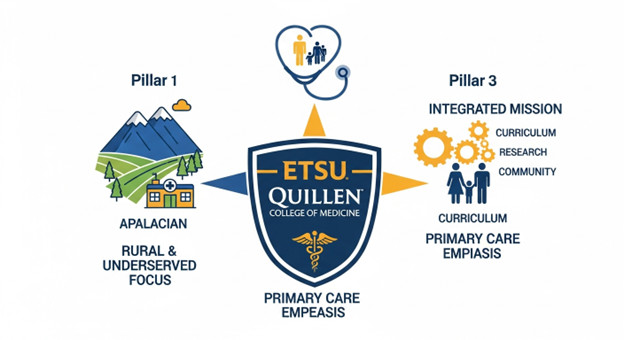
At the heart of Quillen College of Medicine’s identity lies a profound commitment to a specific set of values and a clear mission that shapes every aspect of its medical education. For applicants, aligning with these principles is not just beneficial; it is fundamental to demonstrating a genuine fit with the institution. This section explores the core tenets that define Quillen and guide its selection process.
The Heart of Quillen: A Commitment to Rural and Primary Care Medicine
Quillen College of Medicine has long been dedicated to addressing healthcare disparities, particularly in rural and underserved regions. This mission is not just a talking point; it is a driving force behind its educational philosophy and strategic direction. The institution recognizes a critical need for physicians who are prepared and motivated to practice primary care in communities that often face shortages. Data consistently shows a projected shortage of primary care physicians, expected to reach 70,610 full-time equivalent physicians by 2038, with this deficit being particularly acute in nonmetro areas Source: Health Resources and Services Administration (HRSA), 2025. Quillen actively seeks applicants who not only understand this challenge but are eager to be part of the solution. The curriculum and clinical experiences are designed to foster skills and perspectives necessary for effective practice in these environments, preparing medical students for meaningful careers in Tennessee and similar regions.
East Tennessee State University and the Academic Health Sciences Center Advantage
As an integral part of East Tennessee State University, Quillen College of Medicine benefits immensely from the broader university ecosystem and its robust Academic Health Sciences Center. This synergy allows for interdisciplinary collaboration, access to a wide range of research opportunities, and a shared commitment to community health. The university’s focus on regional service provides a strong foundation for Quillen’s mission, creating an environment where medical students are exposed to diverse perspectives and innovative approaches to healthcare delivery. This affiliation ensures that Quillen is at the forefront of medical advancements while remaining deeply rooted in its service-oriented mission.
Culture and Community: What Makes Quillen’s Medical Education Unique?
The culture at Quillen College of Medicine is shaped by its mission and its location. There is a palpable sense of camaraderie and shared purpose among medical students, fostered by a collaborative learning environment rather than cutthroat competition. The admissions committee actively looks for individuals who will thrive in this supportive atmosphere and contribute positively to the community of learners. This unique culture is built on mutual respect, a dedication to service, and a genuine passion for medicine. The medical education received here goes beyond textbook knowledge; it encompasses the development of compassionate, skilled physicians ready to make a difference.
Beyond the Classroom: Engaging with the Tennessee Community and Border Counties
A cornerstone of the Quillen experience is its deep engagement with the Tennessee community and its surrounding border counties. Medical students are provided with numerous opportunities to participate in outreach programs, clinical rotations in rural settings, and community health initiatives. This hands-on experience is invaluable, allowing students to witness firsthand the healthcare challenges and triumphs within these regions. Such engagement is crucial for developing cultural competence and a nuanced understanding of patient needs, which are highly valued by the admissions committee. Prospective applicants are encouraged to demonstrate prior or planned engagement with similar communities to showcase their alignment with Quillen’s ethos.
Demystifying Quillen’s Admissions Profile: What They’re Looking For
Understanding what the Quillen College of Medicine admissions committee seeks in its applicants is crucial for developing a strategic approach to your application. Quillen employs a holistic review process, meaning they consider a wide range of factors beyond just academic metrics. This section breaks down the profile of an ideal Quillen candidate, highlighting the qualities and experiences that contribute to a successful application.
Understanding Quillen’s Acceptance Rate and Admissions Selectivity
Like most accredited Medical Schools, Quillen College of Medicine maintains a highly competitive admissions process. While specific year-to-year acceptance rates can fluctuate, they generally reflect the selectivity of top-tier medical programs. Nationally, the acceptance rate for applicants to U.S. MD-granting medical schools was 42.8% in the 2025 application cycle Source: AAMC, 2025. Quillen aims to select individuals who not only possess strong academic foundations but also demonstrate a genuine commitment to the institution’s mission. The admissions committee carefully reviews each application to identify candidates who will excel in their medical education and contribute meaningfully to the physician workforce, particularly in primary care and rural settings.
The Holistic Review: Beyond GPA and MCAT Scores
Quillen College of Medicine is committed to a holistic review process, evaluating each applicant as a whole person. This means that while academic achievements are important, they are only one piece of the puzzle. The admissions committee looks beyond GPA and MCAT scores to assess an individual’s experiences, motivations, personal qualities, and potential to succeed in a demanding medical education and beyond. They seek to understand your journey, your resilience, your leadership capabilities, your commitment to service, and how your unique background and experiences align with the values and mission of Quillen. This comprehensive approach ensures that the medical students admitted are well-rounded and possess the diverse perspectives needed in modern healthcare.
Core Qualities of an Ideal Quillen Applicant
The ideal Quillen College of Medicine applicant embodies a specific set of qualities that align with the institution’s mission. Paramount among these is a demonstrated commitment to primary care and rural medicine. This can be evidenced through relevant experiences, volunteer work, or personal reflections. Resilience is another key trait; the medical school journey is challenging, and the admissions committee wants to see that applicants have the fortitude to overcome obstacles. Leadership potential, strong interpersonal skills, empathy, and a capacity for teamwork are also highly valued. Furthermore, Quillen seeks individuals with a strong sense of community involvement and a commitment to serving others, particularly in underserved regions of Tennessee and its border counties. Cultural competence and an ability to work effectively with diverse populations are also essential.
Applicant Demographics and Student Body Insights
Quillen College of Medicine strives to cultivate a diverse student body that reflects the communities it serves. In recent years, there has been a growing emphasis on diversity in medical education across the nation. For instance, by the 2023-2024 academic year, 62.52% of matriculants considered student body diversity important, and 54.87% considered faculty diversity important when selecting a medical school Source: JAMA Network Open, 2025. Women accounted for 55.4% of matriculants to U.S. MD-granting medical schools in the 2023-2024 academic year Source: American Medical Association, 2023. Additionally, Black or African American students comprised 10.0% of total matriculants in U.S. medical schools during the 2023-24 academic year Source: AAMC, 2023. Quillen actively seeks to build a class that brings a rich tapestry of backgrounds, experiences, and perspectives, fostering a dynamic learning environment that enhances medical education for all.
Essential Admissions Requirements & Academic Foundations
To be considered for acceptance at Quillen College of Medicine, applicants must meet a set of fundamental academic requirements. These prerequisites are designed to ensure that all admitted medical students possess the necessary foundational knowledge and skills to succeed in the rigorous medical education program. This section outlines the key academic benchmarks that Quillen expects from its prospective candidates.
Prerequisite Coursework: Building Your Scientific and Humanistic Foundation
Quillen College of Medicine requires applicants to complete specific prerequisite coursework to demonstrate a solid understanding of the basic sciences and essential humanistic disciplines. Typically, this includes biology, chemistry (general and organic), physics, and mathematics (calculus and/or statistics). Many medical schools, including Quillen, also emphasize the importance of coursework in subjects that foster critical thinking and communication skills, such as English or behavioral sciences. It is crucial for applicants to consult the most current official admissions requirements on the Quillen College of Medicine website to ensure all prerequisites are met. Successful completion of these courses forms the bedrock of a strong application.
GPA Expectations: Aiming for Academic Excellence
While Quillen College of Medicine employs a holistic review, a strong Grade Point Average (GPA) remains a significant indicator of academic preparedness. Successful applicants typically demonstrate a high level of academic achievement throughout their undergraduate careers. Although specific GPA cutoffs are not publicly disclosed, medical students who gain acceptance generally possess GPAs that reflect consistent strong performance, often above 3.7. The admissions committee will review your entire academic record, including trends in your GPA, to assess your academic potential and dedication to your studies. Demonstrating academic excellence across all subjects is a vital component of a competitive application for Quillen.
The Medical College Admission Test (MCAT): What Scores Are Competitive for Quillen?
The MCAT is a standardized test widely used by medical schools to assess critical thinking, problem-solving, and knowledge in science and reasoning skills. For Quillen College of Medicine, like many other institutions, a competitive MCAT score is a crucial element of the application. The mean total MCAT score for matriculants to U.S. MD-granting medical schools in the 2023-2024 academic year was 511.5 Source: AAMC, 2023. While Quillen does not typically publish specific score ranges for acceptance, applicants are advised to aim for scores that place them within a competitive percentile nationally. Preparation for the MCAT should be thorough, reflecting the depth of knowledge and analytical skills required for medical education and the admissions committee’s evaluation.
The Acuity Insights Casper Exam: Understanding This Crucial Assessment
In addition to traditional academic metrics, Quillen College of Medicine, like many other medical schools, may require applicants to complete the Acuity Insights Casper exam. Casper (Computer-Based Assessment for Sampling Personal Characteristics) is a standardized online assessment designed to evaluate non-cognitive skills and attributes, such as ethics, professionalism, communication, and empathy. These are qualities that the admissions committee deems essential for success in medical school and in the practice of medicine, particularly in primary care and rural medicine. Applicants should familiarize themselves with the format and content of the Casper exam and prepare accordingly to showcase their suitability for Quillen’s medical education program.
Navigating the Application Process: Your Comprehensive Timeline
The application process for Quillen College of Medicine is multi-faceted and requires careful planning and adherence to strict deadlines. Understanding each step, from the initial AMCAS submission to the secondary application and beyond, is critical for presenting a strong and complete profile to the admissions committee. This section provides a detailed roadmap to guide applicants through the timeline and requirements of applying to Quillen.
The AMCAS Primary Application: Your First Major Step
The primary application for Quillen College of Medicine is submitted through the American Medical College Application Service (AMCAS). AMCAS standardizes the initial submission process, collecting essential information about your academic history, work and volunteer experiences, personal statement, and letters of recommendation. It is imperative to complete the AMCAS application accurately and thoughtfully, as this document forms the foundation of your application to Quillen and other medical schools. Take your time to articulate your experiences clearly and concisely, ensuring they reflect your motivations and suitability for medical education.
ETSU Quillen’s Secondary Application: Demonstrating Your Fit
Once AMCAS verifies your primary application, Quillen College of Medicine will invite eligible applicants to complete a secondary application. This component is your opportunity to further personalize your application and demonstrate specifically why you are a strong fit for Quillen’s unique mission and values. The secondary essays typically ask for more in-depth reflection on your experiences, your understanding of Quillen’s commitment to rural medicine and primary care, and how you envision contributing to the Tennessee community. It is crucial to tailor your responses directly to Quillen’s prompts, avoiding generic answers and showcasing your genuine interest and alignment with their ethos.
Letters of Recommendation: Choosing Your Advocates
Letters of recommendation are a vital part of your application to Quillen College of Medicine. They provide the admissions committee with external perspectives on your character, academic abilities, and potential as a future physician. It is essential to choose individuals who know you well and can speak to your strengths, particularly in areas relevant to medical education and practice, such as your work ethic, intellectual curiosity, and interpersonal skills. Typically, Quillen will require letters from your pre-health advisor, science faculty, and potentially from mentors who can attest to your clinical or research experiences. Waive your right to view these letters to ensure the recommender feels comfortable providing a candid assessment.
Application Deadlines: A Critical Timeline for Applicants
Adhering to application deadlines is non-negotiable for gaining acceptance at Quillen College of Medicine. The AMCAS primary application typically opens in early May, with submission generally recommended by early to mid-June to allow ample time for processing and review by the admissions committee. The secondary application usually follows shortly after the primary submission, often within a few weeks of receiving the invitation. Completing and submitting your secondary application promptly, ideally within two weeks of receipt, is highly advisable. Missing deadlines can significantly jeopardize your chances of acceptance. Stay informed by regularly checking the official Quillen College of Medicine admissions website for the most up-to-date timeline. The total number of applicants to U.S. MD-granting medical schools declined by 1.2% in the 2024-25 academic year, reaching the lowest level since 2017-18 Source: AAMC, 2025, underscoring the importance of timely and thorough applications.
Application Fees and Fee Waivers
Submitting applications to medical school involves associated fees. The AMCAS application fee is standard, and Quillen College of Medicine also charges a fee for its secondary application. These fees can accumulate, and for applicants facing financial hardship, fee waivers are available. AMCAS offers a fee waiver program for eligible individuals. Additionally, Quillen College of Medicine may have its own policies regarding fee waivers for its secondary application. It is essential to explore these options early in the process if financial constraints are a concern, ensuring that cost is not a barrier to pursuing your medical education.
The Early Decision Program: Is This Pathway Right for You?
Quillen College of Medicine may offer an Early Decision (ED) Program, which is a binding agreement for applicants who have decided Quillen is their top choice medical school. If accepted through ED, you are committed to attending Quillen and must withdraw all other applications. This pathway can be advantageous for highly qualified applicants with a strong, demonstrated commitment to Quillen’s mission, particularly its focus on rural medicine and primary care. However, it is a significant commitment, and applicants should carefully consider their options and ensure they are fully prepared to attend Quillen if accepted before applying through this expedited route. The ED application deadline is typically earlier than the regular decision timeline.
Crafting a Standout Application for Quillen College of Medicine
Beyond meeting the essential requirements, a standout application for Quillen College of Medicine requires a strategic approach to showcasing your unique journey, your alignment with the school’s mission, and your potential as a future physician. This section focuses on how to leverage your personal statement, activities, and secondary essays to create a compelling narrative that resonates with the admissions committee.
Tailoring Your Personal Statement and AMCAS Activities to Quillen’s Mission
Your personal statement and the descriptions of your activities within the AMCAS application are critical opportunities to communicate your motivations and experiences to the admissions committee at Quillen College of Medicine. While the personal statement should authentically reflect your journey into medicine, it is essential to subtly weave in themes that align with Quillen’s core values, such as a passion for primary care, rural medicine, and community service. When detailing your experiences, emphasize the skills and insights gained that are relevant to Quillen’s mission. For instance, if you have engaged in volunteer work in underserved areas or pursued research related to health disparities, highlight these aspects to demonstrate your commitment to the Tennessee community and beyond.
Mastering the Secondary Essays: Connecting Your Story to Quillen’s Unique Identity
The secondary application essays are where you can directly address Quillen College of Medicine’s specific interests and values. These prompts are designed to elicit responses that go beyond the information in your AMCAS application. Take the time to thoroughly research Quillen’s programs, faculty, and recent initiatives. Use your essays to articulate precisely why you are drawn to Quillen, how your experiences and aspirations align with its mission, and what unique contributions you will bring to the medical student body and the community. For example, if a prompt asks about your interest in rural medicine, draw upon specific experiences and reflections that demonstrate this commitment. Avoid generic statements; be specific, reflective, and genuine in your responses to connect your story to Quillen’s distinct identity.
Showcasing Your Personal Qualities: Resilience, Leadership, and Cultural Competence
In addition to academic achievements and mission alignment, Quillen College of Medicine seeks applicants who possess strong personal qualities. Your application materials, including your personal statement, AMCAS activities, and secondary essays, should provide concrete examples of your resilience, leadership, and cultural competence. Describe situations where you overcame significant challenges, demonstrating perseverance and problem-solving skills. Highlight leadership roles where you inspired or guided others. Showcase experiences where you worked effectively with diverse populations, demonstrating your cultural competence and empathy. These qualities are essential for success in medical education and for effectively serving the diverse communities that Quillen aims to support. The admissions committee looks for evidence of these traits to ensure you will thrive as a medical student and a future physician.
The Interview Process: Your Opportunity to Shine
If your application stands out, you will be invited for an interview at Quillen College of Medicine. This is a critical step in the admissions process, providing the admissions committee an opportunity to assess your communication skills, personality, and how well you align with the school’s values in person. This section provides insights into what to expect during the interview and how to prepare effectively.
Format and Focus: What to Expect
The interview format at Quillen College of Medicine typically involves one-on-one conversations with faculty members, current medical students, or members of the admissions committee. The focus is on getting to know you beyond your written application, assessing your motivations for pursuing medicine, your understanding of Quillen’s mission, and your ability to think critically and articulate your thoughts clearly. Be prepared for questions that explore your experiences, your reasoning behind choosing Quillen, your understanding of primary care and rural medicine, and how you handle challenging situations. The interview is a two-way street; it’s also your chance to ask insightful questions and further gauge your fit with the institution.
Common Questions & Strategic Answers
While no one can predict every question, some themes are common in medical school interviews. Expect to discuss your reasons for wanting to become a physician, your experiences in healthcare settings (clinical and volunteer), your strengths and weaknesses, and your understanding of the challenges facing healthcare today, particularly in rural settings. For Quillen, questions often delve into your commitment to primary care and serving underserved communities. When answering, be honest, reflective, and connect your experiences back to your motivations and the values of Quillen College of Medicine. Use the STAR method (Situation, Task, Action, Result) to structure responses about behavioral questions. The goal is to demonstrate your suitability for Quillen’s medical education and its mission to serve Tennessee and beyond.
Post-Interview Follow-up
After your interview at Quillen College of Medicine, it is standard practice to send a thank-you note to your interviewers and the admissions office. This note should be brief, professional, and reiterate your continued interest in Quillen. It’s an opportunity to briefly mention something specific you discussed or learned during your interview that further solidified your interest. While this follow-up is a courtesy, it can help reinforce your enthusiasm and professionalism. The admissions committee will then deliberate and communicate their final decision regarding your acceptance.
Financial Planning for Medical School
The cost of medical education is a significant consideration for most applicants. Quillen College of Medicine, like other institutions, has a defined cost of attendance, and understanding this, along with available financial aid, is crucial for planning your journey. This section provides an overview of financial considerations.
Cost of Attendance and Financial Aid
The cost of attending Quillen College of Medicine includes tuition, fees, and living expenses. For the 2023-2024 academic year, tuition and fees were approximately $36,480 for in-state medical students and $47,424 for out-of-state students. The average medical school debt balance for students was $206,924 as of 2023 Source: Education Loan Finance (ELFI), 2024. Quillen is committed to helping medical students finance their education through various forms of financial aid, including federal loans, institutional scholarships, and grants. Applicants are encouraged to complete the Free Application for Federal Student Aid (FAFSA) and explore all available options through the ETSU Financial Aid office to understand their financial obligations and potential aid packages.
Scholarships and Loan Repayment Programs
Beyond federal student loans, Quillen College of Medicine offers various scholarships and may participate in loan repayment programs designed to incentivize physicians to practice in underserved areas, aligning perfectly with Quillen’s mission. Scholarships are often merit-based or need-based and may be awarded by the university, specific departments, or external organizations. For applicants interested in rural medicine and primary care, exploring state and federal loan repayment programs, such as those offered by the Health Resources and Services Administration (HRSA), can significantly alleviate the financial burden of medical education. These programs often require a commitment to serve in designated high-need areas after completing residency.
Unique Programs and Pathways at Quillen
Quillen College of Medicine offers specialized programs and pathways designed to cater to the diverse interests and career aspirations of its medical students, further reinforcing its commitment to its core mission. These programs provide unique opportunities for focused training and early exposure to specific areas of medicine.
The Rural Primary Care Track: Nurturing Future Rural Physicians
Recognizing the critical need for physicians in rural Tennessee and surrounding regions, Quillen College of Medicine offers a dedicated Rural Primary Care Track. This program provides a more intensive focus on rural medicine, offering tailored clinical experiences, mentorship, and educational opportunities designed to prepare medical students for successful practice in rural communities. Applicants with a strong interest in serving these areas and pursuing a career in primary care are highly encouraged to explore this pathway. Participation in this track demonstrates a clear commitment to Quillen’s mission and can significantly enhance an application.
Opportunities for Research and Scholarly Activity
Medical education at Quillen emphasizes the importance of research and scholarly activity. Medical students have numerous opportunities to engage in research projects under the guidance of faculty mentors. These opportunities span various disciplines, including basic sciences, clinical research, and public health. Participating in research allows medical students to develop critical thinking skills, contribute to medical knowledge, and explore areas of interest that may inform their future residency and career choices, potentially in rural medicine or primary care.
Conclusion
Navigating the admissions landscape for Quillen College of Medicine requires a deep understanding of its distinctive mission, rigorous academic standards, and a commitment to a holistic evaluation process. From the foundational prerequisites and the competitive MCAT to the intricate steps of the AMCAS and secondary application, every element plays a crucial role in presenting a compelling case for acceptance. Quillen actively seeks applicants who not only possess strong academic credentials but also demonstrate a genuine passion for primary care, rural medicine, and serving the community, particularly within Tennessee and its border counties. By thoughtfully articulating your experiences, showcasing your resilience, leadership, and cultural competence, and ensuring your application directly reflects Quillen’s values, you can significantly enhance your prospects. The journey through medical education at Quillen is designed to cultivate compassionate, skilled physicians ready to address critical healthcare needs. As you prepare your application, remember that authenticity, preparation, and a clear alignment with Quillen’s mission are your most powerful assets in securing a place among its esteemed medical students.
Frequently Asked Questions About ETSU Quillen College of Medicine
1. What GPA do you need to get into East Tennessee State University Quillen College of Medicine?
The average GPA for matriculants at ETSU Quillen College of Medicine is approximately 3.78–3.86, depending on the entering class year. Both science (BCPM) and overall GPA are considered during the holistic review. Competitive applicants typically present a GPA at or above 3.7, though the admissions committee evaluates the full academic trajectory, including grade trends and course rigor.
2. What MCAT score do you need to get into ETSU Quillen College of Medicine?
The average MCAT score for entering students at Quillen College of Medicine is around 510. The school considers applications with MCAT scores below 497 to be non-competitive for further review. Applicants scoring 510 or above will be the most competitive, though scores are evaluated in the context of the full application.
3. What is the acceptance rate at ETSU Quillen College of Medicine?
ETSU Quillen College of Medicine has a highly selective acceptance rate of approximately 1.95%, with roughly 78 students matriculating from a pool of about 4,009 applicants in recent cycles. As of 2026, the school is increasing its entering class size from 78 to 100 students to address physician shortages in the Appalachian region. This expansion may modestly affect acceptance rates going forward.
4. How many people apply to ETSU Quillen College of Medicine each year?
Approximately 4,000 or more applicants submit primary applications to ETSU Quillen College of Medicine each cycle. Of those, a much smaller subset are invited to complete a secondary application and an even smaller group receive interview invitations. The school matriculates around 78–100 students per year, making it one of the more competitive small-class MD programs in the Southeast.
5. Does ETSU Quillen College of Medicine accept out-of-state applicants?
ETSU Quillen College of Medicine gives strong preference to Tennessee residents, as its core mission is to train physicians who will serve rural and underserved communities in the state and the broader Appalachian region. Out-of-state applicants are considered but face a significantly more competitive process. Non-residents who have strong ties to Tennessee, prior service in the region, or a demonstrated commitment to rural or primary care medicine may improve their standing.
6. What is the interview format at ETSU Quillen College of Medicine?
Interviews at Quillen College of Medicine use a traditional (non-MMI) conversational format. Recent cycles have been conducted virtually. Interviewers assess fit with the school’s community-oriented, primary care mission, commitment to service, and readiness to care for diverse and underserved patient populations. Candidates should be prepared to discuss their motivations for primary care, rural medicine, and service.
7. What are the secondary essay prompts for ETSU Quillen College of Medicine?
Quillen’s secondary application includes a prompt asking why you chose to apply and how your goals align with the school’s mission and values (1,500 characters). A second essay asks applicants to discuss the value of peer co-learning and teaching classmates, reflecting the school’s active, in-person curriculum design (1,500 characters). There is also an optional essay for applicants from historically underrepresented backgrounds to reflect on how their life experiences shaped their values and attitudes toward people with different backgrounds.
8. How much does it cost to attend ETSU Quillen College of Medicine?
For the 2025–2026 academic year, tuition and fees at ETSU Quillen College of Medicine are approximately $38,858 for Tennessee residents and $49,802 for out-of-state students. These figures cover tuition and mandatory fees but do not include living expenses, health insurance, books, or equipment. As a public medical school, Quillen remains one of the more affordable MD programs in the country, particularly for in-state students.
9. What is the mission of ETSU Quillen College of Medicine and why does it emphasize Appalachian rural medicine?
Quillen College of Medicine’s mission is to educate physicians and biomedical scientists — especially those interested in primary care — to practice in underserved and rural communities, with a particular focus on northeast Tennessee and the surrounding Appalachian region. The school ranked second in the nation in 2025 (U.S. News & World Report) for most graduates practicing in medically underserved areas, and was ranked Tier 1 (top 16 nationally) for primary care. The 2026 class size expansion from 78 to 100 students was specifically designed to produce more physicians for rural Appalachian communities facing persistent doctor shortages.
10. Does ETSU Quillen College of Medicine require the CASPer exam?
Yes, all applicants who progress to the secondary application stage at Quillen College of Medicine are required to complete the Acuity Insights CASPer exam and submit their score to the school. Applicants should schedule the exam early, as score reporting typically takes up to four weeks. Results must be received before the secondary application deadline, so last-minute scheduling risks disqualifying an otherwise strong application.