
Your Journey to Rush Medical College
Embarking on the journey to medical school is a significant undertaking, and for aspiring physicians drawn to a unique blend of academic rigor, compassionate patient care, and a deep commitment to community, Rush Medical College in Chicago stands as a beacon of excellence. Gaining admission to such a prestigious institution requires more than just stellar grades and MCAT scores; it demands a profound understanding of Rush’s distinctive philosophy and a meticulously crafted application that showcases an applicant’s alignment with its core values. This comprehensive guide is designed to illuminate the path to Rush Medical College, offering aspiring students an in-depth roadmap to navigate the competitive admissions landscape. We will delve into the ethos of Rush University, explore what makes it a compelling choice for medical education, and dissect the multifaceted application process, from academic preparation to the crucial interview. By providing clear insights into Rush’s expectations and offering actionable strategies, this guide aims to empower you to present your most authentic and compelling self, ultimately increasing your chances of joining the ranks of Rush-trained physicians.
This blog will cover:
- Why Rush? Understanding Its Unique Place in Medical Education
- Laying the Groundwork: Academic and Experiential Requirements
- Navigating the Application Process: Step-by-Step
- The Interview Process: Your Opportunity to Connect
- Beyond Acceptance: What to Expect at Rush
- Conclusion
Welcome to Rush: A Mission-Driven Approach to Medicine
Rush Medical College, a vital component of Rush University, is not merely an institution for training physicians; it is a vibrant ecosystem dedicated to advancing health and healing through education, patient care, and discovery. Located in the heart of Chicago, Rush has cultivated a reputation for providing exceptional medical education and groundbreaking research, all while remaining deeply rooted in its commitment to serving the diverse populations of the city and beyond. This mission-driven approach permeates every aspect of the institution, shaping its curriculum, its research endeavors, and most importantly, the type of student it seeks to enroll. Understanding this foundational mission is the first critical step for any applicant aspiring to join the Rush community.
Why Rush? Understanding Its Unique Place in Medical Education
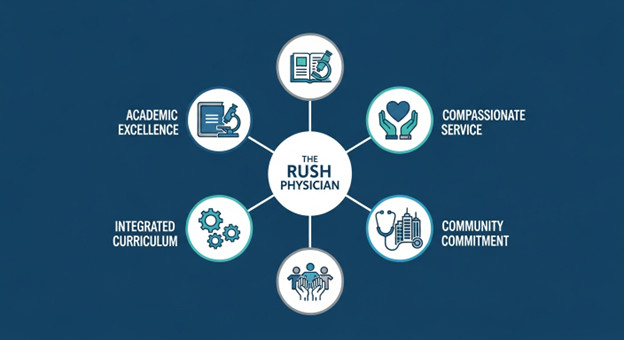
Rush Medical College distinguishes itself within the competitive landscape of medical schools through its unwavering dedication to its core mission. It’s a place where academic excellence is intrinsically linked with compassionate service. The college emphasizes an integrated approach to medical education, fostering an environment where students are encouraged to think critically, collaborate effectively, and develop a profound sense of empathy. Its location within the bustling Illinois Medical District provides unparalleled opportunities for hands-on clinical experience with a diverse patient population, exposing students to a wide spectrum of health challenges and socioeconomic factors that influence well-being. This unique environment prepares graduates not just to be skilled clinicians, but also to be thoughtful leaders and advocates for health equity.
What This Guide Covers: Your Roadmap to Admission
This guide serves as your comprehensive roadmap to understanding and navigating the admissions process at Rush Medical College. We will begin by exploring the distinctive “Rush Fit,” delving into the college’s philosophy, core values, and the holistic review process that goes beyond traditional metrics. Subsequently, we will lay the groundwork for your application by detailing the essential academic and experiential requirements, including prerequisite coursework, the MCAT, clinical experience, community service, research, and securing strong letters of recommendation. The core of this guide will then focus on meticulously navigating the application process itself, covering the AMCAS application, the Casper test, the Rush secondary application, and what to expect during the review stages. Finally, we will prepare you for the crucial interview process and offer a glimpse into life beyond acceptance, highlighting Rush’s innovative curriculum and supportive student environment. By the end of this guide, you will possess the knowledge and strategic insights necessary to construct a powerful and authentic application to Rush Medical College.
Understanding the “Rush Fit”: More Than Just Metrics
The pursuit of admission to Rush Medical College transcends a simple checklist of academic achievements and standardized test scores. While these quantitative measures are undoubtedly important, Rush places significant emphasis on what is often termed the “Rush Fit”—an applicant’s alignment with the institution’s deeply ingrained philosophy, values, and its commitment to community and patient well-being. This “fit” is not about conformity but about demonstrating shared principles and a genuine desire to contribute to Rush’s unique mission.
The Philosophy of Rush: Community, Health Equity, and Outstanding Patient Care
At the heart of Rush Medical College lies a profound commitment to community, health equity, and the delivery of outstanding patient care. This philosophy is not merely a statement of intent but an actionable principle that guides every aspect of their educational and clinical endeavors. Rush recognizes that healthcare extends beyond the hospital walls, actively engaging with the diverse communities of Chicago to address health disparities and promote wellness. Applicants are encouraged to understand and reflect this commitment in their own experiences and aspirations. This means demonstrating an awareness of social determinants of health, a passion for serving underserved populations, and an understanding of the ethical complexities inherent in modern medicine.
Rush’s Core Values and Competencies: What They’re Truly Looking For
Rush Medical College actively seeks individuals who embody specific core values and possess a demonstrable set of competencies. These are critical indicators of an applicant’s potential to thrive at Rush and contribute meaningfully to the medical profession. Key competencies often sought include:
- Professionalism: Exhibiting integrity, accountability, and ethical behavior in all endeavors.
- Communication Skills: The ability to effectively convey information and actively listen to patients, colleagues, and the public.
- Teamwork and Collaboration: Working harmoniously and productively with diverse groups to achieve common goals.
- Critical Thinking and Problem-Solving: Analyzing complex situations, evaluating evidence, and developing effective solutions.
- Empathy and Compassion: Demonstrating genuine care and understanding for the experiences of others.
- Leadership: Taking initiative, inspiring others, and contributing to positive change.
- Commitment to Diversity and Inclusion: Valuing and respecting individuals from all backgrounds and experiences.
- Resilience and Adaptability: Navigating challenges, learning from setbacks, and adapting to changing circumstances.
Understanding these competencies allows applicants to strategically highlight experiences that showcase these qualities.
The Holistic Review Process: Beyond GPA and MCAT Scores
Rush employs a holistic review process, a comprehensive evaluation that considers a wide range of factors beyond just academic metrics. While a strong GPA and MCAT score are foundational, they are not the sole determinants of admission. The admissions committee seeks to understand the applicant as a whole person, evaluating their unique background, experiences, skills, and potential contributions to the Rush community and the medical profession. This means that extracurricular activities, clinical exposure, research involvement, volunteer work, leadership roles, and personal essays are all given significant weight. The goal is to assemble a class of diverse individuals who will not only succeed academically but also contribute to the vibrant intellectual and compassionate environment of Rush.
Defining Your “Why Rush?”: Crafting a Personalized and Profound Connection
Articulating a compelling “Why Rush?” is paramount. This is not about reciting facts found on their website but about demonstrating a deep, personal connection to Rush’s specific mission, values, and opportunities. Consider what aspects of Rush—its community engagement, its research strengths, its particular approach to patient care, or its location in Chicago—resonate most deeply with your own values and long-term goals. Your “Why Rush?” should be authentic, specific, and clearly linked to how you envision yourself contributing to and benefiting from the Rush experience. This clarity will shine through in your essays and interview responses, distinguishing you from applicants with more generic motivations.
Laying the Groundwork: Academic and Experiential Requirements
A strong foundation in academics and a wealth of relevant experiences are crucial for admission to Rush Medical College. The admissions committee looks for evidence of intellectual curiosity, scientific aptitude, and a commitment to the field of medicine that goes beyond theoretical knowledge. This section outlines the key components of this foundational preparation.
Prerequisite Coursework: Ensuring You Have the Foundation
Rush Medical College requires applicants to complete specific prerequisite courses to ensure they possess the fundamental scientific knowledge necessary for medical school. These typically include courses in biology, chemistry (general and organic), physics, and mathematics, often with laboratory components. It is essential to review the most up-to-date prerequisite list on the Rush Medical College admissions website, as requirements can evolve. Beyond just completing these courses, demonstrating a strong academic performance, reflected in your GPA, is vital. Many successful applicants also pursue advanced science coursework or a related major that further solidifies their scientific understanding.
The MCAT Exam: Achieving a Competitive Score
The Medical College Admission Test (MCAT) is a standardized examination designed to assess your knowledge of scientific concepts and principles, verbal reasoning, and problem-solving skills. A competitive MCAT score is a significant component of your application, signaling your readiness for the rigors of medical school. Rush, like most medical schools, uses this score as a key metric in its evaluation. Dedicated preparation, including thorough study of the subject matter, practice tests, and understanding test-taking strategies, is essential. While there isn’t a strict cutoff score, aiming for a score within or above the average range of matriculated students provides a competitive edge.
Clinical Experience: Meaningful Patient Interaction
Meaningful clinical experience is indispensable for any aspiring medical student, and Rush Medical College is no exception. This involves direct interaction with patients, allowing you to observe healthcare professionals, understand the patient-physician relationship, and gain insight into the daily realities of medical practice. Experiences such as volunteering or working in hospitals, clinics, or emergency departments, shadowing physicians across various specialties, or participating in medical missions are highly valued. The key is not just the quantity of hours but the quality of your reflections and what you learned from these encounters, demonstrating your commitment and understanding of patient care.
Community Service and Engagement: Aligning with Rush’s Mission
Rush places a strong emphasis on community service and engagement, reflecting its core mission to serve and improve the health of the communities it serves. Applicants are encouraged to demonstrate a sustained commitment to helping others, particularly those in underserved or vulnerable populations. This could involve volunteering at local shelters, participating in health outreach programs, or engaging in initiatives that address social determinants of health. Showing how your community service aligns with Rush’s dedication to health equity and social responsibility will significantly strengthen your application. It demonstrates that you share their values and are prepared to contribute to their mission.
Research Experience: Demonstrating Scientific Inquiry
Engaging in research is another critical aspect of a strong application to Rush Medical College. This demonstrates your intellectual curiosity, analytical skills, and ability to contribute to the advancement of medical knowledge. Research can encompass a wide range of activities, from bench science in a laboratory setting to clinical research or public health studies. Even if your primary interest isn’t in a research career, participating in research provides invaluable experience in critical thinking, data analysis, and scientific inquiry. Presenting your research findings, whether through presentations, publications, or well-articulated contributions, adds significant weight to your application.
Letters of Recommendation: Choosing Your Advocates
Letters of recommendation play a crucial role in providing a third-party perspective on your character, abilities, and potential. For medical school applications, Rush typically requires letters from specific sources, often including a pre-medical advisor or committee letter from your undergraduate institution, and letters from faculty members who can speak to your academic performance and scientific aptitude. It is also highly beneficial to secure letters from individuals who can attest to your clinical experiences, research involvement, or character. Choose recommenders who know you well and can speak enthusiastically and specifically about your strengths, providing concrete examples of your achievements and qualities.
Navigating the Application Process: Step-by-Step
The application to Rush Medical College is a multi-stage process that requires careful planning, attention to detail, and timely submission. Understanding each step, from the primary application to secondary essays and potential interviews, is essential for presenting a cohesive and compelling candidacy.
The AMCAS Application: Your Primary Submission
The American Medical College Application Service (AMCAS) serves as the primary application system for most U.S. medical schools, including Rush Medical College. This comprehensive application requires detailed information about your academic history, standardized test scores (MCAT), work and volunteer experiences, extracurricular activities, and personal essays. The “Work and Activities” section is particularly important, providing space to detail your clinical experiences, research, community service, and other significant involvements. Be meticulous in filling out this section, focusing on quantifiable achievements and thoughtful reflections that highlight your skills and growth. The personal essay, or “Statement of Purpose,” is your opportunity to articulate your motivations for pursuing medicine and your suitability for medical school.
The Casper Test: Assessing Your Situational Judgment
Many medical schools, including Rush, utilize the Casper (Computer-Based Assessment for Sampling Personal Characteristics) test as part of their admissions process. Casper is an online, situational judgment test designed to assess non-cognitive skills and attributes such as empathy, ethics, professionalism, and resilience. It presents applicants with a series of video and text-based scenarios, followed by questions that require written or video responses. Preparing for Casper involves understanding the types of scenarios presented and practicing how to respond thoughtfully, ethically, and in a manner that aligns with the core values of a medical professional and the mission of Rush.
The Rush Secondary Application: Decoding the Prompts
Once your AMCAS application is verified and Rush Medical College receives it, you will typically be invited to complete a secondary application. This application often includes specific essay prompts designed to allow the admissions committee to learn more about your specific interests, experiences, and how they align with Rush’s unique programs and mission. These prompts may delve into your reasons for applying to Rush, your understanding of health equity, your experiences with diverse populations, your research interests, or how you handle challenges. Approach each prompt thoughtfully, using specific examples from your experiences to illustrate your points and demonstrate your genuine interest in Rush. Tailoring your responses to Rush’s specific values and programs is crucial here.
Application Review and Status Updates: What Happens Next?
After submitting both your AMCAS and Rush secondary applications, your application enters the review phase. The admissions committee will meticulously review all components of your application, including your academic record, MCAT scores, experiences, essays, letters of recommendation, and Casper results. This is a holistic review process, designed to identify candidates who not only possess the academic potential but also align with Rush’s mission and values. During this period, it is important to remain patient. You will typically receive updates on your application status through the applicant portal provided by Rush. If you are a competitive applicant, you may receive an invitation for an interview, which is the next critical step in the admissions process.
The Interview Process: Your Opportunity to Connect
The interview is a pivotal stage in the admissions process for Rush Medical College, serving as a direct opportunity for the admissions committee to gain a deeper understanding of you as an individual and assess your “fit” with the institution. It’s a two-way street where you can also evaluate if Rush is the right environment for your medical education.
Receiving an Interview Invitation: What to Expect
An interview invitation from Rush Medical College signifies that your application has passed an initial screening and that the admissions committee is interested in learning more about you. The invitation will typically outline the format of the interview, the date and time, and any specific instructions. Rush often utilizes a combination of interview styles, and it’s important to be prepared for various approaches. The interview is your chance to expand upon the information provided in your application, showcase your personality, and demonstrate your passion for medicine and your specific interest in Rush.
Preparing for Your Interview: Research and Reflection
Thorough preparation is key to a successful interview. Begin by revisiting your own application materials—your essays, descriptions of your experiences, and your stated reasons for applying to Rush. Refresh your understanding of Rush’s mission, values, current research initiatives, and its role in the Chicago community. Prepare to discuss your experiences in depth, focusing on what you learned, how you grew, and how these experiences have shaped your desire to become a physician. Reflect on your strengths and weaknesses, and be ready to articulate how you would contribute to the Rush Medical College community. Practicing your responses to common interview questions, especially those related to your motivation and fit, can boost your confidence.
Mastering Behavioral Interview Questions: The STAR Method
Many medical school interviews, including those at Rush, incorporate behavioral interview questions. These questions are designed to understand how you have handled specific situations in the past, believing that past behavior is a predictor of future performance. The STAR method is an effective technique for answering these questions:
- Situation: Briefly describe the context of the situation.
- Task: Explain the goal you were trying to achieve or the task you needed to complete.
- Action: Detail the specific steps you took to address the situation or complete the task. Focus on your
- Result: Describe the outcome of your actions and what you learned from the experience.
Practicing with this method will help you provide clear, concise, and impactful answers that showcase your skills and problem-solving abilities.
The Interview Format: Understanding What Rush Utilizes
Rush Medical College may employ various interview formats to assess candidates comprehensively. This can include traditional one-on-one interviews with faculty members or admissions committee members, or it might involve Multiple Mini Interviews (MMI), which consist of a series of short, independent stations assessing different competencies through brief scenarios. It is crucial to check the specific format communicated by Rush in your interview invitation. Regardless of the format, the underlying goal is to assess your communication skills, critical thinking, ethical reasoning, teamwork, and overall suitability for Rush’s educational environment and mission.
Post-Interview Etiquette: Sending a Thank You Note
Following your interview, it is a professional courtesy and a good practice to send a thank you note to your interviewers and, if applicable, to the admissions office. This note should be concise, reiterating your continued interest in Rush Medical College and briefly mentioning something specific you discussed or learned during the interview that further solidified your interest. Ensure the note is personalized and sent promptly, typically within 24-48 hours of your interview. This thoughtful gesture can leave a positive final impression.
Beyond Acceptance: What to Expect at Rush
Gaining admission to Rush Medical College is a significant achievement, marking the beginning of an intensive and rewarding educational journey. The college is committed to providing a comprehensive and innovative learning experience, preparing students to excel in a rapidly evolving healthcare landscape.
The Integrated Learning Model: Curriculum Highlights
Rush Medical College employs an innovative and integrated learning model designed to foster a deep understanding of medical science and clinical practice. The curriculum emphasizes early clinical exposure, interdisciplinary learning, and the development of core competencies essential for modern physicians. Students engage in case-based learning, team-based activities, and problem-based learning modules, moving beyond rote memorization to critical analysis and application. The curriculum is structured to build a strong foundation in basic sciences, progressively integrating it with clinical skills and patient care experiences, ensuring graduates are well-prepared for residency and beyond. This approach cultivates a physician who is not only knowledgeable but also compassionate and adaptable.
Conclusion
The path to admission at Rush Medical College is a challenging yet rewarding endeavor that demands a holistic approach, aligning academic excellence with a genuine commitment to its mission of community service, health equity, and outstanding patient care. This guide has provided a comprehensive overview of Rush’s philosophy, the critical academic and experiential requirements, and a step-by-step navigation of the application process. From understanding the nuanced “Rush Fit” and defining your personal connection to the institution, to excelling in your AMCAS application, Casper test, secondary essays, and interviews, every element plays a crucial role. Remember that Rush seeks not just high achievers, but individuals who embody their core values and possess the potential to become compassionate, skilled, and community-oriented physicians. By diligently preparing, authentically presenting your experiences, and clearly articulating your motivations, you can significantly enhance your candidacy. Embrace the journey with dedication and a clear understanding of what makes Rush Medical College a unique and esteemed institution. Your proactive engagement with these insights will be instrumental in realizing your aspiration to join the Rush University community and contribute to its legacy of healing and discovery.
Frequently Asked Questions About Rush Medical College
1. What GPA do you need to get into Rush Medical College?
The average GPA of matriculating students at Rush Medical College is approximately 3.72. While there is no published hard minimum, competitive applicants typically hold science and cumulative GPAs above 3.6. Rush evaluates academic performance holistically alongside research, clinical experience, and personal qualities.
2. What MCAT score is required for Rush Medical College?
The average MCAT score for enrolled students at Rush Medical College is 510. Competitive applicants generally score in the 508–515 range. Rush considers the full application rather than using a strict MCAT cutoff, but scores below the national average significantly reduce the likelihood of an interview invitation.
3. What is the acceptance rate at Rush Medical College?
Rush Medical College has a highly selective acceptance rate of approximately 1.09%, with roughly 144 students matriculating out of about 13,237 applicants in a recent cycle. The school receives applications from across the country and internationally, making early, well-prepared applications essential. Applicants who align with Rush’s community health mission tend to stand out in the pool.
4. How many applicants does Rush Medical College receive each year?
Rush Medical College receives approximately 13,000–14,000 applications per year through AMCAS. The entering class size is around 141 students, resulting in an extremely competitive applicant-to-seat ratio. Only a fraction of applicants are invited to complete the secondary application or receive an interview.
5. Does Rush Medical College accept out-of-state applicants?
Yes, Rush Medical College is a private institution and actively considers out-of-state and international applicants. Because it has no state residency preference, applicants from all 50 states compete on equal footing. Strong alignment with Rush’s mission of serving diverse, urban patient populations can benefit out-of-state candidates.
6. What is the interview format at Rush Medical College?
Rush Medical College uses a virtual interview day format, with interview invitations sent beginning in August and continuing through February. The interview format is traditional (not MMI), typically consisting of one-on-one conversations with faculty or current students. Applicants receive scheduling instructions at the time of invitation and are evaluated on professionalism, communication, and fit with Rush’s mission.
7. What are the Rush Medical College secondary essay prompts?
Rush Medical College requires a secondary application with a $100 fee and a November 15 deadline. There are two main essay prompts: (1) describe a life experience that broadened your worldview or enhanced your ability to understand those unlike yourself, and (2) describe how you have impacted or changed a person or community. CASPer, a standardized situational judgment test assessing non-cognitive skills such as ethics and professionalism, is also required.
8. How much does Rush Medical College cost?
Tuition and fees for the MD program at Rush Medical College are approximately $70,752 for the 2025–2026 academic year. The estimated total cost of the four-year MD degree, including living expenses, is approximately $336,418. Financial aid, scholarships, and loan programs are available through Rush University’s financial aid office.
9. What makes Rush Medical College’s curriculum unique?
Rush Medical College uses a progressive, integrated curriculum built around a “flipped classroom” model emphasizing team-based learning and active problem-solving rather than traditional lectures. Students begin direct patient contact within the first few weeks of their first year, which is earlier than most MD programs. The curriculum is designed to produce physicians who are simultaneously excellent clinicians and collaborative team members, reflecting Rush’s emphasis on interprofessional education.
10. How does Rush Medical College’s Chicago location and community health mission shape training?
Rush Medical College is situated in Chicago’s Illinois Medical District on the Near West Side, a diverse, underserved urban environment that is central to its educational mission. Medical students serve more than 10,000 community members annually through student-run clinics and outreach programs focused on healthcare access, health education, and pipeline building. Rush is recognized as an “anchor institution” committed to addressing the social and structural determinants of health in its surrounding neighborhoods, giving students direct exposure to equity-focused medicine throughout all four years.