
The journey to becoming a physician is a demanding yet incredibly rewarding path, and for many aspiring doctors in New Jersey and beyond, Rutgers Robert Wood Johnson Medical School (RWJMS) represents a pinnacle of medical education and training. As part of the esteemed Rutgers University, RWJMS is a leading institution dedicated to advancing health care through cutting-edge research, compassionate patient-centered care, and a deep commitment to serving the diverse communities of the Garden State. Navigating the competitive admissions landscape requires more than just academic prowess; it demands a nuanced understanding of RWJMS’s unique identity, a meticulously crafted application, and a genuine demonstration of your potential to contribute to the future of health care. This comprehensive guide is designed to illuminate every step of your path to RWJMS, offering strategic insights and actionable advice to help you craft a compelling application and articulate your fit for this exceptional School of Medicine. From understanding its core values to mastering the interview process, we will explore the multifaceted requirements and opportunities that define the RWJMS experience.
This blog will cover:
- Why Rutgers Robert Wood Johnson Medical School? Understanding Its Unique Identity
- Building a Competitive Application Profile: Pre-Application Strategies
- Navigating the Application Process: Step-by-Step for RWJMS
- Mastering the RWJMS Interview: The Multiple Mini Interview (MMI)
- Beyond the Standard: Special Programs and Pathways at RWJMS
- The RWJMS Experience: Curriculum, Clinicals, and Student Life
- Faculty Excellence and Mentorship
- Conclusion
Welcome to Rutgers Robert Wood Johnson Medical School
Rutgers Robert Wood Johnson Medical School, often referred to simply as RWJMS, stands as a cornerstone of medical training and innovation within Rutgers University, New Jersey’s largest academic institution. As a dynamic and forward-thinking medical school, RWJMS is driven by a mission to improve health and well-being through excellence in education, research, and patient care. It is a place where aspiring physicians gain the knowledge, skills, and ethical grounding necessary to become leaders in the ever-evolving field of health care. Located strategically within a vibrant academic and clinical ecosystem, RWJMS offers unparalleled opportunities for students to engage with diverse patient populations and cutting-edge medical advancements.
What This Guide Will Cover: A Holistic Approach to Admission
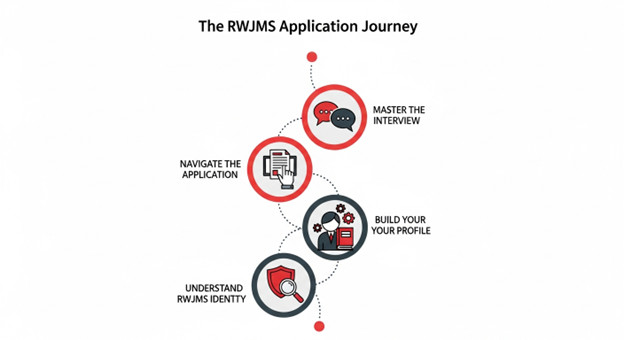
This guide is meticulously crafted to provide prospective applicants with a comprehensive roadmap to understanding and navigating the admissions process at Rutgers Robert Wood Johnson Medical School. We will delve into the distinctive characteristics of RWJMS, exploring its mission, vision, and core values, and illuminating the strengths that set it apart. Furthermore, we will outline the critical elements of building a competitive application profile, from academic foundations to extracurricular pursuits. The intricate details of the application process itself, including the AMCAS primary application, the RWJMS secondary application, and the significance of the holistic review, will be thoroughly explained. A substantial portion will be dedicated to preparing for the distinctive Multiple Mini Interview (MMI) format, offering strategies for success. Finally, we will provide a glimpse into the innovative medical education at RWJMS, its curriculum, clinical training, research opportunities, and student life, culminating with insights into special programs and pathways. Our aim is to equip you with the knowledge and confidence needed to present your strongest self throughout this rigorous journey.
Why Rutgers Robert Wood Johnson Medical School? Understanding Its Unique Identity
Choosing a medical school is a pivotal decision, and understanding the unique identity of Rutgers Robert Wood Johnson Medical School (RWJMS) is crucial for applicants seeking not just admission, but a place where they can truly thrive. RWJMS is more than just an academic institution; it is a vital component of the New Jersey health care landscape, deeply ingrained in its community and committed to addressing critical health needs. Its affiliation with Rutgers University, a powerhouse of research and innovation, further enhances its capabilities and broadens the opportunities available to its students and faculty. Prospective students are drawn to RWJMS for its strong emphasis on patient-centered care, its pioneering research initiatives, and its dedication to fostering a collaborative and inclusive learning environment.
Mission, Vision, and Core Values: Patient-Centered Care and Community Health
At the heart of Rutgers Robert Wood Johnson Medical School lies a profound commitment to patient-centered care and the health of the broader community. This mission is not merely a statement but a guiding principle that permeates every aspect of the institution, from its educational philosophy to its extensive research endeavors and clinical services. RWJMS envisions a future where health care is equitable, accessible, and delivered with compassion and expertise, actively working to reduce health disparities and improve wellness across New Jersey and beyond. The core values of integrity, excellence, diversity, collaboration, and a relentless pursuit of knowledge drive the faculty and medical students to engage in meaningful work that benefits society. This unwavering focus on serving the community shapes the type of physician RWJMS aims to cultivate—one who is not only scientifically rigorous but also deeply empathetic and socially conscious, prepared to tackle the complex health challenges of the 21st century.
Strengths and Distinguishing Features
Rutgers Robert Wood Johnson Medical School distinguishes itself through a combination of unique strengths and features that cater to aspiring physicians passionate about making a tangible impact. A primary advantage is its deep integration within the vibrant and diverse health care ecosystem of New Jersey. This provides students with unparalleled opportunities for clinical exposure to a wide array of patient populations and health conditions, fostering a robust understanding of real-world health care challenges. Furthermore, RWJMS is a hub for groundbreaking research, with a strong emphasis on translating scientific discoveries from the laboratory to the bedside. This “bench to bedside” approach ensures that medical students are exposed to the forefront of medical innovation and have ample opportunities to participate in meaningful research projects alongside distinguished faculty. The collaborative spirit that pervades the institution, from interdisciplinary research initiatives to student-led community programs, is another hallmark, preparing medical students for effective teamwork in modern health care settings.
The RWJMS Learning Environment: A Glimpse into Medical Education
The learning environment at Rutgers Robert Wood Johnson Medical School is deliberately designed to foster intellectual curiosity, critical thinking, and a deep sense of professional responsibility. It is a dynamic space where rigorous academic instruction is seamlessly integrated with extensive hands-on clinical experiences. Students are immersed in a curriculum that emphasizes problem-based learning, encouraging them to actively engage with complex medical scenarios. Collaboration is a cornerstone of this environment; medical students frequently work alongside peers from various backgrounds, as well as with experienced faculty and healthcare professionals across numerous specialties. This fosters not only a strong foundation in medical knowledge but also develops essential communication, teamwork, and leadership skills vital for success in the collaborative world of modern health care. The school’s commitment to research also means that students are exposed to cutting-edge discoveries and are encouraged to contribute to the scientific advancement of medicine.
Building a Competitive Application Profile: Pre-Application Strategies
The journey to gaining admission to Rutgers Robert Wood Johnson Medical School begins long before the application submission date. Building a competitive profile is a multi-year endeavor that requires strategic planning, dedicated effort, and a genuine passion for medicine. RWJMS employs a holistic review process, meaning they look beyond mere academic metrics to understand the applicant as a whole person. This involves excelling academically, but also cultivating significant experiences, developing essential personal qualities, and demonstrating a clear understanding of and commitment to the medical profession and RWJMS’s unique mission. Proactive engagement in activities that align with the school’s values, such as community health initiatives and research, can significantly strengthen your application and showcase your potential as a future physician.
Academic Foundations: GPA and Prerequisite Courses
A strong academic record is the bedrock of any successful medical school application, and Rutgers Robert Wood Johnson Medical School is no exception. While RWJMS utilizes a holistic review, a solid GPA and completion of all prerequisite courses are fundamental requirements. Prospective applicants should strive for a GPA that reflects consistent academic excellence, particularly in science courses. Many successful applicants present GPAs in the upper 3s, though demonstrating an upward trend or explaining any dips due to extenuating circumstances can be beneficial. It is crucial to carefully review RWJMS’s specific prerequisite course requirements, which typically include a foundational set of biology, chemistry, physics, and often advanced science courses such as biochemistry, genetics, and calculus. Successful completion of these courses not only ensures you meet the minimum academic standards but also provides the necessary scientific literacy to succeed in the rigorous medical curriculum at RWJMS.
Mastering the MCAT Exam
The Medical College Admission Test (MCAT) is a critical component of the application process, serving as a standardized measure of a student’s readiness for medical school. For Rutgers Robert Wood Johnson Medical School, a strong MCAT score demonstrates not only your knowledge base across key scientific disciplines and critical reasoning skills but also your ability to perform under pressure—an essential trait for future medical students and physicians. While RWJMS emphasizes a holistic review, competitive MCAT scores are important benchmarks. Successful applicants often present scores that reflect mastery of the exam’s content areas, including Biological and Biochemical Foundations of Living Systems; Chemical and Physical Foundations of Biological Systems; Psychological, Social, and Biological Foundations of Behavior; and Critical Analysis and Reasoning Skills. Dedicated preparation, including diagnostic testing, targeted study, and practice exams, is paramount to achieving your best possible MCAT score.
Cultivating Meaningful Extracurricular Activities
Beyond academics and the MCAT, Rutgers Robert Wood Johnson Medical School places significant value on the breadth and depth of an applicant’s extracurricular experiences. These activities serve as vital indicators of your commitment to medicine, your personal qualities, and your understanding of health care. RWJMS looks for evidence of meaningful engagement in areas such as clinical experience (shadowing physicians, volunteering in hospitals or clinics), research (both basic science and clinical), community service, leadership roles, and unique life experiences that have shaped your perspective. The key is not simply participation, but sustained commitment and demonstrated impact. Reflect on how these experiences have influenced your decision to pursue a medical career, what you have learned about yourself and the health care field, and how they align with RWJMS’s mission to serve New Jersey and beyond. Authentic engagement and thoughtful reflection on these activities will be crucial when articulating your story.
Developing Essential Skills for Future Physicians
Success in medical school and beyond hinges on developing a robust set of personal and professional skills that complement academic knowledge. Rutgers Robert Wood Johnson Medical School actively seeks candidates who demonstrate qualities essential for compassionate and effective health care. These include strong communication and interpersonal skills, empathy, resilience, critical thinking, problem-solving abilities, and a capacity for collaboration. Engaging in activities that hone these skills—whether through leadership roles in student organizations, volunteer work requiring patient interaction, or research projects demanding analytical rigor—is highly beneficial. Demonstrating these competencies through your application essays, letters of recommendation, and especially during the interview process will significantly enhance your candidacy for RWJMS. RWJMS understands that future physicians must not only be adept diagnosticians but also compassionate caregivers and effective team members.
Navigating the Application Process: Step-by-Step for RWJMS
The application process for Rutgers Robert Wood Johnson Medical School (RWJMS) is a structured yet comprehensive journey designed to evaluate candidates holistically. Understanding each step, its importance, and the specific requirements is crucial for presenting a strong and coherent application. This process typically begins with the AMCAS Primary Application, followed by the RWJMS Secondary Application, and culminates in potential interviews. It is essential to adhere to all deadlines and to meticulously prepare each component of your application, ensuring it accurately reflects your qualifications, experiences, and genuine interest in RWJMS. Diligence and attention to detail at every stage will serve you well.
The AMCAS Primary Application
The American Medical College Application Service (AMCAS) Primary Application is the universal starting point for applications to most U.S. medical schools, including Rutgers Robert Wood Johnson Medical School. This extensive application collects fundamental information about your academic history, coursework, standardized test scores (MCAT), work and experiences, personal essay (Statement of Purpose/Personal Comments), and requests for Letters of Recommendation. Completing the AMCAS application accurately and thoroughly is paramount, as it is the first comprehensive overview the admissions committee will receive. Dedicate ample time to crafting your personal essay, as it is your primary opportunity to articulate your motivations for pursuing medical education, your journey, and your aspirations, making a connection to your interest in becoming a physician. Ensure all details are precise, as inaccuracies can detract from your application.
The RWJMS Secondary Application: Beyond the Basics
Once your AMCAS application is verified and transmitted to Rutgers Robert Wood Johnson Medical School, you will typically receive access to the RWJMS Secondary Application. This is a critical opportunity to demonstrate your specific interest in RWJMS and to provide additional details that may not have been fully captured in the primary application. The secondary application often includes several essay prompts designed to assess your understanding of RWJMS’s mission, your commitment to community health, your experiences with diverse populations, and your reasoning for choosing RWJMS. These essays are not merely supplementary; they are a vital part of the holistic review process. Take time to reflect deeply on each prompt, tailoring your responses to showcase your alignment with RWJMS’s values and to highlight experiences that are particularly relevant to the school’s focus on serving New Jersey and addressing health disparities.
Understanding the Holistic Review Process at RWJMS
Rutgers Robert Wood Johnson Medical School employs a holistic review process in evaluating applications, meaning that every component of your application is considered to assess your potential to succeed and contribute to the medical school and the profession. This approach moves beyond a simple reliance on GPA and MCAT scores to encompass a broader range of qualifications and attributes. The admissions committee examines your academic record, MCAT performance, extracurricular activities (clinical experience, research, service, leadership), personal essay, secondary application responses, letters of recommendation, and performance during interviews. They seek to understand your life experiences, resilience, motivation, maturity, and alignment with RWJMS’s mission of patient-centered care and community health. This comprehensive review ensures that RWJMS selects individuals who not only possess strong intellectual capabilities but also exhibit the empathy, dedication, and diverse perspectives necessary to become outstanding physicians.
Requirements for US Citizens and Permanent Residents
For applicants who are US Citizens or Permanent Residents of the United States, Rutgers Robert Wood Johnson Medical School (RWJMS) follows standard application procedures primarily through AMCAS. While these applicants are considered for admission, it is important to note the strong preference RWJMS has for New Jersey residents. This preference is deeply rooted in the school’s mission to serve the health care needs of the state. Therefore, applicants with strong ties to New Jersey, evidenced through residency, education, or significant community engagement within the state, often find their applications more competitive. All requirements regarding prerequisite courses, MCAT scores, letters of recommendation, and the two-stage application process (primary and secondary) apply equally. Prospective applicants are encouraged to consult the official RWJMS Admissions website for the most up-to-date and detailed information on specific requirements.
Mastering the RWJMS Interview: The Multiple Mini Interview (MMI)
The interview stage is a pivotal part of the admissions process at Rutgers Robert Wood Johnson Medical School. RWJMS utilizes a Multiple Mini Interview (MMI) format, a standardized and comprehensive approach designed to assess critical thinking, communication skills, ethical reasoning, and personal attributes beyond what can be gleaned from written application materials. Preparing for the MMI is essential, as it is your direct opportunity to showcase your suitability for RWJMS and to demonstrate how your values and experiences align with the school’s mission. Approach this stage with confidence, authenticity, and a clear understanding of what the MMI aims to evaluate.
Preparing for the Multiple Mini Interview (MMI) Format
The Multiple Mini Interview (MMI) at Rutgers Robert Wood Johnson Medical School consists of a series of independent interview stations, each typically lasting a few minutes, focusing on different scenarios. These scenarios can range from ethical dilemmas and problem-solving tasks to personal reflections and situational judgment questions. Preparation for the MMI involves understanding its structure and practicing how to approach each type of station effectively. Focus on active listening, clear and concise articulation of your thoughts, and demonstrating your thought process rather than just arriving at a definitive answer. Familiarize yourself with common ethical principles in medicine and practice articulating your responses thoughtfully. The goal is to showcase your ability to think critically, communicate empathetically, and act professionally under pressure, qualities highly valued by RWJMS.
Demonstrating Your Fit: “Why RWJMS?”
A recurring theme throughout the admissions process, particularly during the interview and in the secondary application essays, is the question of “Why RWJMS?”. This is your opportunity to articulate a deep and genuine connection to Rutgers Robert Wood Johnson Medical School. Research the school’s mission, vision, values, curriculum, research strengths, and community engagement initiatives thoroughly. Consider what specifically resonates with your personal aspirations and experiences. Do their programs for addressing health disparities align with your passion? Is their approach to medical education particularly appealing? Do you have a strong connection to New Jersey that drives your desire to serve its communities? Your answer should be more than just a recitation of facts; it should be a personal reflection demonstrating that you have thoroughly considered why RWJMS is the right place for you to pursue your medical education and how you will contribute to its unique environment.
The Interview Day Experience
The interview day at Rutgers Robert Wood Johnson Medical School, whether conducted virtually or in person, is a comprehensive experience designed to allow the admissions committee to get to know you better and for you to learn more about the institution. Beyond the Multiple Mini Interview (MMI) stations, you may have opportunities to interact with current medical students, faculty, or admissions staff, providing valuable insights into life at RWJMS. This is an opportune time to ask thoughtful questions that demonstrate your continued interest and engagement. Be prepared to discuss your application thoroughly, including your experiences, motivations, and your understanding of the medical profession. Maintain a professional demeanor, dress appropriately, and approach the entire day with enthusiasm and authenticity.
Ethical Reasoning and Professionalism
A core component assessed during the Multiple Mini Interview (MMI) and throughout the application process at Rutgers Robert Wood Johnson Medical School is your capacity for ethical reasoning and professionalism. The MMI scenarios are specifically designed to present ethical dilemmas, challenging you to apply principles of medical ethics, critical thinking, and sound judgment. It is important to demonstrate an understanding of concepts such as patient autonomy, beneficence, non-maleficence, justice, confidentiality, and cultural sensitivity. Your responses should reflect thoughtful consideration of different perspectives, a commitment to acting in the best interest of patients, and an awareness of your professional responsibilities. Exhibiting honesty, integrity, and a willingness to learn from challenging situations are paramount in showcasing the professionalism RWJMS expects from its future physicians.
Beyond the Standard: Special Programs and Pathways at RWJMS
Rutgers Robert Wood Johnson Medical School recognizes that aspiring physicians come from diverse backgrounds and have unique career aspirations. To cater to these varied needs, RWJMS offers a range of special programs and pathways designed to provide tailored educational experiences and unique entry points into medical education. These programs demonstrate RWJMS’s commitment to fostering talent and addressing specific needs within the health care field. Whether you are a high-achieving undergraduate student seeking early assurance, interested in joint degree programs for accelerated or specialized training, or looking for opportunities to immerse yourself in medical fields during the summer, RWJMS provides avenues to explore and advance your medical career journey.
Early Assurance Program (REAP)
The Rutgers Early Assurance Program (REAP) is a significant opportunity offered by Rutgers Robert Wood Johnson Medical School, particularly for students from backgrounds underrepresented in medicine. REAP is designed to provide a streamlined pathway into medical school for talented and motivated undergraduates who demonstrate a strong commitment to serving diverse communities. This program signifies RWJMS’s dedication to increasing diversity within the physician workforce and to nurturing future leaders who can address health disparities. Students accepted into REAP typically have their MCAT requirements deferred and are admitted directly to RWJMS after meeting specific academic and programmatic milestones during their undergraduate careers, underscoring the school’s proactive approach to cultivating future medical professionals.
Joint Degree Programs and Advanced Standing
Rutgers Robert Wood Johnson Medical School offers several joint degree programs and opportunities for advanced standing, catering to students who seek a more integrated and sometimes accelerated path to medical school. These programs, often in collaboration with various Rutgers University undergraduate campuses, allow students to pursue combined Bachelor of Science (BS) and Doctor of Medicine (MD) degrees. A notable example is a seven-year program that integrates undergraduate and medical education, providing a structured curriculum designed to prepare students for the rigors of medical school with a strong foundation. These joint programs are highly competitive and are designed for students who demonstrate exceptional academic ability and a clear, long-term commitment to medicine from an early stage in their academic careers.
Accelerated and Distinction Programs
RWJMS offers various accelerated and distinction programs that allow medical students to tailor their education to specific interests and career goals. One prominent example is the Accelerated Primary Care Track, which provides a focused pathway for students committed to careers in primary care. This program often involves early exposure to primary care settings and a streamlined curriculum designed to prepare students for residency in fields like Internal Medicine, Pediatrics, or Family Medicine. Additionally, RWJMS encourages students to pursue distinction pathways in areas such as research or global health, allowing them to delve deeper into specialized fields through dedicated projects, thesis work, and unique experiential learning opportunities that enrich their overall medical education.
Summer Enrichment and Exposure Opportunities
For aspiring medical students, gaining exposure to the medical field and understanding the demands of medical education is invaluable. Rutgers Robert Wood Johnson Medical School often provides summer enrichment programs and exposure opportunities designed to give prospective and current students a glimpse into the world of medicine. These programs can range from introductory courses on medical sciences and clinical skills workshops to opportunities for shadowing physicians and participating in community health initiatives. Such programs not only enhance an applicant’s understanding of the medical profession but also demonstrate a proactive commitment to exploring and preparing for a career in health care, often providing a competitive edge to applicants.
The RWJMS Experience: Curriculum, Clinicals, and Student Life
The experience of a medical student at Rutgers Robert Wood Johnson Medical School is defined by an innovative curriculum, extensive clinical training, a vibrant research environment, and a supportive student community. RWJMS aims to equip its medical students with the knowledge, skills, and ethical framework necessary to excel in today’s complex health care landscape. From the early stages of scientific learning to advanced clinical rotations, the emphasis is on creating well-rounded physicians who are not only knowledgeable but also compassionate, collaborative, and community-oriented. The integration of research and patient care provides a dynamic learning experience, preparing graduates to lead and innovate in the field of medicine.
The Innovative Medical Sciences Curriculum
The Medical Sciences curriculum at Rutgers Robert Wood Johnson Medical School is meticulously designed to provide a comprehensive and forward-thinking medical education. It integrates foundational scientific principles with early clinical exposure, allowing students to connect theoretical knowledge with practical application from the outset. The curriculum emphasizes active learning methodologies, such as problem-based learning and case studies, fostering critical thinking and diagnostic skills. Students engage with a wide range of disciplines through didactic lectures, small group discussions, and hands-on laboratory experiences. This innovative approach ensures that RWJMS medical students develop a strong scientific understanding and the ability to think critically and analytically, preparing them effectively for advanced clinical rotations and lifelong learning in the dynamic field of medicine.
Clinical Training and Facilities
Rutgers Robert Wood Johnson Medical School offers extensive and diverse clinical training opportunities that are integral to its medical education program. Students gain hands-on experience in a variety of settings, including the renowned Robert Wood Johnson University Hospital, a leading academic medical center, as well as affiliated hospitals and outpatient clinics throughout New Jersey. This broad exposure allows medical students to interact with a wide spectrum of patient populations, pathologies, and health care challenges, providing a robust foundation for their future medical careers. The clinical facilities are equipped with state-of-the-art technology, supporting a learning environment that emphasizes evidence-based practice, patient safety, and compassionate care.
Research and Innovation at RWJMS
Research and innovation are central pillars of the educational experience at Rutgers Robert Wood Johnson Medical School. RWJMS fosters a culture of scientific inquiry, encouraging medical students to participate actively in cutting-edge research alongside distinguished faculty. Students have opportunities to engage in a diverse range of research areas, from basic science and translational research to clinical trials and public health initiatives. This involvement not only deepens their understanding of medical science but also hones critical thinking, problem-solving skills, and the ability to contribute to the advancement of health care knowledge. RWJMS’s commitment to research provides aspiring physicians with invaluable opportunities to be at the forefront of medical discovery.
Life as an RWJMS Medical Student
Life as an RWJMS medical student is characterized by a rigorous academic schedule balanced with opportunities for personal growth, community engagement, and professional development. The medical student body is diverse, fostering a rich learning environment built on collaboration and mutual support. Beyond the demanding curriculum and clinical rotations, students actively participate in a wide array of extracurricular activities, including student interest groups, volunteer organizations, and leadership roles. These experiences allow students to explore specific medical specialties, contribute to community health initiatives, and develop essential leadership and teamwork skills. The supportive faculty and the collaborative spirit among peers create a dynamic and engaging environment where medical students can thrive and prepare for their future careers in health care.
Faculty Excellence and Mentorship
The faculty at Rutgers Robert Wood Johnson Medical School represent a cornerstone of the institution’s educational excellence. Comprising leading researchers, esteemed clinicians, and dedicated educators, these faculty members bring a wealth of knowledge and experience to the classroom and clinical settings. They are committed to nurturing the next generation of physicians, providing not only rigorous instruction but also invaluable mentorship. Medical students benefit from close interactions with faculty, gaining insights into various medical specialties, research opportunities, and the nuances of professional practice. This strong faculty-student relationship fosters a supportive learning environment where aspiring physicians can develop their skills, explore their interests, and receive guidance throughout their medical school journey.
Conclusion
The path to becoming an RWJMS physician is a journey marked by academic rigor, personal growth, and a deep commitment to the values of patient-centered care and community health. Rutgers Robert Wood Johnson Medical School offers a unique and enriching environment for aspiring medical professionals, distinguished by its strong ties to New Jersey, its pioneering research, and its collaborative learning culture. By understanding the school’s mission, meticulously preparing your academic profile, thoughtfully crafting your application, and genuinely demonstrating your fit through the interview process, you can significantly enhance your chances of admission. Remember that RWJMS seeks not only academically gifted individuals but also those with empathy, resilience, and a profound desire to serve. Embrace the holistic review process by showcasing your authentic self and your passion for contributing to the future of health care. As you navigate these steps, remember that your journey is a testament to your dedication, and with careful planning and genuine effort, the doors to Rutgers Robert Wood Johnson Medical School can open for you.
Frequently Asked Questions About Rutgers Robert Wood Johnson Medical School
1. What GPA do you need to get into Rutgers Robert Wood Johnson Medical School?
The average GPA for matriculants at Rutgers Robert Wood Johnson Medical School is 3.83. This figure reflects the total GPA; competitive applicants typically also present strong science (BCPM) GPAs in the same range. An upward grade trend and evidence of academic resilience can partially offset a lower GPA, though falling well below 3.7 makes admission highly challenging at this school.
2. What MCAT score do you need for Rutgers Robert Wood Johnson Medical School?
The average MCAT score for admitted students at Rutgers RWJMS is 515, which places matriculants around the 92nd percentile nationally. Section breakdowns are not publicly published, but applicants should aim for balanced scores across all four sections rather than a single high section masking weaknesses elsewhere. Scores significantly below 512 will face very steep competition given the school’s selectivity.
3. What is the acceptance rate at Rutgers Robert Wood Johnson Medical School?
Rutgers Robert Wood Johnson Medical School has an acceptance rate of approximately 2.69% for the 2025–2026 cycle. Out of roughly 6,479 applicants, only 174 students ultimately matriculated. This places RWJMS among the more selective public medical schools in the country, making a thorough and polished application essential.
4. How many people apply to Rutgers Robert Wood Johnson Medical School each year?
Approximately 6,479 applicants submitted applications to Rutgers RWJMS in the most recent cycle, with 174 students joining the entering class. The school receives applications through AMCAS, the standard centralized application service for allopathic (MD) programs. With a total enrollment of around 780 MD students across all four years, the program is mid-sized by national standards.
5. Does Rutgers Robert Wood Johnson Medical School accept out-of-state applicants?
Yes, Rutgers RWJMS does accept out-of-state applicants, but New Jersey residents receive a significant preference — approximately 83.3% of the matriculating class are NJ residents, leaving only about 16.7% of seats for out-of-state students. Out-of-state tuition is notably higher at $77,992 per year versus $49,516 for in-state residents. Non-NJ applicants should have especially strong applications and be prepared to articulate a genuine connection to or interest in New Jersey health care.
6. What is the interview format at Rutgers Robert Wood Johnson Medical School?
Rutgers RWJMS uses a seven-station Multiple Mini Interview (MMI) format conducted via live video conference. In addition to the MMI stations, applicants also complete a traditional interview component as part of the same day. Interviews are by invitation only and are hosted by the Admissions Committee. Preparing for scenario-based MMI prompts — particularly around ethics, communication, and teamwork — is strongly recommended.
7. What are the secondary essay prompts at Rutgers Robert Wood Johnson Medical School?
The RWJMS secondary application includes four main essay components. First, a Core Values essay asking which of RWJMS’s five core values (Respect, Wellness, Joining learners with care delivery, Making patients first, Science to advance human health) resonates most with you — answered in two paragraphs or less. Second, a Community Contribution essay (250 words or less) about what you will bring to the learning environment. Third, a Challenging Situation essay describing how you handled a difficult experience. Fourth, a Pre-Professional Competencies reflection — or applicants may substitute CASPer results for this component. Additional short questions may address academic history and New Jersey ties. The secondary fee is $80 (waived for AAMC FAP recipients), and the deadline falls in mid-January.
8. How much does Rutgers Robert Wood Johnson Medical School cost?
Annual tuition and fees for the 2025–2026 academic year are $49,516 for New Jersey residents and $77,992 for out-of-state students. Over four years, the total estimated cost of attendance is approximately $312,808 for in-state and $413,396 for out-of-state students (including living expenses and fees). As a public institution, RWJMS offers a meaningful tuition advantage for New Jersey residents compared to private medical schools.
9. Does Rutgers Robert Wood Johnson Medical School require CASPer?
Yes, Rutgers RWJMS requires CASPer as part of the admissions process. Notably, applicants who submit CASPer results may use those scores in place of writing the separate Pre-Professional Competencies secondary essay, giving CASPer a dual role in the application. CASPer is an online situational judgment test that assesses non-cognitive skills such as empathy, communication, and ethical reasoning, and scores are submitted directly to RWJMS. Applicants should register for CASPer early through Altus Assessments to ensure their scores are delivered before the application deadline.
10. What is the Rutgers RWJMS mission and how does its affiliation with RWJBarnabas Health shape training?
Rutgers Robert Wood Johnson Medical School is dedicated to transforming health care for New Jersey and the nation through innovation and excellence in education, research, patient- and family-centered care, and addressing the needs of a diverse community. RWJMS is closely affiliated with RWJBarnabas Health, New Jersey’s largest academic health system, giving students broad clinical exposure across community and tertiary care settings throughout the state. The school is also preparing to merge with Rutgers New Jersey Medical School to form the Rutgers School of Medicine, anticipated to receive full LCME accreditation in 2027 — which would make it one of the largest medical schools in the nation. This trajectory signals growing resources, expanded research infrastructure, and an even stronger clinical training network for future students.